
Dr Ryan Cushley-Spendiff is a lecturer at Nottingham Law School, Nottingham Trent University. He is attached to the Centre for Business and Insolvency Law.
Bethesda experienced a lot of negative feedback following the release of Fallout 4: Anniversary Edition in November 2025, which broke many mods that have been created for the PC game over the past decade, as well as attracting complaints of crashes and glitches.
Unfortunately, Bethesda is not the first major developer to fail to meet consumer expectations, nor is it the first to mishandle the situation. One cannot help but recall Creative Assembly, whose 2023 Shadows of Change expansion for Total War Warhammer 3 threatened to kill the series due to similar poor quality. It caused so much backlash that the company’s vice president put out a letter of apology.
Total War: Warhammer 3. | Image credit: Creative Assembly/Sega
These kinds of stories are increasingly common, but two questions arise. Is the fanbase legally protected? And if not, does this signal the need for further regulation? The answer to the first question is “barely”, while the answer to the latter is that this is unlikely – but potentially for good reason.
In the UK, the current consumer protections for video games can be found within the Consumer Rights Act 2015 (CRA) and the Consumer Protection from Unfair Trading Regulations 2008. These give basic rights to all consumer transactions, including the right of satisfactory quality and that the goods are fit for a particular purpose. However, these provisos have aged oddly, with the games market now being one of continuous digital content development rather than singular transactions. There is little to prevent developers from providing continuous updates to games, including game-breaking hotfixes or radical changes to core mechanics.
It may feel strange to say that an implied term that the goods must be of satisfactory quality can entail glitchy updates, but the reason for this lies in the balancing act the CRA was attempting. The act had in-built flexibility to balance consumer welfare with genuine commercial need.
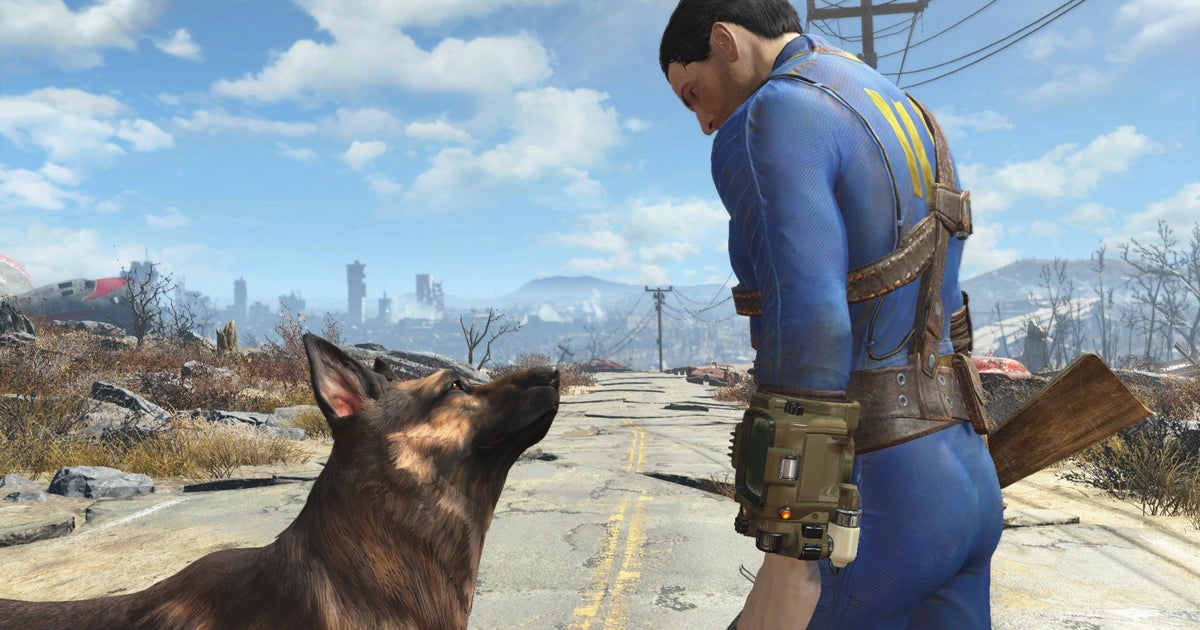
Fallout 4. | Image credit: Bethesda
The flexibility is that the standard of satisfactory quality is determined by reference to all relevant circumstances through the lens of a “reasonable person.” As games are growing increasingly more complex and tech debt on older engines is becoming more apparent, it is generally considered reasonable to assume that in complex digital content, there will be bugs and glitches. So the test is that if a “reasonable person”, taking account of the above, would expect there to be some level of defects after launch or an update, it is possible, and often likely, for the game to still be of “satisfactory quality.”
So long as these defects do not render the game completely unplayable or constitute false marketing (in the context of Fallout 4, for example, the expectation might be that the player can still get to Diamond City and complete the main quest), the game will not automatically fail this criterion.
Now, should a game be riddled with bugs and glitches, it edges more and more towards being considered unsatisfactory. However, this is where Bethesda’s own reputation may give it more leeway than other companies. Going back to titles like Morrowind, Bethesda has a reputation for developing complex, ambitious games that often come with their fair share of bugs – but also for attempting to fix the more terminal ones, even if this can sometimes be months after release.
Because of this, there is an argument that a reasonable person buying a Bethesda game, or downloading a large update, should expect a lot of glitches and bugs, especially when the update is free or there is a promise of future support. If challenged, Bethesda may be able to mount a defence along the lines of: “what did you expect from buying a Bethesda game?”
We are in a situation where videogame companies have successfully avoided targeted legislation for around 50 years. How has this happened? The answer is that the industry has been exceptionally good at killing legislation in its crib. The recent conversations are not the first time that legislation has been threatened; in fact, since its inception, the industry has been plagued by political controversy.
Historically, this focused on video-game violence, which gives important context on how the industry has kept itself so deregulated. When controversy erupted around the topic in the 1990s, most corporations were happy to ignore the moral panic, confident in research showing that there was no link between real-world violence and game violence. That was until the US Congress got involved.
Night Trap 25th Anniversary Edition | Image credit: Screaming Villains
Prompted by outcries over Mortal Kombat and Night Trap, congressional hearings on video-game violence began in 1993. Within a year, the Entertainment Software Association was formed by the industry, which then almost immediately founded the Entertainment Software Rating Board. This was a self-imposed reorganisation of the industry, the result of which was a self-regulatory system that has become quasi-mandatory.
All of this not because of pending legislation, but because of a hostile Congress making vague noises that it might intervene, which the industry wanted to head off as fast as possible. There was an interest in killing off regulation before any law could be passed, and this approach proved so popular with the sector that Europe, with the exception of Germany, mimicked it with the Pan-European Game Information (PEGI) system.
What was initially a poorly disguised anti-regulation ploy turned into a crown jewel of deregulation. The industry survives on its consumer reputation, with companies generally wanting to foster, and subsequently weaponise, good reputational capital in order to compete. This was an ideal ground for self-regulation, and for a long period legislators did not want to get involved where there was effective self-monitoring. We shouldn’t forget that legal change is not free, and regulation can easily have more of an indirect cost than any benefit derived from it. Combined with an uncertain benefit, unforeseen consequences, and an industry that historically could actually monitor itself, it is not difficult to see why newer calls for legislation are being generally ignored.
“It might yet be possible to save the self-regulation regime that has worked for so long”
Yet this is not something to be blindly relied on. While the legislative mood is currently still hesitant, the more that market failures occur, the more the mood will change – as evident in November 2025, when the UK Parliament debated consumer law as it applies to video games. The issue with creating new legislation for complex digital content is that it threatens to tip the balancing act of the CRA into harming genuine commercial interests, especially when the legislature itself does not have the best knowledge of, or sympathy towards, the logistics of the industry.
It might yet be possible to save the self-regulation regime that has worked for so long, but this will be solely through the actions of the industry in managing its reputation and consumer expectations. At this point, either the industry regulates itself, as it historically has done, or it will invite itself to be regulated by those who don’t understand it.