
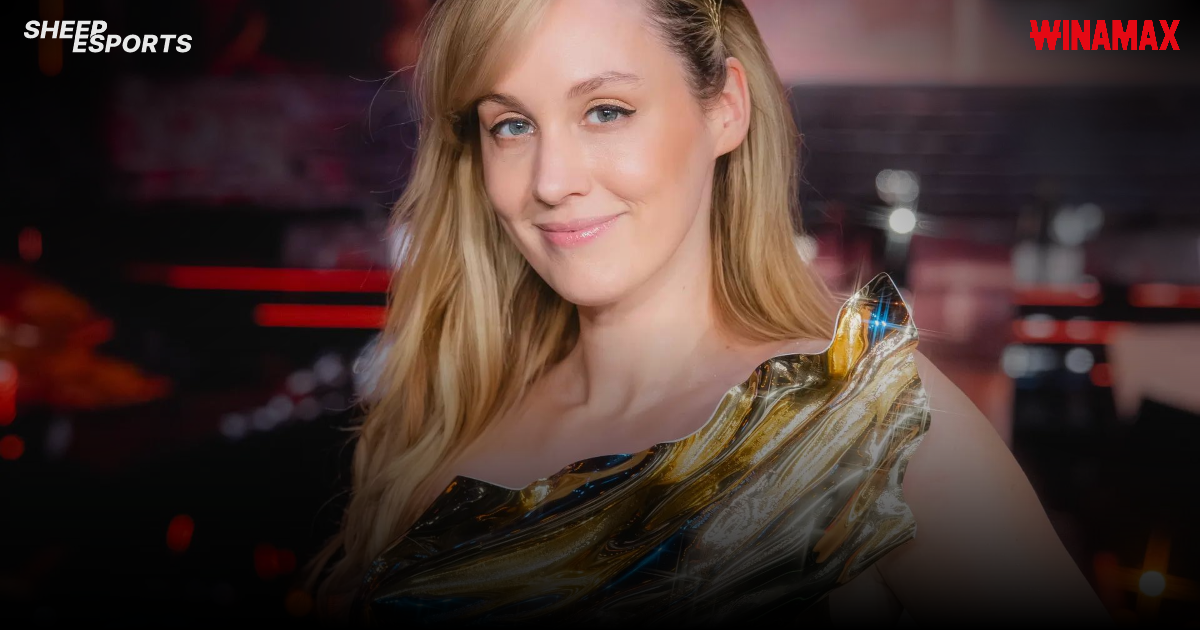
Eefje “Sjokz” Depoortere, host and analyst of the LEC for Riot Games. Photo Credit: Colin Young-Wolff/Riot Games
“People don’t care what was really said in an interview as long as they get the most clickable moment”
As the LEC prepares to kick off its 2026 season, the league once again finds itself at a crossroads between continuity and change. Few people have witnessed—and shaped—that evolution as closely as Eefje “Sjokz” Depoortere. A staple of the European League of Legends broadcast since its earliest days, the LEC host and former esports journalist has been a constant presence from the EU LCS era to today’s more modern product. In the second part of our interview, recorded around Worlds last November, Sjokz shares her perspective on longevity in esports, the challenges of keeping the LEC broadcast fresh, and how new formats, co-streaming, and shifting fan expectations are redefining what the league looks like heading into 2026.
You’ve been in the LEC since the very beginning, and many of your longtime colleagues have retired over the years, including Travis Gafford, who helped you early in your career. What does it mean to still be here and to keep going after all this time? Is it still as special for you as it used to be?
Eefje “Sjokz” Depoortere: “It’s definitely still as special. Every morning I wake up and I have the chance to work on the LEC, or even on international events like Worlds, and I count my lucky stars that I get to do it. It has been hard over the years to say goodbye to some colleagues, because when you all start doing something together from the beginning and go through all of those things side by side, it creates such an exceptional bond—especially with someone like Travis, with whom I have a great connection and who’s still a great friend of mine.
I also really respect the decision to move on, because when you’ve been in something for so long, sometimes you’re afraid to make the jump to something else. You think, “This is all I know, so I need this forever.” But maybe there are other things you could find interesting or want to explore. He took that jump, and he’s doing incredibly well. I’ve also diversified my own projects, of course. But when it comes to things like Worlds—and when we were in Madrid with the LEC—I just love it so much. It’s my favorite thing in the whole world, and that hasn’t changed in the last 13 years. It’s only gotten better.
The LEC ecosystem has evolved a lot since the old EU LCS days, and more changes are coming in 2026 with the newly announced LEC Versus format. What do you think about these upcoming changes?
Sjokz: On one hand, I’ve been a bit fatigued by how much we’ve been changing our systems every year, because as fans you need stability and you want to know what to expect from the product you enjoy—where to be every week. I’ve seen this happening across esports in general.
On the other hand, I like the changes a lot. The three splits were a bit boring, although I did think that 2025’s different formats were an improvement because they gave fans something new to watch each time. Still, it felt like a bit much. In 2026, I think the inclusion of ERL teams for LEC Versus will be really cool. I believe we’ve moved more toward an entertainment product, and content and amusement are super important. Obviously competition remains the most important, but I think these changes will fuel a lot of action and entertainment. We’ll finally get to see if the top ERL teams can actually match up against LEC teams, which I think some of them could.
Aside from that big topic, I also really like that they promised more Roadshows. That’s something I got from working in Counter-Strike: things that happen during Roadshows simply don’t happen in year-long studios. They bring out the best in competition and in esports. It separates the weak from the strong when it comes to performing in front of an audience. It creates the biggest, most memorable, emotional, and crazy moments that, if you’re someone interested in esports, will make you a fan for the next shows and beyond. We haven’t always been able to capture that in the studio, which is normal, although we try our best and put a lot of work into interacting with our audience. We can’t forget the people who come every week to see our players.
If you could make one change to the European ecosystem yourself, what would it be?
Sjokz: It would simply be even more Roadshows. The more, the better. It doesn’t always have to be a 10,000-person arena—it can take different, smaller forms. Watch parties, small venues, mixing things up. Bringing these shows to more people and new places is the way to go.
As someone who has covered the LEC for so many years, is it challenging to keep the show fresh and engaging during full studio seasons? How do you make each show feel unique?
Sjokz: That’s always been my main goal, and the goal of the team as well. It’s particularly difficult because the system is in a weird place now. The official broadcast used to be the end-all be-all—first the English one, then the French one, the German one, etc. Now there are co-streamers in the mix, and I think it makes our job a little difficult. Maybe we needed a little kick up the butt, right? We’ve been doing things the same way for a long time, so now we have to look more at what they’re doing and see how we can incorporate some of it into our show.
There are also other differences: while we need to take breaks, they don’t have to. They can keep entertaining their audiences, check players’ solo queue match histories, and do cool stuff like that. They also have a lot more freedom regarding what they can talk about. Since we’re the official English broadcast, there are obviously topics we can’t discuss. I know people don’t always like that, but when there are rumors about teams, or when formats leak, you have to address things differently. Co-streamers can just treat those as normal information and talk about them freely. That’s been a difficult gap for us to bridge.
Regardless, all of that makes us challenge ourselves and think: “What do we have that they don’t?” And the answer is simple: players. Sure, co-streamers can get some access to them when they’re in the studio, but I think we’ve found a lot of formats to incorporate players and make use of that strength. I’m a big fan of having players on every segment of our show. I know that was a big debate on social media with fans, but I can assure you: we request players for everything. We want them on every single segment. We have a ton of ideas—some more comedic, some more analytical—and our goal is to give players as much exposure as possible. The broadcast is always better with them involved.
Logically, because they have a lot of content to do themselves, we have to work around that by involving ourselves more. We’re always trying to make a really fun product, and I think our field of analysts was really awesome this year. It’s great when everyone has something they love doing and they’re not afraid to make a fool of themselves and just go in for the entertainment.
As you mentioned, this became a major point of discussion when newer fanbases, like the ones of Karmine Corp and Movistar KOI, joined the league. Do you think the criticism that casters were “putting themselves above the players” in content like the rap videos is fair?
Sjokz: That discourse was tricky for us to watch. I think part of it came from the differences between co-streams and the official broadcast. A lot of the newer viewers didn’t necessarily know the historical background of the LEC. I’d see a great content piece from OTP and their casters, or from streamers, and people would react like, “Yes, this is amazing, this is what we want to see.” And in my mind, we are those people for the legacy broadcast. There are viewers who’ve been watching us for many, many years. We’re there every single day, and we’re here to stay. In some cases, it’s actually riskier to build the brand of a new player who might not stay long enough for us to help build their image than it is to keep developing the identity of the on-air team.
Though, to answer your question: I don’t believe the role of on-air talent is more important than the players. If you look at the pyramid—without players, we have nothing. And our content is always better when players are involved. But the reality is that a lot of our big pieces come from the creative minds of our casters. People really loved the rap battles, but they take an enormous amount of work. In our latest one, we had two days to write and record all the visuals. We’d already done three months of dance training. After show hours, people were working from 1 a.m. until 5 a.m. writing verses and making sure everything fit. Drakos (Daniel Drakos) pulled three all-nighters in a row to ensure it would be ready to air. Then the editors worked like crazy. It’s an enormous effort for something that is made for the community and is completely free.
So yeah, it can be disheartening to see those reactions. I’d like to believe people also enjoy seeing us, but I do understand the feedback. I want to be clear: we love our players. If it were easier to get them involved, we’d have them in every single piece of content we make. It’s gotten harder since COVID—something shifted. Teams also create more of their own content now, which is a good thing, but it means they’re less inclined to lend players for long shoots. Sometimes it just doesn’t work scheduling-wise. In the end, I can see both sides. I just want to make cool stuff.
As someone who started your career as a journalist, what are your thoughts on the state of journalism in esports today?
Sjokz: I’m not a gatekeeper. I have a Master’s in journalism, but I don’t think that’s a necessity. It helps, but it’s not required. When I look at journalism and its definition, I think it actually applies to what content creators do, what pure journalists do, and also what we do on the broadcast. I’m still very much guided by empirical evidence, objectivity, context, and framing—that’s how I work. It doesn’t matter if I’m making a random TikTok; I’ve thought about those things because honesty is important, and I think journalistic principles should be a guiding light for everybody.
The thing is, we can’t necessarily expect that from people who become co-streamers and blow up overnight. Sometimes I do wonder about the ethics of it all. A lot of content today seems driven purely by clicks and views. People don’t care what was really said in an interview as long as they get the most clickable moment. Maybe they cut off half of it or react to it in a way that gets more attention, and then it spreads on TikTok or elsewhere.
I do think it’s good to develop that muscle. I had to learn to flex it myself and be like, “okay, we’re making a show, but we also want viral moments.” That’s where balance comes into play. But for people who haven’t studied, built up, or internalized a central framework of journalistic principles, sometimes things don’t come out perfectly. I do feel, though, that we’re all in it together, and I hope the community can sometimes step in and say, “hey, that was out of line because of this.”
The other side of it is people just scroll to find something to disagree with or get mad at, which I don’t like either. So yes, as a content creator and broadcaster, it’s a frustrating time. But sometimes it’s nice, too, because you feel like you can really get your word out there.
Is there anything you’d like to say to LEC fans to get them hyped for 2026?
Sjokz: 2026 is going to be great. We’ve got a new format again, which is classic LEC and just plain fun. It’ll be exciting to see if Los Ratones can finally put their money where their mouth is—or maybe some of our other teams, who knows? But yeah, we still love you. As always, we also love our co-streamers and we enjoy integrating them wherever we can. We’re all in this together, and all we really want is to make a great show for you—to make sure that when you turn on your stream on a Saturday, you feel at home. And that’s what we’re going to try to do.”