
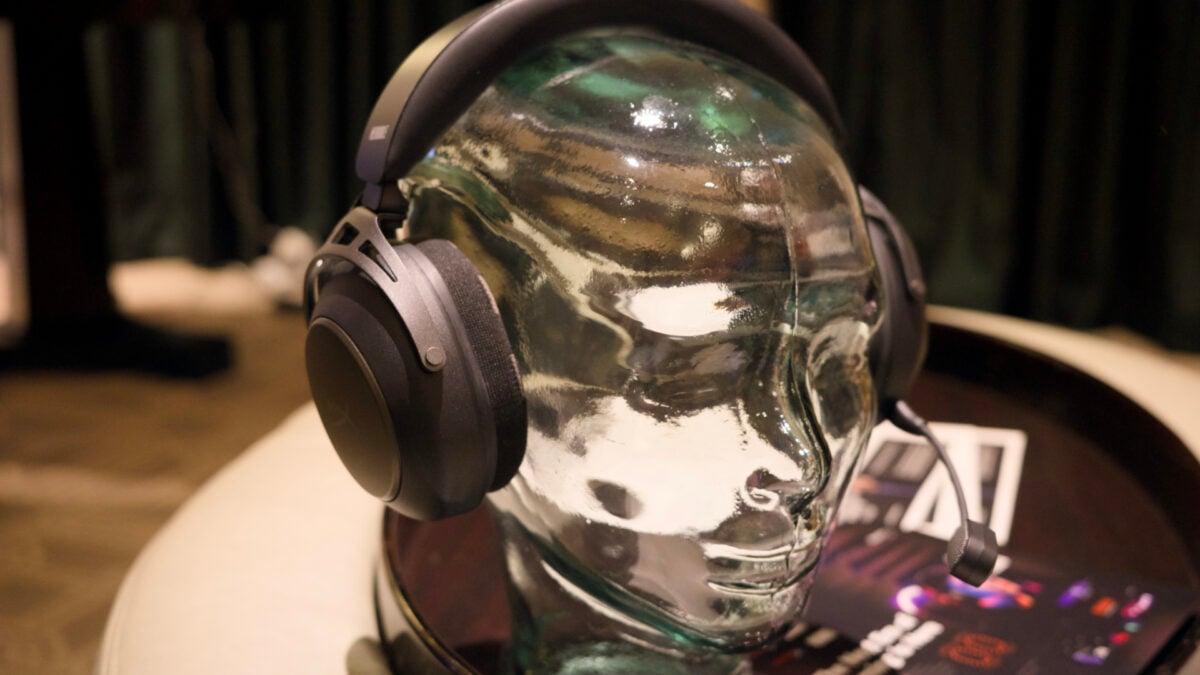
If my mind is as empty as the void, am I better at playing video games? According to Neurable, a company that makes EEG (electroencephalogram) technology for wearables, my cranium holds a very loose-fitting brain—a cerebrum that can zone out in 43 seconds or less. Is that good enough to take my aim in first-person shooters from subpar to acceptable?
Neurable has been around for a few years, and it has worked with companies like Master & Dynamics to craft headphones capable of reading your brainwaves. Why do you need a headset that can measure your electrical impulses? Neurable’s previous work suggested the technology could offer data to folk with attention deficit issues or otherwise track your ability to focus. It’s the kind of technology that works well in a clinical setting. Regular users will have a much harder time reaching any zen-like state just because their expensive headset tells them they’re stressed.
For its latest product, Neurable partnered with HP’s gaming brand HyperX on a new, weird gaming headset that incorporates the brainwave-reading technology. The difference this time around is that Neurable says the headset can offer an immediately discernable difference in how gamers play. By using special software to “Prime” your brain—meaning it helps you enter a flow state—you can play your video games with higher precision. Your shots will line up better, your inputs in fighting games will become tighter, and your clicks in a MOBA will strike like machine gun fire—or at least that’s the promise.
Time to ‘Prime’ 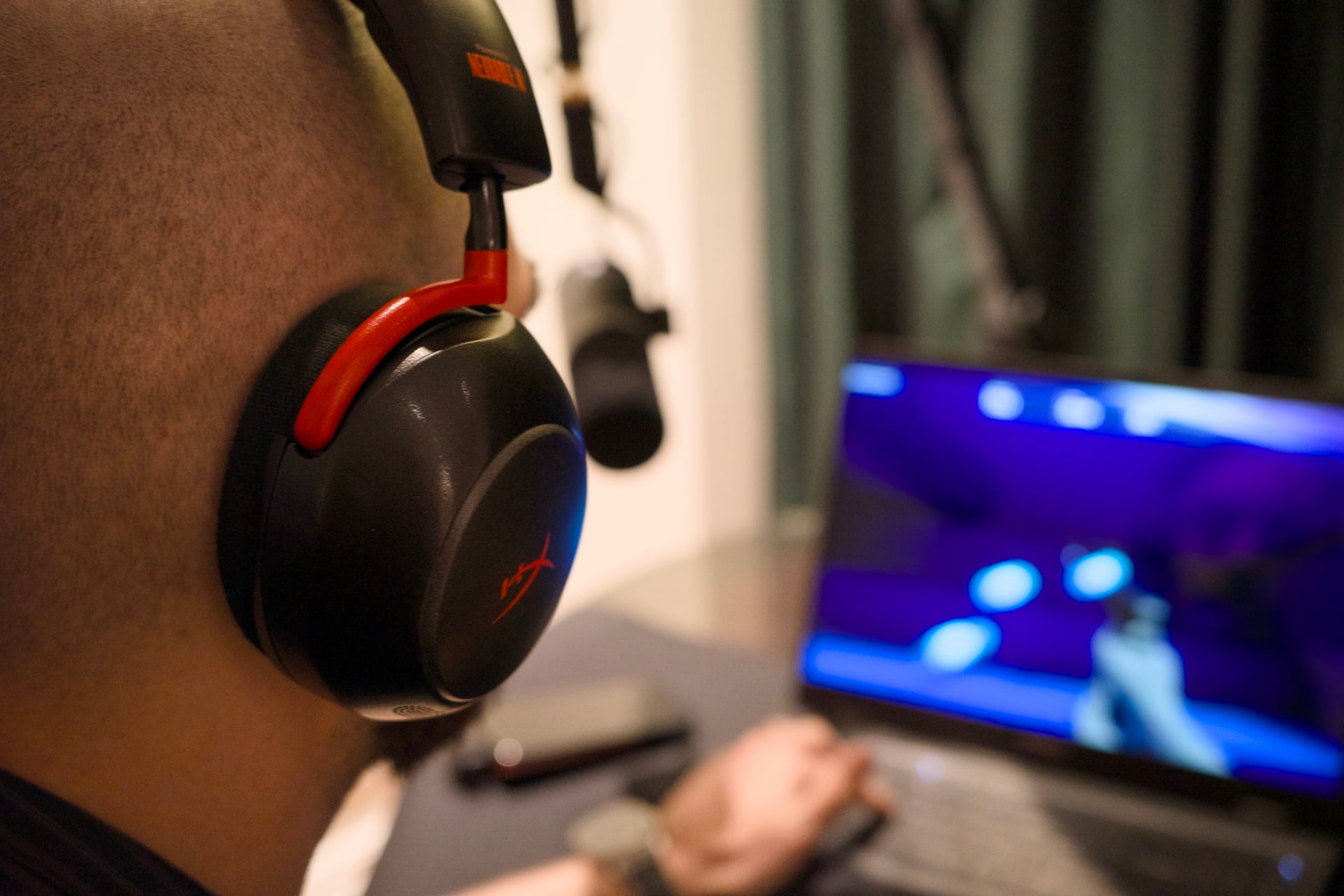 You’ll look like a gamer, and you’ll feel like one too. © Kyle Barr / Gizmodo
I sat down with Neurable’s head researcher, Dr. Alicia Howell-Munson, and company cofounder Adam Molnar at CES 2026 to try them out for myself. The company had a modified version of the HyperX Cloud Alpha 2 Wireless headset for me to use. The foam earcups were replaced by Neurable’s fabric EEG-reading pads. You strap these devices around your ears, and instead of using several diodes arrayed along your noggin, Neurable’s tech only needs the surface around your lobes to take readings.
First, the team had me shoot a few targets using the free AimLabs app, once as a practice round and again to record my score. I’m not a regular Counter-Strike or Valorant player, even though I have more than enough experience with first-person shooters on PC and consoles. I’ve largely eschewed any and all multiplayer games, not because I’m bad (I am) but because they stopped being fun long ago, when players started caring so much about skill and less about having any raucous fun like I did back in the early days of Forge in Halo 3. Still, I wasn’t terrible. I missed a few times, but my accuracy was still just above 89%, and my timing wasn’t shabby either.
The Prime software is still in development, though the actual program couldn’t be simpler. The company brings up a field of floating dots on the screen, and you stare at these stars until they coalesce into a single floating orb. The software is meant to offer a sense of feedback, where any distractions or jet lag you may be feeling will reduce the rate you get those dots moving. My time, as I already stated, took around 43 seconds. Howell-Munson told me it can take some people (ostensibly those who weren’t completely zoned out after five days at CES) far longer, upwards of four minutes if you’re less focused or more stressed. After priming, I entered AimLabs again. After clicking on orbs, I received a report telling me that I scored just below my previous attempt, but my accuracy had improved to 92%.
Built for the pro and wannabe-pro gamers 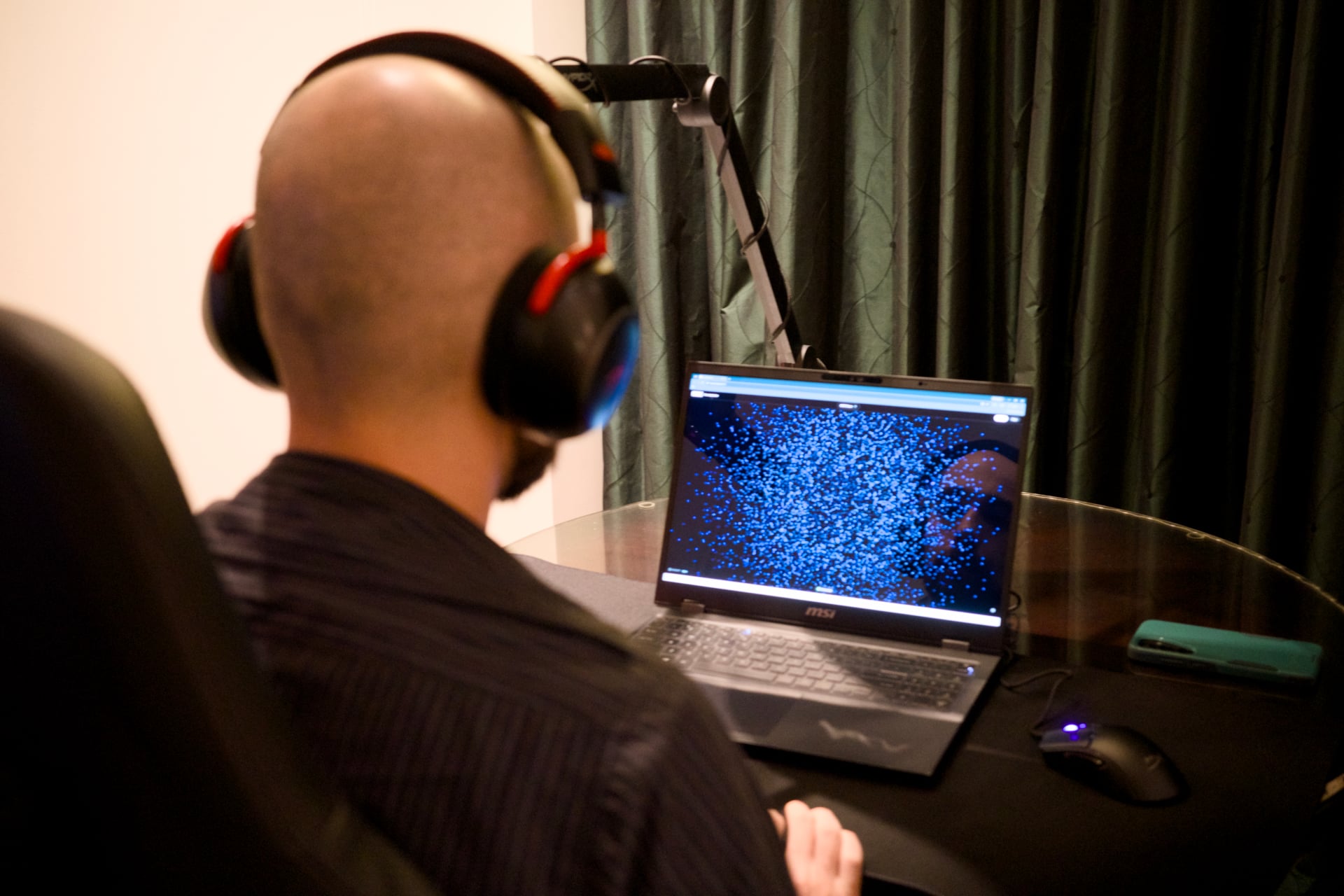 Neurable’s upcoming HyperX headset isn’t much without the additional “Prime” software to help players get into the god-like flow state. © Kyle Barr / Gizmodo
One test isn’t enough to prove anything, at least not scientifically. Howell-Munson said they tested the device with 13 collegiate first-person shooter (FPS) esports athletes, seven casual FPS players, and five more who had never played any FPS games. While 25 subjects doesn’t seem like a large sample size, players who went through the Prime application were more accurate, with esports players hitting a near-3% improvement in AimLabs. Reaction time for most players decreased by 38 to 39 milliseconds. I’m including the company’s paper on EEG priming that you can read for yourself.
The researcher also told me they did more tests with fighting game aficionados. It’s more difficult to get any data for those kinds of games, though they anecdotally reported feeling they were playing better than before they had used the headset and app. It’s not as if the headset is rewiring your brain. It’s simply making the process of entering your personal flow state faster by offering actual feedback about your mental morass.
Molnar promised its technology should be supported by a new HyperX headset set to release sometime later this year. The company didn’t offer any specifics about pricing, but if you look at Neurable’s past work with Master & Dynamics, it will likely be pricey. Judging by the promo materials on hand, HP’s next headset will be explicitly marketed to the kinds of hardcore gamers who care more about their K/D ratio than anything else. Perhaps it might get me through a few more bosses in Hollow Knight: Silksong, so long as my mind remains perfectly devoid.