
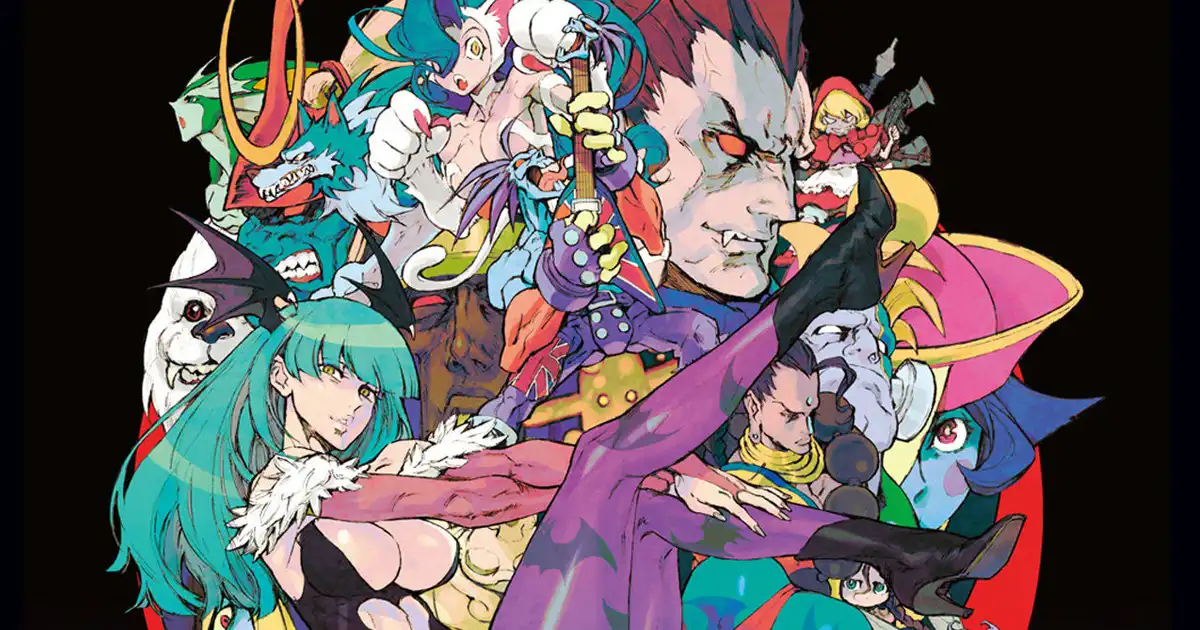

Just a few days ago, we got an update on the early registration numbers for Evo Japan 2026 and while the big headline was just how huge Street Fighter 6 is compared to all other fighters in Japan, there was another fact which made me exceptionally happy to see — the fact that Vampire Savior sits in 3rd place.
For such an old game to even beat out Tekken 8 in these early numbers (it likely won’t in the final numbers, but it’s still a strong start) is a fantastic thing and if there’s any title which deserves it, it’s the crown jewel of the Darkstalkers series. So with that in mind, I wanted to share some of the amazing things the Darkstalkers franchise provided to the fighting game genre which have become mainstays in the genre today.
The fighting game genre has a storied history and contributions have been made from the most unlikeliest of places, with several of them coming from games that nobody ever really talks about today. When doing research for this story, I found out that a game I’d never even heard of called Power Instinct introduced air throws, for example. Below, I’ll outline some of the things that Darkstalkers either introduced or popularized to shape fighting games into the genre we know it as today.
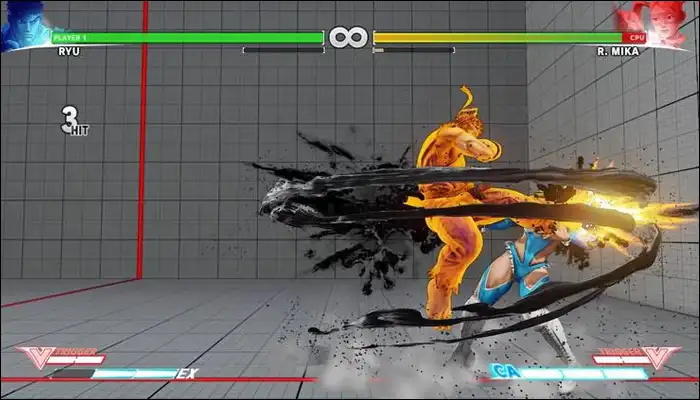
It may surprise you to hear that one of the most central parts of many 2D fighting games, EX moves, actually originated in the Darkstalkers series. Prior to this, meter had generally just been used to unleashed Super moves, but the Darkstalkers development team had the novel idea of using it to just enhance regular special moves as well as having access to Super attacks.
Given how natural of a thing this is now, especially in Street Fighter, but also in many other fighting games it’s hard to argue against how impactful of an addition it ended up being after it was added in the very first game in the series, Darkstalkers: The Night Warriors, back in 1994.
Even though we’ve seen a bit of a pivot with them in Street Fighter 6, opting to instead convert EX moves into Overdrive moves which use your Drive gauge instead of Super meter, the core concept is still the same — a juiced up special move which costs resources to use.
Of course, in Darkstalkers the EX moves were a lot more expensive than you may be used to, with them costing a whole bar of meter to execute. This neatly brings me to my next point, though, which is…
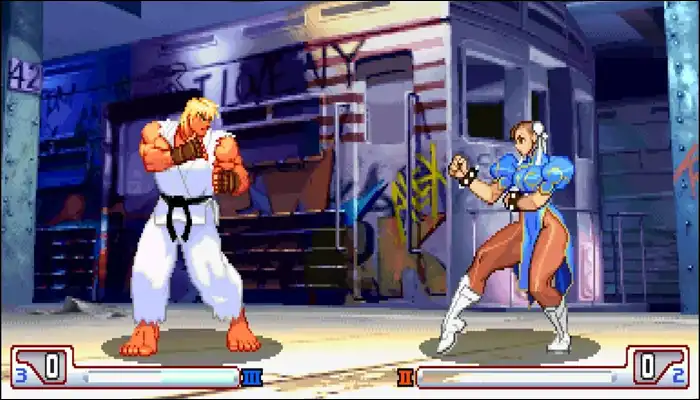
Before Darkstalkers came onto the scene, games which had Super bars just the one and once it was filled, you were able to use your finishing move.
However, likely in conjunction with the idea to give players access to souped up special moves in exchange for meter, Darkstalkers went much further and let you continuously build bars on top of bars, leading to the system we see in many games today.
While Street Fighter can be a bit on-and-off with having multiple Super bars or just a single one, it’s left its mark on many other series as well such as Marvel vs. Capcom and even though Arc System Works games like Guilty Gear and BlazBlue don’t use multiple bars, the principle of using part of your resources to unleash your biggest super moves is still the same there as well.
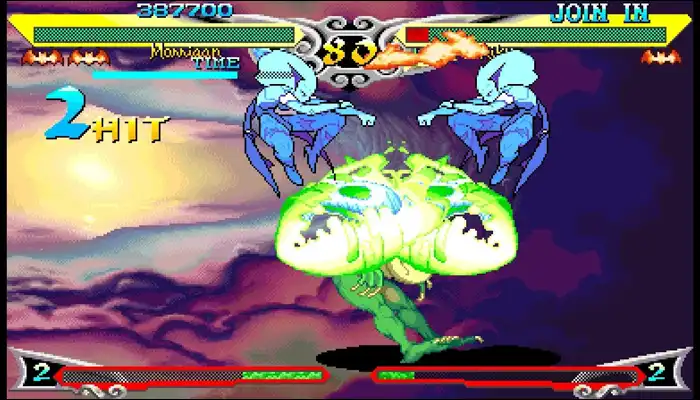
Although Super moves had existed for a while when Darkstalkers came out, the idea of using a Super to put yourself into a buffed state was a fresh idea.
In the second Darkstalkers game, Night Warriors (also known as Vampire Hunter), J. Talbain had a super called Mirage Body which would put him in an enhanced state where he got faster.
But they didn’t just come up with that idea, but in Vampire Savior they put it on the entire cast via a type of move called “Dark Force”.
For the exchange of using your bar, you could activate a special mode exclusive to your character which would give you enhanced abilities in various ways.
Morrigan, for example, had her Astral Vision where she clones herself and attacks from both sides, a move which definitely got more popularized from Chris G’s team in Ultimate Marvel vs. Capcom 3.
Installs are now very commonplace across fighting games and are one of the various Super move types which can show up, but Darkstalkers paved the way for it.
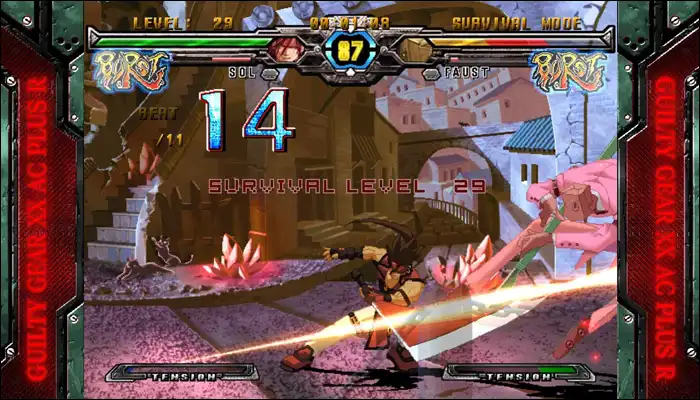
There had been games before Darkstalkers which had limited sets of chain combos where moves would go into each other, but Darkstalkers went the whole country yard and made it so that you could go from weaker normals to stronger normals seamlessly.
Chain combos are used in many different franchises and under different names, sometimes referred to as the “magic series” or in the Guilty Gear series or Arc System Works games in general known as gatlings, these are pretty much a mainstay of fighting games even if not all of them have it.
Even games like Street Fighter which tend to be much more link-oriented have limited chain combos in the form of Target Combos, so even if you haven’t played any games with full chain combos the concept should not be unfamiliar to you.
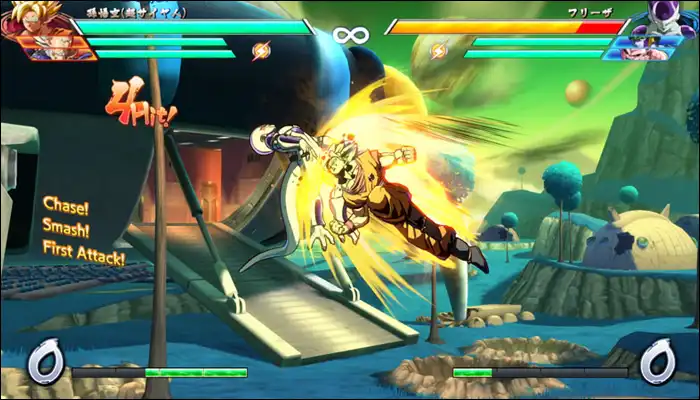
Being able to block in the air was also something that first appeared in the Darkstalkers games, which makes sense and plays into a later point on this list as well. With the rapid movement and high aerial mobility, it was only natural that blocking in the air should be a part of the game.
Air blocking isn’t a catch-all and you’ll still get hit by grounded moves, but it gave you the option to meet your opponent in the air since airborne attacks were blockable if you were also in the air.
This helped to not make jumps too overpowered by still always having access to blocking, but giving more options in a game which emphasized aerial battles and let players duke it out above the ground just as well as on the ground.
It’s another feature which got added to the Marvel vs. Capcom game and also finds itself in many other titles, pretty much any of them which have a good focus on aerial movement. Many of the games known as “airdashers” or “anime fighters” tend to employ this since unsurprisingly typically fall in the air movement category.
But before Darkstalkers, fighting games were very grounded and pretty much had a set restriction on what you could expect as far as movement went.
There were some exceptions, airdashing had appeared in games before it, but the general idea that the battle can take place both on the battlefield or above it at any time was most definitely novel.
Darkstalkers took that step and if you think about how many fighting games today fully embrace that as a large part of their identity, with long juggles where the player stays in the air the entire time or just flying around as a part of neutral, it’s clear that it was a significant contribution.
While they didn’t necessarily invent air movement, they made it into a heavy focus and showed that fighting games can be played on more than just one plane… and I don’t mean in the lane system sense.
In short, the Darkstalkers series may not have sold insane amounts or be as recognized as franchises like Street Fighter, Tekken or Guilty Gear are, but it very much carved out a very significant niche in fighting game history and introduced many mechanics that we constantly see reused or reinterpreted today.
Given that Vampire Savior already has over 100 entrants at Evo Japan 2026, it’s going to be amazing to see the action unfold when some of Japan’s, or indeed the whole world’s, finest players gather to fight it out in this classic and I hope this article made you more excited to check it out.
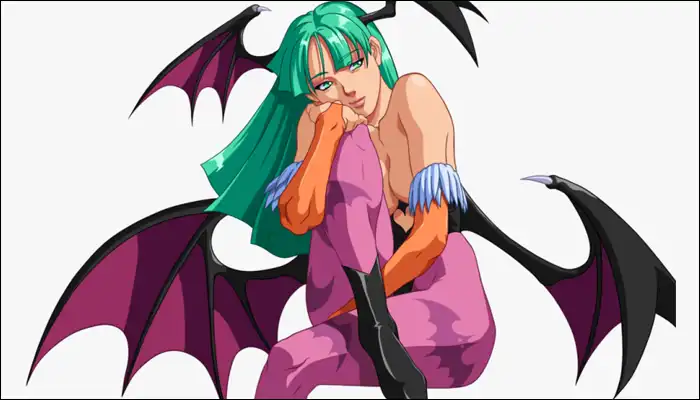
Also finally, as a bonus, let me give a special shoutout to the very biggest contribution Darkstalkers made to fighting games — Morrigan Aensland.
You know I’m right.