
Here's a little known trick. Antivirus scans can find system instabilities faster than p95, OCCT, or corecycler. It's a very diverse, bursty, multithreaded workload, that cycles your cores from idle to load repeatedly, very rapidly (scanning tens, hundreds of thousands of files). Testing a wide combination of load conditions across all of your CPU cores.
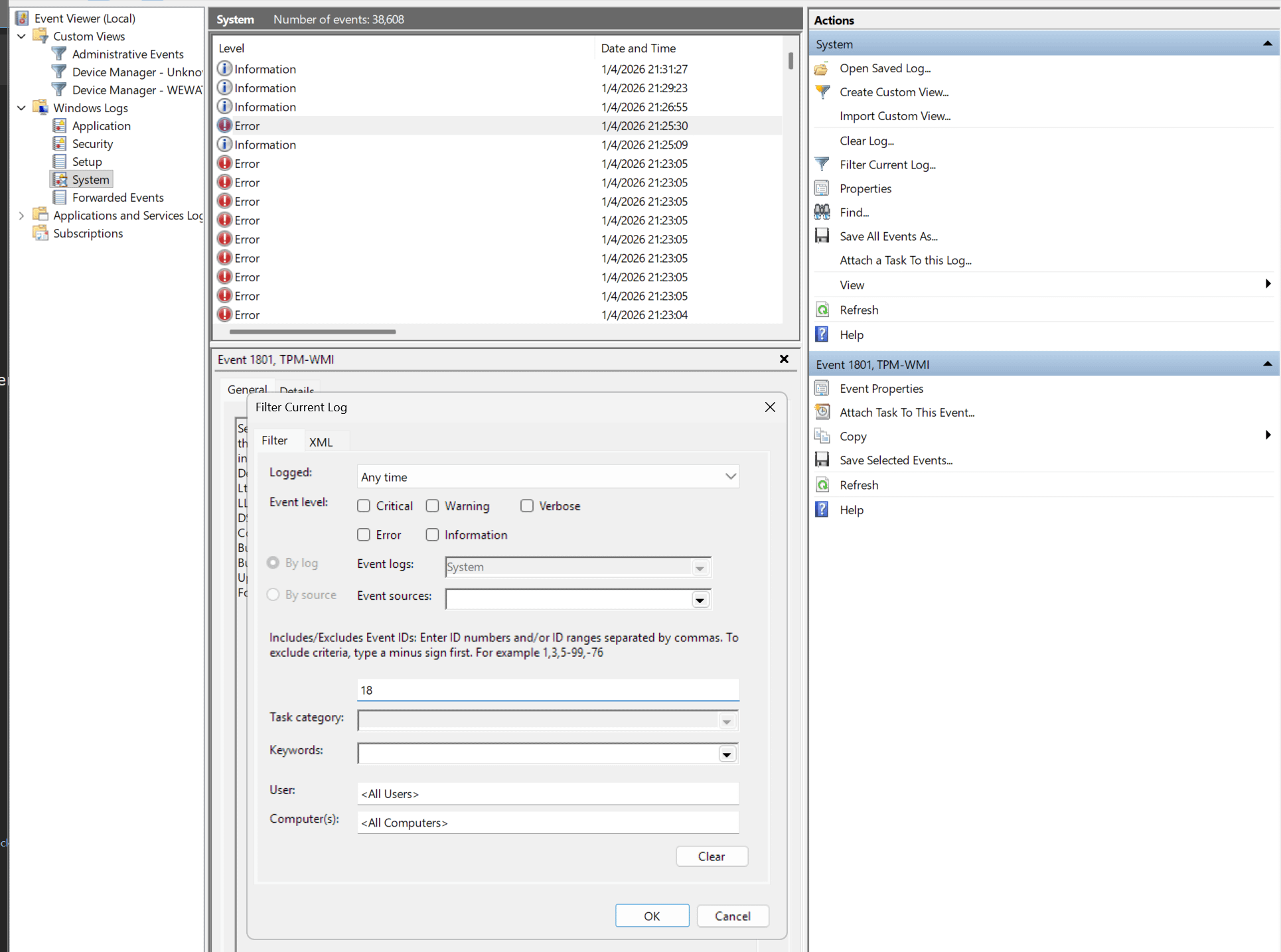
Also, AV scans operate in ring 0, in the kernel space. User programs in ring 3 are sandboxed by the OS, and apps can continue to run, even with errors caused by an unstable undervolt/overclock. Errors in kernel space caused by AV scans will immediately kill your system. Fast failure is good! And not only that, Windows will log the WHEA failure and tell you exactly which core it came from (filter for Event 18 and check APIC ID. For hyperthreaded cores, APIC 0,1 is Core 0, APIC 2,3 is Core 1, and so forth).
Of course, you'll want to use the traditional methods (power virus AVX, and max clock SSE in p95/OCCT). But I've found that AV burst workloads are much more demanding. If an overclock/undervolt can survive multiple full system AV scans, then likely it will pass traditional long stress testing. This isn't quite true the other way around.