
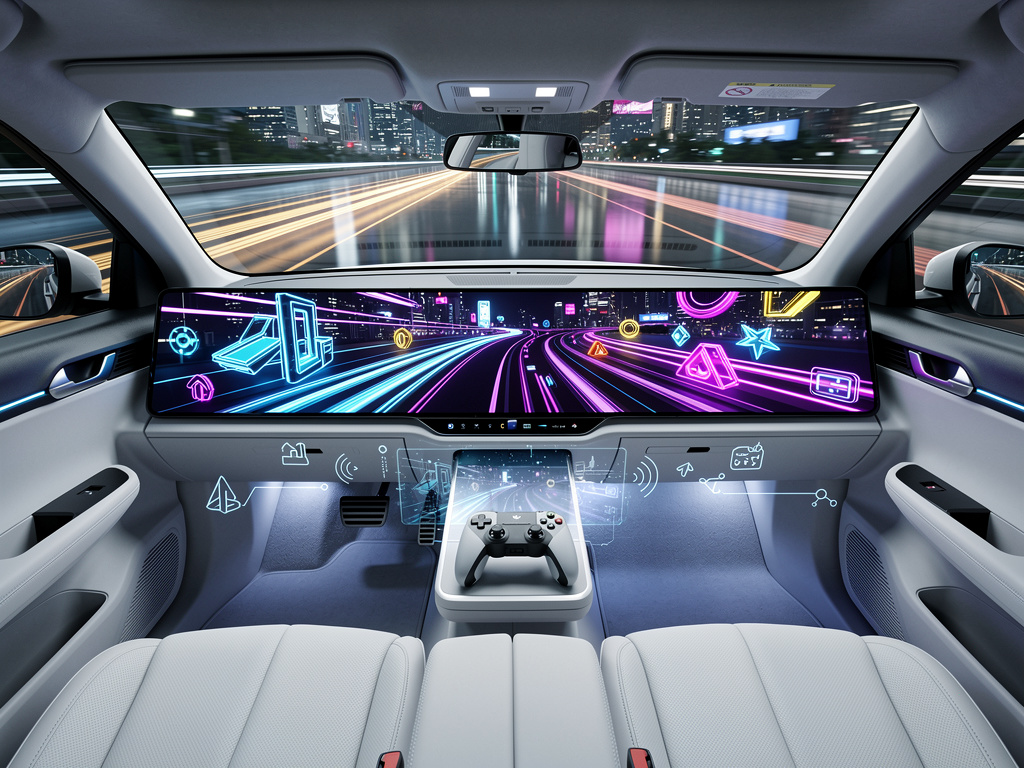
In a move that blends automotive innovation with entertainment technology, Sony Honda Mobility has unveiled a groundbreaking feature for its upcoming electric vehicles: seamless integration with PlayStation Remote Play. This development allows passengers to stream and play games from their PlayStation 5 or PlayStation 4 consoles directly within the car, marking a significant step in the convergence of mobility and digital leisure. Announced just days ago, this initiative positions the joint venture between Japanese giants Sony and Honda as a pioneer in in-car entertainment, potentially reshaping how consumers perceive time spent in vehicles.
The partnership, known as Sony Honda Mobility, was established in 2022 to develop premium electric vehicles that leverage the strengths of both companies. Sony brings its expertise in electronics and entertainment, while Honda contributes its automotive engineering prowess. Their flagship model, the Afeela, is set to hit the market in 2026, with pre-orders beginning next year. According to details from the official announcement, the Remote Play feature will enable users to connect their home console to the vehicle’s infotainment system via a stable internet connection, streaming gameplay to the car’s displays.
This isn’t just about playing games on the go; it’s a strategic play to differentiate in a crowded electric vehicle market. As autonomous driving technologies advance, the time passengers spend idle in cars could become prime real estate for entertainment consumption. Sony Honda Mobility’s executives have emphasized that this integration is designed for passengers only, with safety features ensuring the driver remains focused on the road. The system requires the console to be powered on at home, adding a layer of dependency on home setup but ensuring high-fidelity gaming without the need for onboard hardware capable of running PS5 titles natively.
The Technical Underpinnings of In-Car Gaming
Delving deeper into the technology, PlayStation Remote Play isn’t new—it’s been available for years on devices like smartphones and PCs. However, embedding it natively into a vehicle’s ecosystem is unprecedented. As reported by Engadget, the Afeela’s infotainment system will support this feature through over-the-air updates starting next year, allowing for continuous improvements without hardware changes. This approach mirrors how Tesla updates its vehicles, but with a gaming twist that could appeal to a younger, tech-savvy demographic.
Industry analysts note that the integration relies on a robust internet connection, with Sony recommending at least 15 Mbps for smooth performance. In the context of electric vehicles, this means leveraging 5G connectivity built into the car, a feature already planned for the Afeela. Posts on X from tech enthusiasts highlight excitement around this, with users speculating on how it could transform long road trips into immersive gaming sessions, though some express concerns about data usage and latency in rural areas.
Beyond the consumer appeal, this move has implications for Sony’s broader ecosystem. By extending the PlayStation experience into vehicles, Sony could boost user engagement and potentially drive sales of PS5 consoles and games. Honda, on the other hand, gains a unique selling point in a market where competitors like Tesla dominate with their advanced infotainment systems. The joint venture’s press release, as covered by AFEELA’s official site, underscores that this is the world’s first in-car integration of PS Remote Play, setting a benchmark for others to follow.
Market Implications and Competitive Dynamics
The electric vehicle sector is heating up, with traditional automakers and tech firms vying for dominance. Sony Honda Mobility’s announcement comes at a time when consumer expectations for in-car experiences are evolving rapidly. A report from Push Square describes it as a “rare example of corporate synergy,” albeit not overly exciting on the surface, but its potential to lock in brand loyalty is substantial. For instance, families with gamers might prioritize the Afeela for its ability to keep passengers entertained during commutes.
Looking at the competition, Tesla has long integrated gaming into its vehicles, allowing titles like Cyberpunk 2077 to be played on the car’s screens using onboard computing power. However, Sony’s approach differs by tying into an existing console ecosystem, which could be more cost-effective and scalable. News from IGN points out the catch: users need their home console active, limiting it to Remote Play rather than true cloud gaming. This distinction might appeal to purists who prefer low-latency experiences but could deter those without a PS5.
On X, discussions reveal a mix of enthusiasm and skepticism. Some users reminisce about earlier concepts from 2022, when Sony and Honda first teased PS5 integration, with posts imagining built-in consoles. Recent buzz, however, focuses on the practicality of streaming, with concerns about motion sickness and battery drain in electric vehicles. These sentiments underscore the need for Sony Honda Mobility to address real-world usability in their marketing.
Safety, Regulations, and Ethical Considerations
Safety remains paramount in this integration. The system is explicitly for passengers, with the vehicle’s software likely disabling access for the driver while in motion, similar to how navigation apps lock out inputs. Regulatory bodies, particularly in the U.S. and Europe, will scrutinize such features to ensure they don’t contribute to distracted driving. As electric vehicles push toward higher levels of autonomy, features like this could become more viable, but for now, they’re tethered to human oversight.
From a business perspective, this could open new revenue streams. Sony might explore in-game purchases or subscriptions tailored for in-car play, while Honda could bundle connectivity services. Coverage in Eurogamer.net highlights the “catch” of needing a home console, but also praises the innovation for making commutes more enjoyable. Industry insiders speculate that this could lead to partnerships with game developers for car-optimized titles, perhaps with motion controls synced to the vehicle’s movements.
Moreover, the environmental angle ties in neatly. Electric vehicles like the Afeela promote sustainability, and integrating entertainment could encourage more people to adopt them by making ownership more appealing. However, critics on X question whether this distracts from core EV advancements like battery range and charging infrastructure, with some posts labeling it a gimmick amid broader industry challenges like supply chain issues.
Innovation Trajectory and Future Prospects
Tracing the evolution, the Sony-Honda partnership has been building toward this since their joint venture announcement. Early concepts at CES 2024 even demonstrated controlling the car with a PS5 DualSense controller, a stunt that garnered massive attention on X, with videos going viral. While that’s not production-ready, it illustrates the creative fusion of gaming and automotive tech. Now, with Remote Play, they’re delivering a tangible feature that builds on that hype.
Looking ahead, this could pave the way for more immersive experiences. Imagine augmented reality overlays on the windshield tying into games, or multiplayer sessions across vehicles in a convoy. Vice reports on how this makes the Afeela the first PlayStation-integrated EV, potentially influencing competitors like Ford or GM to pursue similar tech tie-ins.
Challenges abound, though. Connectivity reliability is crucial; spotty signals could frustrate users. Additionally, the cost of the Afeela, expected to be premium-priced, might limit its audience initially. Yet, as per VGC, this positions Sony Honda Mobility as a leader in blending mobility with digital lifestyles, appealing to a generation that values seamless tech integration.
Broader Industry Ripple Effects
The announcement has sparked conversations about the future of in-vehicle entertainment across the board. Automakers are increasingly viewing cars as “devices on wheels,” with software defining the experience. Sony’s move could pressure rivals to accelerate their own integrations, perhaps with Xbox or Nintendo ecosystems. On X, tech accounts are abuzz with predictions of a gaming arms race in EVs, from built-in arcades to VR headsets for passengers.
Economically, this bolsters Sony’s gaming division amid a slowdown in console sales. By extending playtime into commutes, it could increase overall engagement metrics, vital for investor confidence. Honda, facing stiff competition in the EV space, gains a differentiator that aligns with its innovation heritage.
Ultimately, this integration reflects a shift where vehicles evolve from mere transportation to multifaceted hubs. As Outlook Respawn details, the feature will roll out via software updates, ensuring longevity. For industry watchers, it’s a harbinger of how entertainment giants might redefine mobility, one game at a time.
In reflecting on this development, it’s clear that Sony and Honda are not just building cars; they’re crafting experiences that blur lines between home and highway. As the Afeela prepares for launch, its success could dictate whether gaming becomes a standard in future vehicles, influencing design, marketing, and consumer expectations worldwide. With ongoing advancements, the road ahead promises to be as engaging as the games themselves.