
The term gamification, which means applying game design principles in other contexts, became a buzzword about 15 years ago, mainly driven by companies offering to gamify business processes.
The approach aims to leverage game mechanics to increase engagement and motivation (“Get on the leader board!” “Gain power-ups!” “Level up your character!”), so it naturally became popular in education. Multiple studies show that incorporating game elements into learning tasks can boost results.
The idea snowballed, as shown by the number of conferences dedicated to these ideas. It is now also used in medicine, usually to boost treatment compliance. But the potential of games for science doesn’t stop at gamification. The therapeutic potential of different kinds of games is being explored in areas ranging from mental health to stroke.
In fact, the number of ways in which scientists are exploiting various aspects of games today has exploded. It’s happening in increasingly diverse fields, in wildly differing ways.
Here are just a few recent examples:
Chronic Pain
An interactive game that trains people to alter brainwaves associated with chronic nerve pain, using neurofeedback, has shown promise in a trial published in June. Neurofeedback is a therapeutic technique that measures brainwaves and provides real-time visual or audio feedback to enable users to learn to control their own brain activity.
The researchers’ previous work suggested that changes in brain activity in the thalamus linked to chronic nerve pain interfere with communication between the thalamus and other regions, especially the somatosensory cortex, which registers pain.
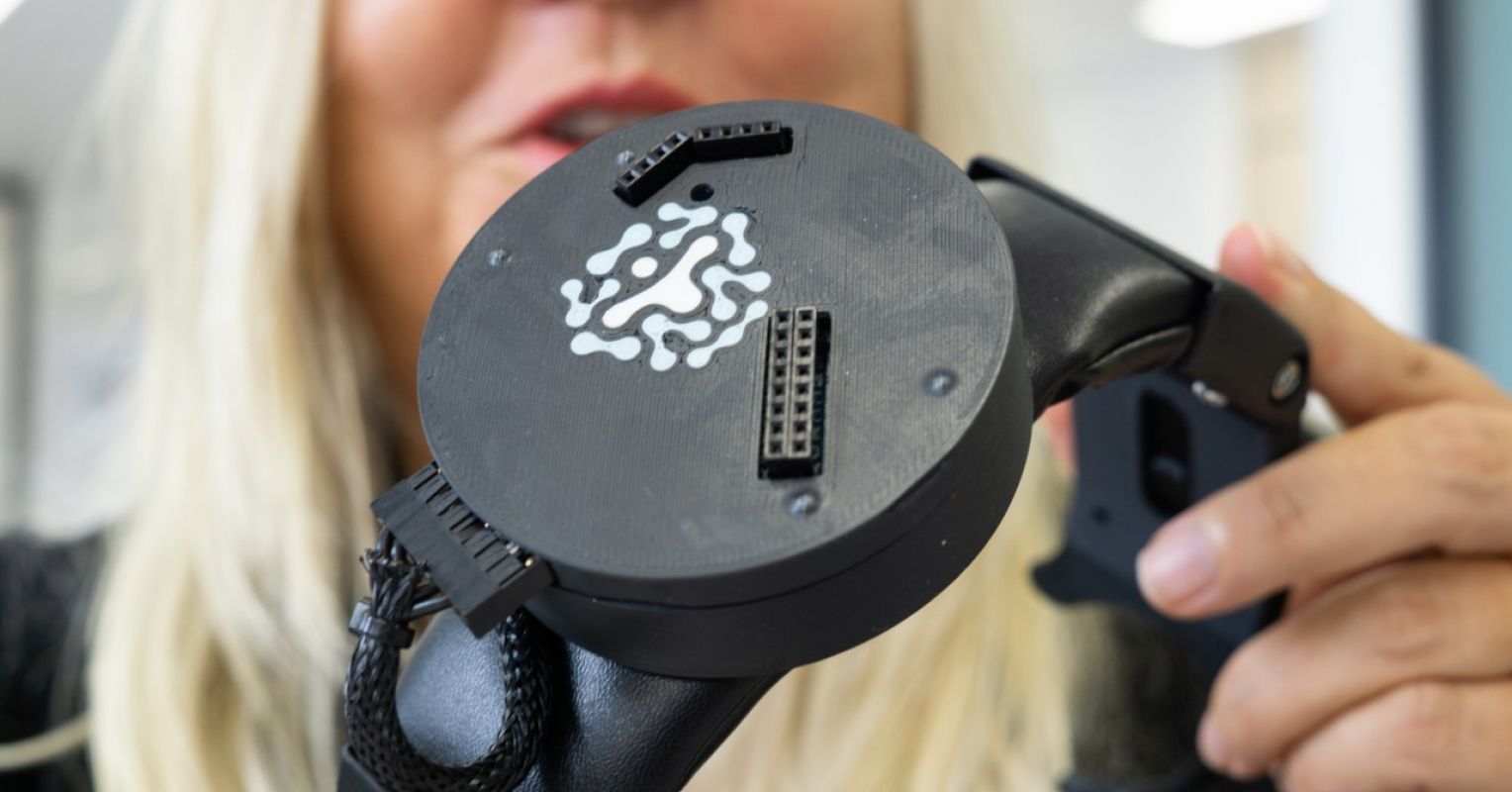
The technology, called PainWaive, teaches users how to regulate this abnormal activity, with the app responding to changes in users’ brainwaves in real time. The kit consists of a bespoke headset and a tablet preloaded with the game app.
The researchers tracked four participants with corneal neuropathic pain who played the game over four weeks. User data was uploaded to the researchers for remote monitoring.
Three participants showed reductions in pain severity and pain interference in a follow-up assessment five weeks later. Interview measures show the intervention was highly acceptable and engaging.
This technology uses a game as a form of self-treatment. The researchers say this empowers patients to manage their own pain at home, offering a non-invasive alternative to opioids.
The small sample size restricts the generality of the findings, but the team are recruiting for two future trials: one for chronic back pain, and one for treating neuropathic pain in people with spinal cord injury.
Understanding Autism
A study published this June used the card game Dixit as the basis for a new qualitative analysis method to examine the lived experience of autism. The researchers asked 35 autistic participants to select picture cards that best described autism and explain their choices.
Participants’ responses revealed three main themes: challenges (such as isolation and sensory overwhelm), strengths (creativity, diversity), and society (social barriers, stereotyping).
The method, termed “Dixit-elicitation” by the researchers, exploits the safe space and structured interactions aspects of games to help autistic people express themselves.
The study suggests it can facilitate communication between autistic and non-autistic people, leading to “a more nuanced understanding of the metaphors and myths experienced by autistic people”. The researchers say the technique may have therapeutic and educational applications.
The same team published a study last year, which found that autistic people are overrepresented among board-gamers, and explored “how and why board games may be a popular hobby amongst the autistic population, and its potential utility for improving autistic wellbeing.” This topic deserves more attention from a “Psychology of Games” blog, and I may return to it, but in the meantime this wonderful piece from Tim Clare expresses it beautifully.
Vaccine Misinformation
Vaccine misinformation got a jab in the arm during the pandemic, when it’s estimated to have reduced vaccination rates in the US by over 2%. More generally, childhood vaccination rates have been declining for years, sometimes dropping below the levels required for herd immunity. In other words, public health is under threat from contagious misinformation.
A major problem is that vaccine myths are constantly evolving, requiring a never-ending game of whack-a-mole to combat. Research also suggests that debunking misinformation once it has taken root is at best partially effective and can even backfire. A different approach, known as “prebunking” aims to inoculate people against misinformation before they’re exposed.
A study published in August describes a game inspired by this approach, called Bad Vaxx. The game simulates social media, and players are exposed to “weakened doses” of common tricks used to manipulate people online. There are four “villains” representing these tactics: Ann McDotal (emotional anecdotes), Dr Forge (fake expertise and pseudoscience), Ali Natural (the naturalistic fallacy), and Mystic Mac (conspiracy theories). Players take on the roles of either one of these characters, or someone fighting against them.
The researchers asked participants who had played the game how manipulative they found misinformation, how confident they were in that judgement, and whether they would share posts they encountered. These were based on real examples representing the tactics employed in the game, and also included non-manipulative, credible content.
The results showed that participants got better at spotting misinformation, more confident in discriminating between real and fake information, and made better choices about what to share. Playing as the “good guy” was slightly more effective than playing a villain.
This approach uses a game to help players learn how to recognize manipulation, as well as motivating them to resist it. The team hopes it can be integrated into educational and medical settings and used in public health campaigns, to help immunize populations and slow the spread of misinformation.
There’s More
Other recent examples in medicine include a sleep-tracking game that improved sleep measures and BMI in some users and a VR game integrating smell that improved visuospatial memory in older adults, suggesting uses in mitigating cognitive decline. VR has also been used for applications as diverse as physical rehabilitation and treating psychosis.
There are also games that tackle political polarization, and climate change, but that’s a topic for another post. Stay tuned!
Most of this research is not merely gamification. These studies go beyond just using points, badges and level ups to increase motivation for educational or medical uses. They illustrate a progression, from other types of therapeutic use, to leveraging widely different aspects of games for applications ranging from research tools to public health interventions.
Each study represents an important topic in itself. Together they illustrate how diverse the applications of games have become. This is likely to continue as AI is brought to bear on challenges facing the field.
You may be wondering why this is happening? I don’t have a study to answer that question, but I do have a theory.
NASA’s ranks are famously packed with sci-fi geeks, and I suspect something similar is going on here. Gamers who lived through explosions of various kinds of games grew up and became scientists. The buzz around gamification likely nudged them to think about using games more broadly. Some ideas probably didn’t work, but those that did may now be bearing fruit.