
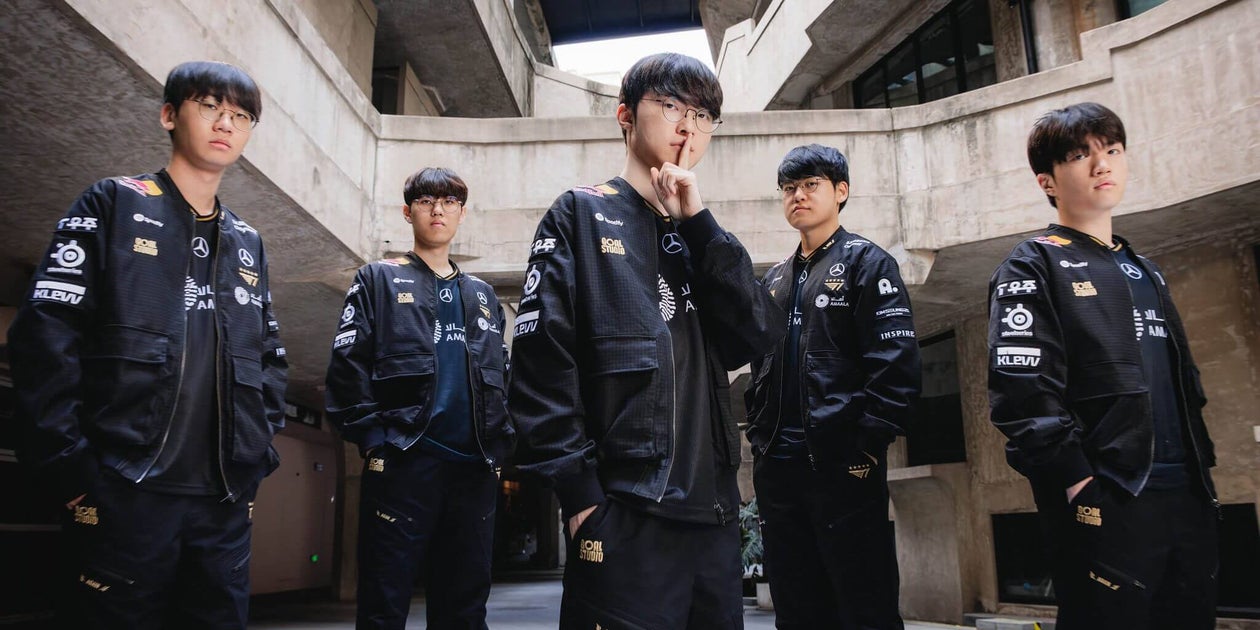
The South Korean esports superstar known as Faker has been so good for so long that his North American sports comparisons require periodic updates.
Lee Sang-hyeok, known to the gaming world as Faker, has been called the Michael Jordan of competitive gaming. For those who prefer a different basketball GOAT, the League of Legends player also gets linked to LeBron James. A recent story put Faker in the company of icons such as Lionel Messi, Tiger Woods and Sidney Crosby.
The 29-year-old Seoul native looks poised to complete a three-peat Sunday in Chengdu, China, where his team, T1, faces first-time finalist kt Rolster in an all-Korea matchup for the 2025 League of Legends World Championship (LoL Worlds). The winning team receives $5 million, plus a cut of sales from special in-game cosmetics — custom character outfits known as skins — created with the winners.
THE #WORLDS2025 FINAL: T1 VERSUS KT pic.twitter.com/zVsLvRhoIQ
— LoL Esports (@lolesports) November 2, 2025
The potential personal milestone for Faker coincides with an anniversary for the sport: This marks the 15th year of the LoL Worlds, as the party gets a little bigger every fall.
In advance of this year’s showdown, The Athletic asked Faker and others who have made esports history to reflect on the best moments, from early “basement vibes” days to today’s global spectacle.
A league of his own
What has Faker savored most?
“I can’t just pick one favorite memory,’’ he replied through email via a staffer at Riot Games, which develops the game and hosts the annual tournament, “because all the times at Worlds are memorable for me.”
Fair enough, as Faker has an unprecedented five Worlds titles (2013, 2015, 2016, 2023 and 2024). It’s like asking him to pick a favorite child.
Faker was dominant at age 17, and he’s still dominant as he nears 30.
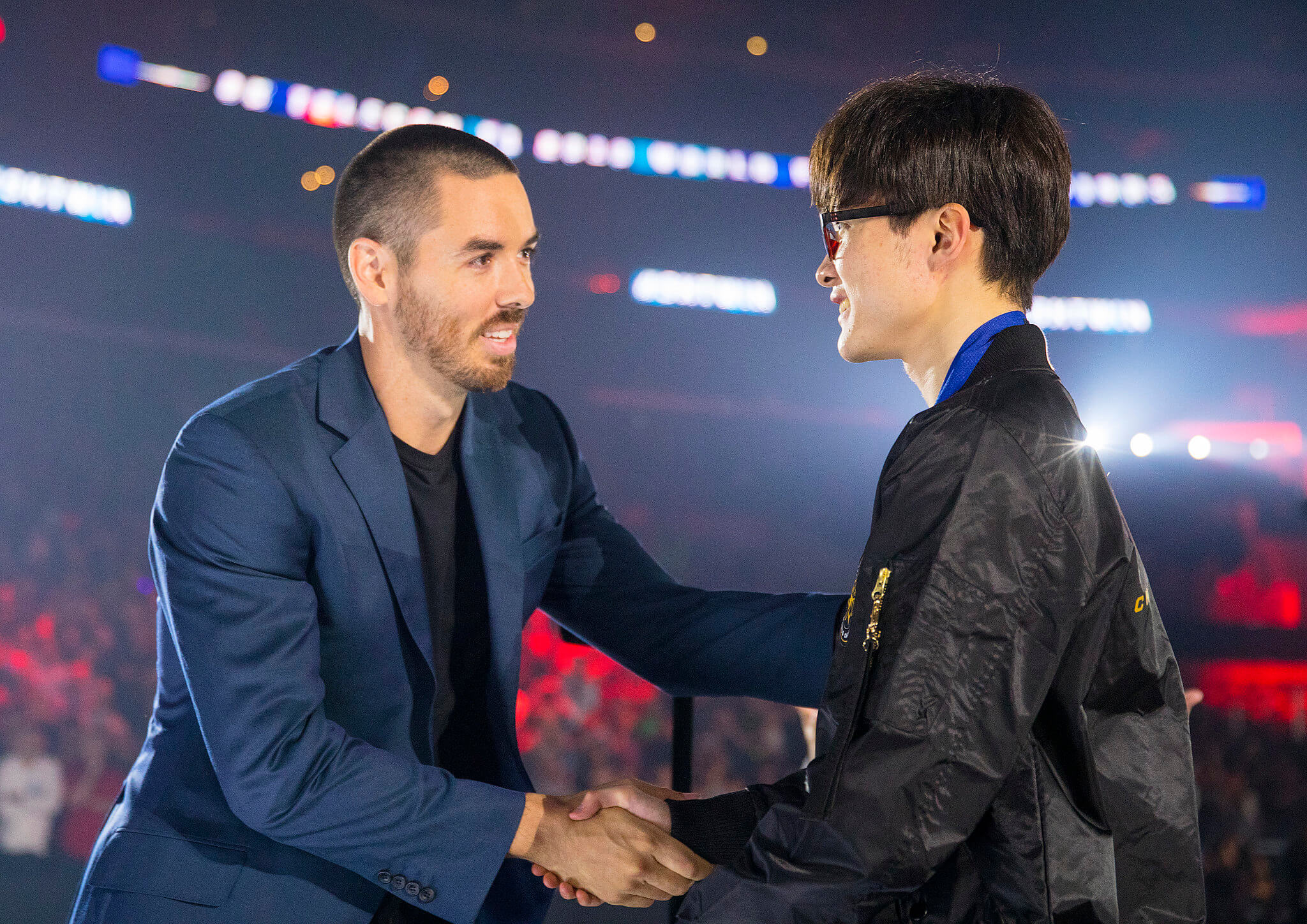
Riot Games co-founder Marc Merrill congratulates Faker at the 2016 Worlds. (Courtesy of Riot Games)
Faker and T1’s road to this year’s Worlds finals took a detour via the play-in stage amid regular-season stumbles. Yet Faker’s constant evolution somehow keeps him ahead of each wave of challenging prodigies.
“I think a lot of people kind of assume that Faker has just been consistently the best — and he hasn’t,’’ said Emily Rand, a broadcast analyst at Worlds and former esports journalist for Yahoo and ESPN. “I actually think that makes his story even better, right?
“There’s a resiliency in having these low points in your career and being able to pick yourself up, change your gameplay again, as all these younger players are coming up around you. I find that really impressive and inspiring.”
Whether or not he hoists the newly designed trophy, Faker said he is honored to be part of the journey.
“It’s great to see the league still strong,” he wrote. “It’s unbelievable to think that it is the 15th anniversary, and it is great to have the opportunity to be one of the teams at Worlds this year.”
While Faker’s response is about as consistent as he is on the keyboard, Rand is more amazed by the person than his trophy cases.
“To be that unaffected and understand that you’re such a source of pride for your country is really remarkable,’’ Rand said. “It doesn’t happen with a lot of traditional sports athletes that I’ve talked to, and it doesn’t always happen with a lot of esports athletes, either. I think that’s really impressive.”
For Marc Merrill, who co-founded Riot Games in 2006 and co-led the development and launch of League of Legends, it only made sense that Faker was chosen as the inaugural inductee to the LoL Hall of Legends in 2024.
“Faker is of that caliber, right?” Merrill said. “He’s humble and likable and cool and a good teammate. It’s sort of an interesting question of, ‘Will there ever be another?’ He’s just one of one, and it’s a beautiful thing.”
Other legends of the realm
The second inductee to be immortalized was Jian “Uzi” Zi-Hao, whose electrifying performance at Worlds in the 2010s played a pivotal role in bringing esports into the mainstream in his homeland of China. Despite never winning a Worlds title, Uzi remained one of the most feared names in LoL before retiring as a national hero to millions. Despite never winning the big one, Uzi left a huge impact on the game.
He has favorite memories, too.
“The one that stands out most is probably the year I first made it to the finals,’’ Uzi said, recalling his 2012 run through an interpreter. “Even though we didn’t win the championship, I still remember the atmosphere, the cheers from the crowd and the feeling of fighting alongside my teammates until the very end. That moment made me even more certain of my choice and reminded me why I’ve kept going all these years.”
For Uzi, being part of the game in those formative years gives him an appreciation for how much the game has grown.
“Worlds has always been the most meaningful stage of my career,’’ he said. “I’ve witnessed the growth and evolution of League of Legends and the entire esports scene. … Every year, new players step onto the stage to write their own stories. I feel proud to have been part of that journey.”
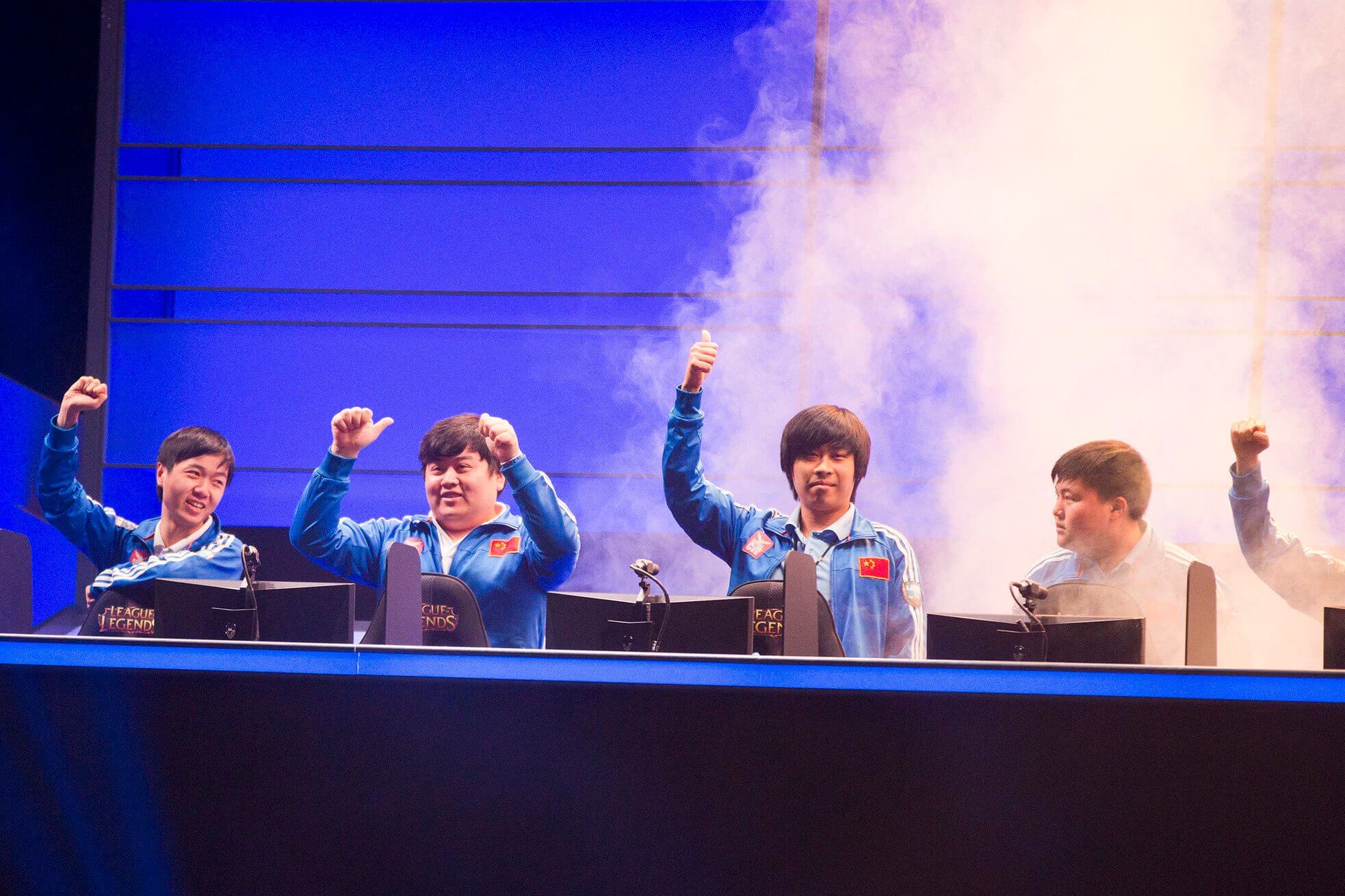
Uzi (fourth from left) was one of the most feared names in LoL. (Courtesy of Riot Games)
Around the same era in North America, Doublelift, a Californian whose real name is Yiliang “Peter” Peng, authored his own legend and made headlines.
He once said of the competition: “Everyone else is trash.” In choosing his favorite moment from the past 15 years, Doublelift brought some of that fiery energy again in recalling a group stage triumph by Team Liquid in 2019.
“We had just smoked DWG in a massive upset, and I ended the game in a really cool way,’’ he said. “I had never felt my performance peaking this hard at Worlds and ended up playing well for our short remainder in the tournament.
“I remember feeling both unstoppable and extremely alive.”
Alas, Team Liquid finished 3-3 in that stage and failed to advance.
“Nothing can ever compare to the feeling of playing against the best in the world and beating them, and similarly, nothing can compare to the feeling of spending the entire year working towards a goal and falling short,’’ Doublelift said. “That’s the double-edged sword of competition, and I’m truly grateful to have experienced it.”
Basement to bird’s nest
The first Worlds in 2011 had 1 million viewers. Last year? Nearly 50 million peak viewers, according to Riot Games. Not bad for something that started from a broadcaster’s “basement.”
David “Phreak” Turley was a shoutcaster — esports’ version of a commentator — for the first Worlds in 2011. An eight-team showdown took place at Dreamhack, a gaming convention, in Jönköping, Sweden. At stake was a $100,000 cash prize.
For the record, Phreak doesn’t even have a basement. But the metaphorical bunker known as “Phreak’s Basement” serves as the unofficial birthplace of League of Legends Worlds and a symbol of just how far things have come.
The venue for Dreamhack was nothing like the current modern arenas.
“It was a functional aircraft hangar or something,” Phreak said in a video call. “It’s a bunch of pipe and drape. It’s, you know, pretty dark overall. There’s not a lot of bright lights. So, it definitely had basement vibes.”
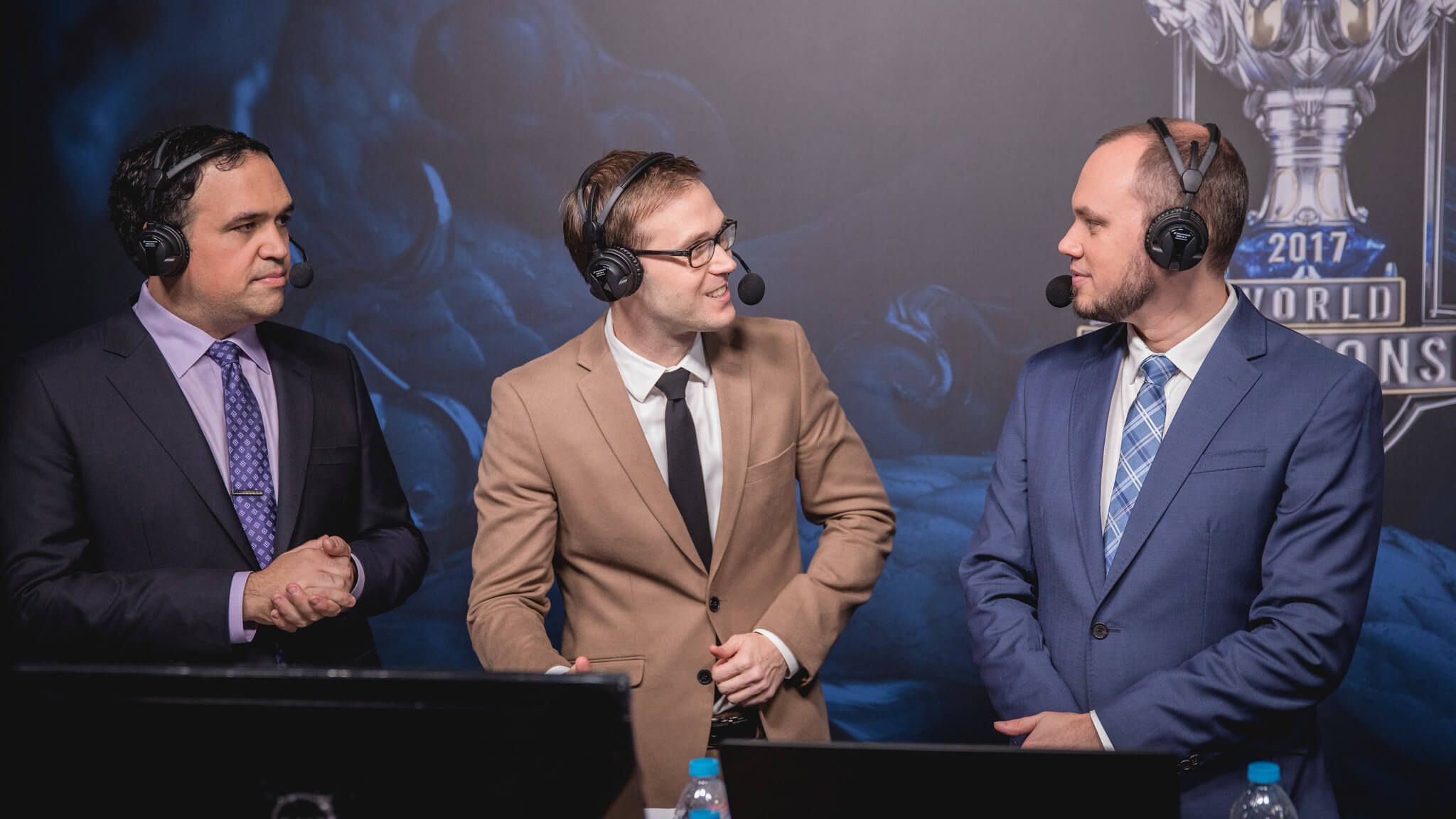
Longtime shoutcaster David “Phreak” Turley (right) shown here at the 2017 League of Legends World Championship. (Colin Young-Wolf / Riot Games)
Turley and his crew recorded their gameplay commentary from a conference room that was “very echoey and all very low-budget because that’s what was normal back then.” The amateur CB radio sound prompted the joke about the broadcast taking place in Phreak’s basement. The spartan accommodations made what happened next all the more incredible.
The early part of that first broadcast remains Phreak’s favorite Worlds moment. He and color commentator, Rivington Bisland III, began discussing the stream count viewership.
“Folks, we have 8,000 people watching this,’’ Phreak said on the air. “That’s a really large number of people.”
Pause.
“Wow, we’re up to 20,000 people watching it. Thank you all for being here. … Oh, we’re up to 40,000 people …”
That eventual number grew to 1 million, a sign that Phreak’s basement was on its way to becoming a penthouse.
“I’ve been in love with esports since I was basically a teenager, or even younger,’’ he said. “It’s cool to see it take off.”
On the other coast, fellow shoutcaster Rand grew up in Boston, a city serious about its sports. She remembers growing up watching the Boston Red Sox. But when Rand started dabbling in League of Legends, it was no surprise that it progressed beyond a hobby.
In 2012, she was, in her own words, “very bad at the game.” Friends told her to pay attention to the professional league to get better. She watched the North American regional finals, then the entire Season 2 Worlds finals.
By Season 3, Rand had a favorite team that matched up well with most of Red Sox history. She went with kt Rolster — is facing Faker and T1 in the finals on Sunday.
“They’re kind of a perennial joke because of how they’re good enough to get your hopes up, and then they just smash them down, right?” Rand said. “They’re a really fun team to follow.”
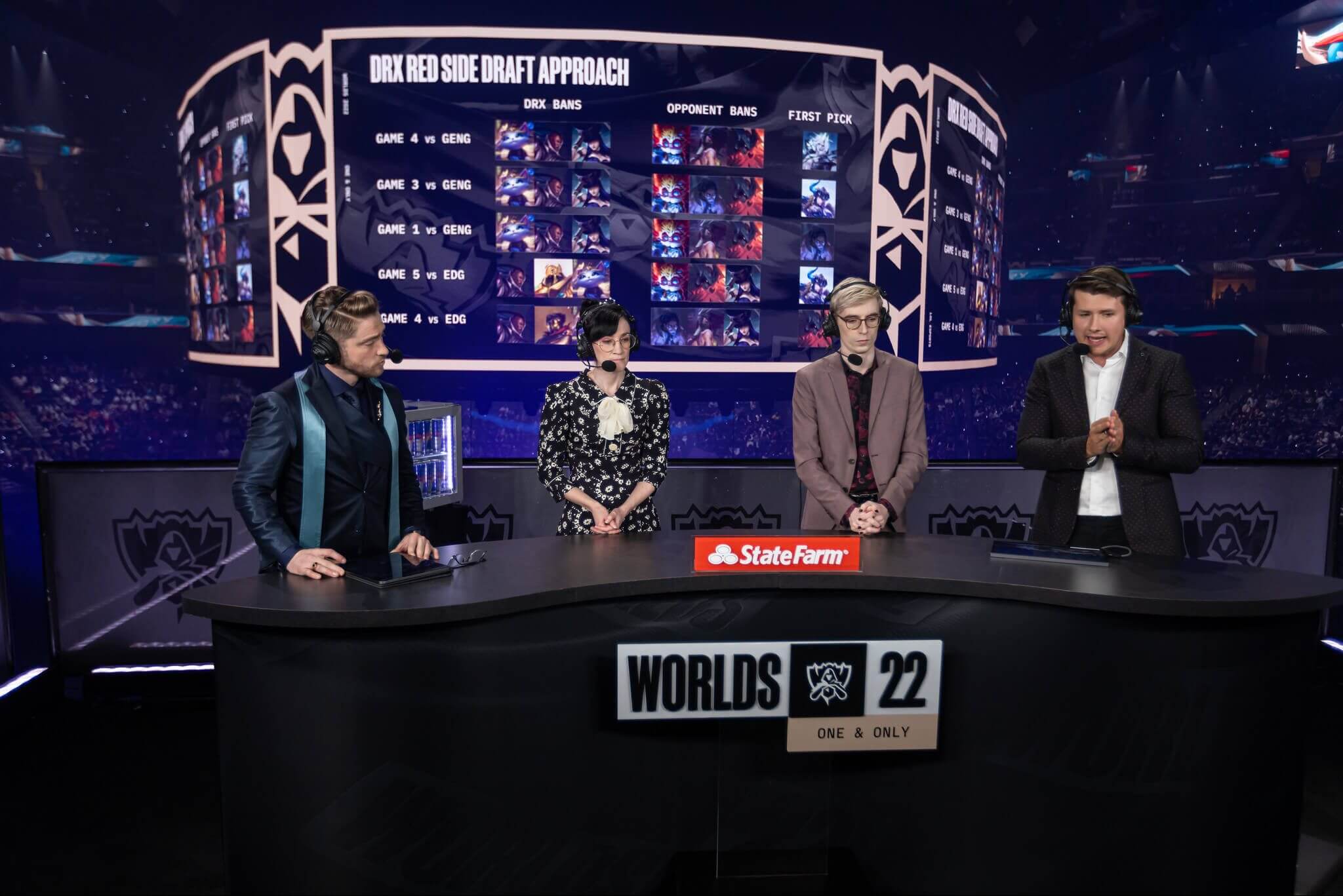
Esports shoutcasters James “Dash” Patterson, Emily Rand, Andrew “Vedius” Day and Joshua “Jatt” Leesman at the 2022 World Championship finals. (Marv Watson / Riot Games)
Rand has blossomed in the esports world from player to blogger to Esports Journalist of the Year in 2020 to broadcaster, documenting Worlds finals that grow larger by the year. By the 2017 Worlds, Faker and other finalists were introduced with an opening ceremony that fans and Riot Games remember fondly.
“They had a giant virtual dragon flying around the stadium. It was incredible,” said John Needham, the president of publishing and esports at Riot Games. “It is still one of the seminal moments in esports history, like, across all the games.”
Looking back at the 15 years of LoL Worlds, Merrill recalls when Riot Games was just an idea with co-founder Brandon Beck, his friend and roommate, while at the University of Southern California studying business. Merrill said it’s surreal to think of what would happen if “current me could travel back and meet college me to show a window to the future.”
The college version of himself would have kicked the time traveler out and slammed the door behind him.
“It’d be like, ‘Don’t play with my emotions, Future Me,’” Merrill said. “There would be a negative reaction, for sure, because it’d be such a fantasy, such a leap, such a dream. So improbable. It doesn’t make any sense. Brandon and I were just two friends who loved games and didn’t even know what we wanted to do in life.”
The plot thickens
For pure drama, it’s tough to top the 2022 Worlds final featuring a clash between Deft and Faker.
Kim Hyuk-kyu, best known in the gaming world as Deft, pulled off the stuff dreams are made of, guiding DRX to a cinematically thrilling victory over heavily favored T1 at Chase Center in San Francisco.
“It’s easily my favorite competitive moment in League of Legends history,’’ Needham said.
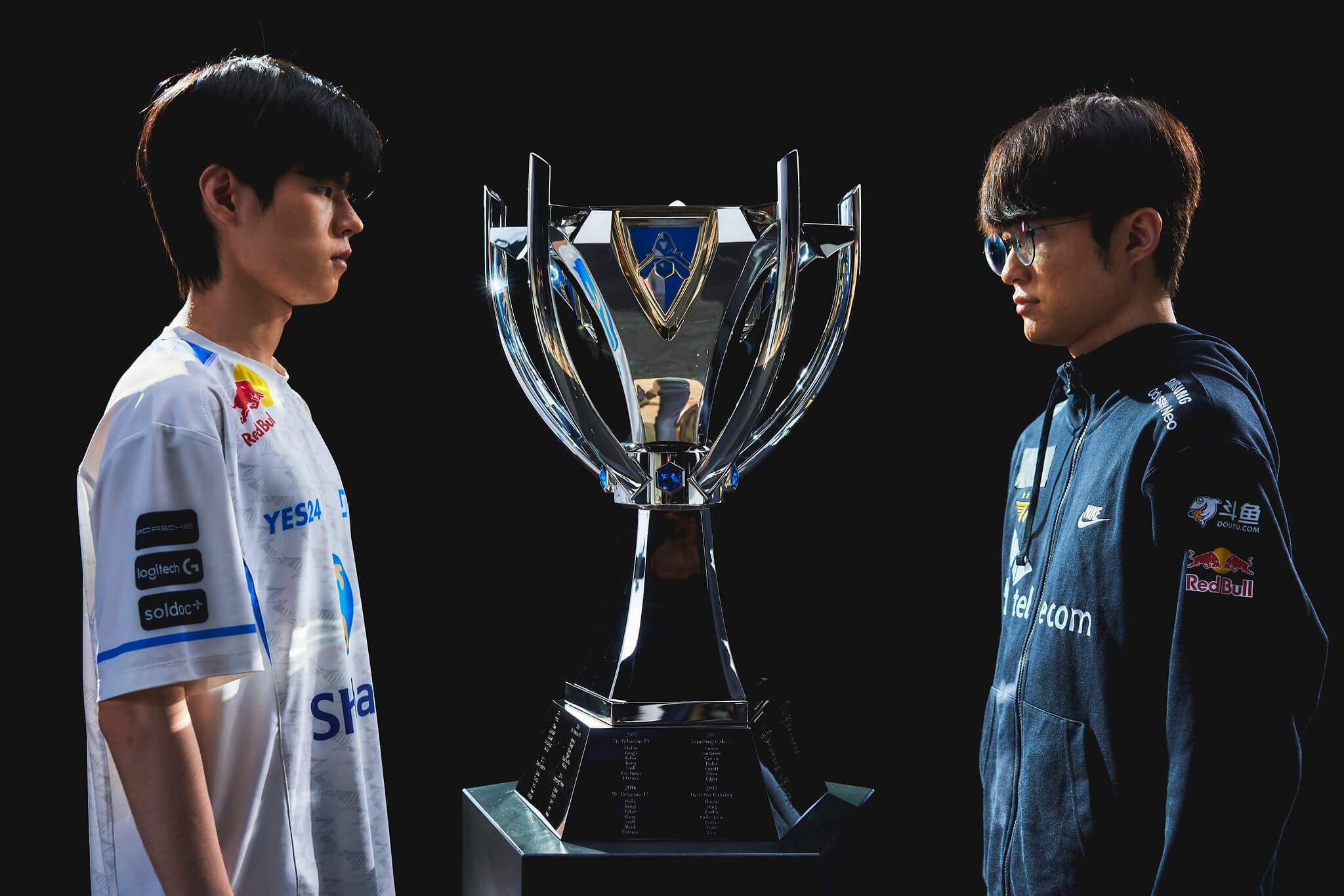
Kim “Deft” Hyuk-kyu of DRX and Faker of T1 squared off at the 2022 finals. (Lance Skundrich / Riot Games)
The plotline was irresistible, as Faker and Deft were once shy, quiet schoolmates in South Korea. (Although only Faker had the nickname “Mapo High School’s Fiery Fist.”)
“They both had these really interesting paths in their League of Legends career, and to tell those stories made it an emotional competition,’’ Needham said. “The competition itself was incredible. I just remember at the end of that Worlds being exhausted with the emotion and the thrill of the competition.”
So what’s in store this year? Here’s hoping it’s good enough to make another anniversary list decades down the line.