
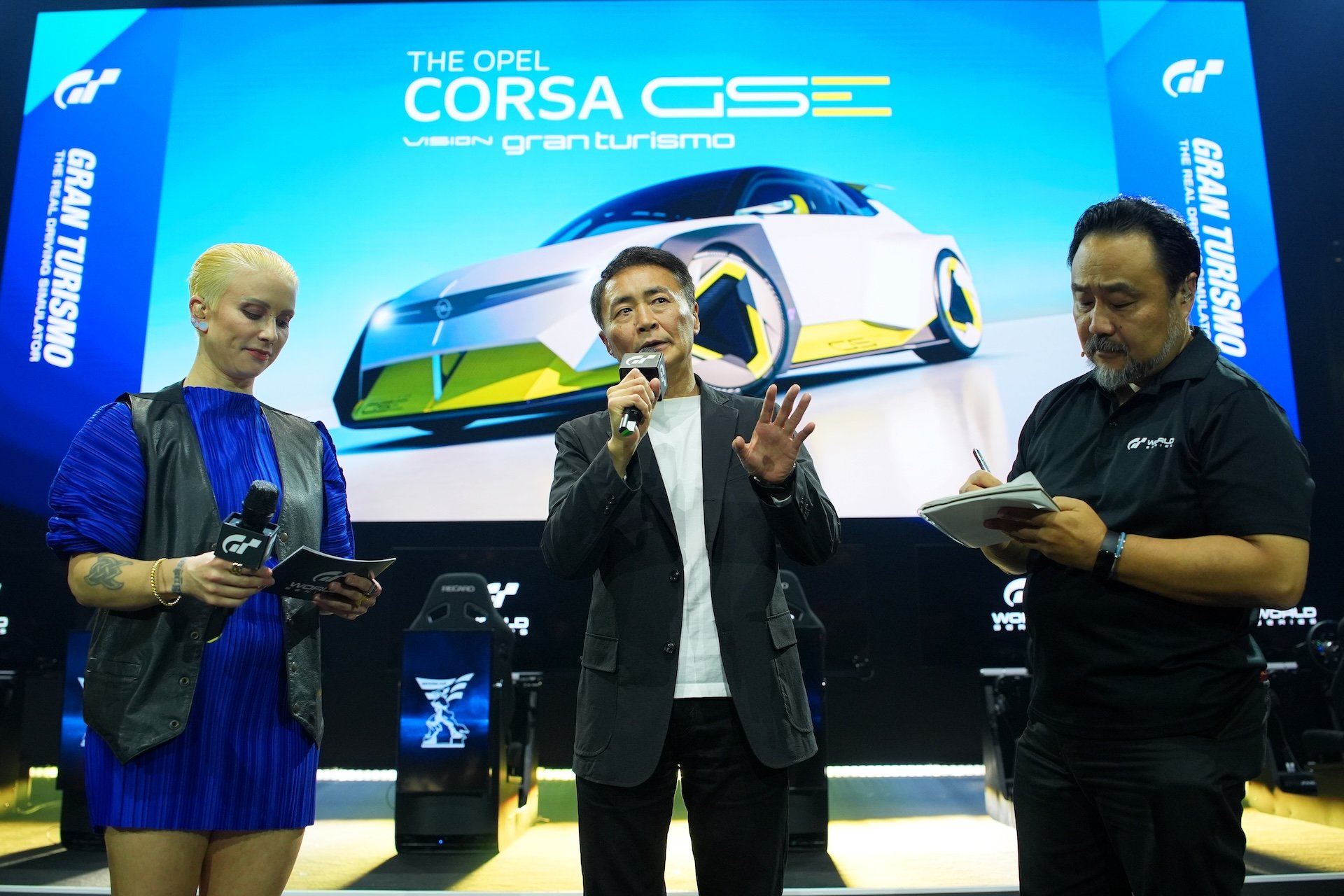
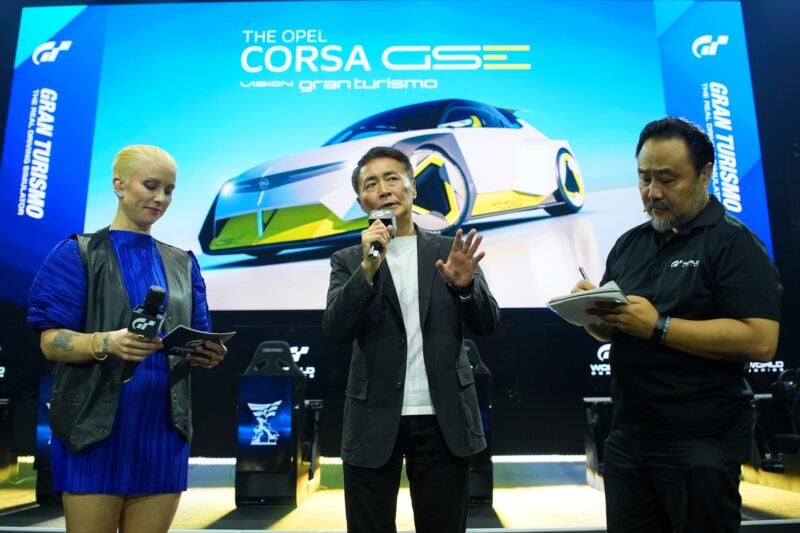
 Photo by Oliver Hardt – Gran Turismo/Gran Turismo via Getty Images
The Vision Gran Turismo program is back in the spotlight with the recent reveal of the Opel Corsa GSE Vision GT. It’s a striking concept, blending the brand’s hot-hatch heritage with a futuristic electric powertrain, and it’s a welcome addition to the growing Vision GT lineup.
But the arrival of another purely conceptual car — one that doesn’t exist in the physical world — raises the question: what information does Polyphony Digital actually need from a manufacturer to bring a car to life in the game?
It’s easy to assume they get a mountain of technical data and simply plug the numbers into the physics engine. For a real-world production car, that process seems straightforward enough. But for a Vision GT concept, where do they get the data for spring rates, damper settings, or torque vectoring logic that has never been tested on a real track?
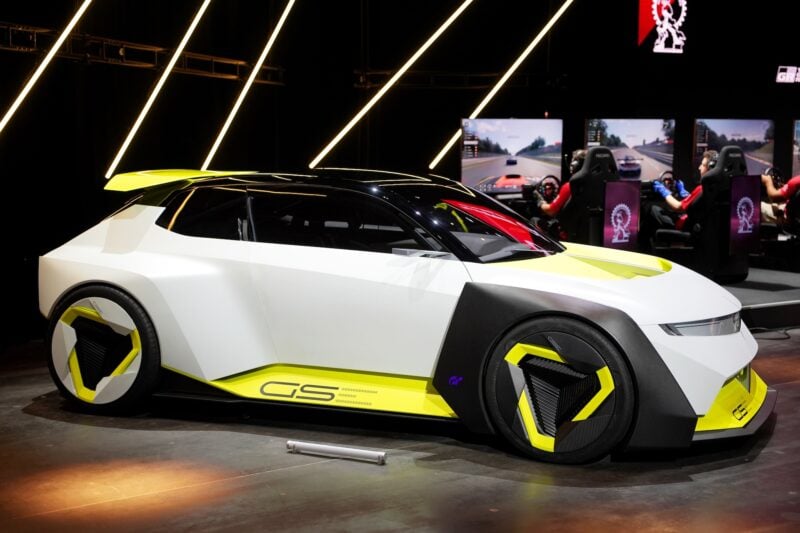 Photo by Oliver Hardt – Gran Turismo/Gran Turismo via Getty Images
During a recent round-table interview for the Opel Corsa VGT reveal, Gran Turismo series creator Kazunori Yamauchi had a chance to address that question. His answer reveals a process that is more collaborative and dynamic than you might think.
It starts, of course, with the manufacturer’s foundational data. Polyphony Digital receives the CAD files for the car’s design, both inside and out.
 Photo by Oliver Hardt – Gran Turismo/Gran Turismo via Getty Images
“First off, the exterior and interior design of the cars are determined by the design centers of the manufacturers. We then model that in the game and actually try running it,” Yamauchi-san explained. “When we do that, we receive from the manufacturer what kind of drive system and drivetrain it will use, all the different suspension geometry involved, and obviously the size and specs of the entire car.”
From there, things get a bit more interesting. Yamauchi-san notes that many cars have unique systems, especially regarding modern drivetrains. Things like advanced torque vectoring, unique hybrid power delivery, or complex active aerodynamics aren’t one-size-fits-all features.
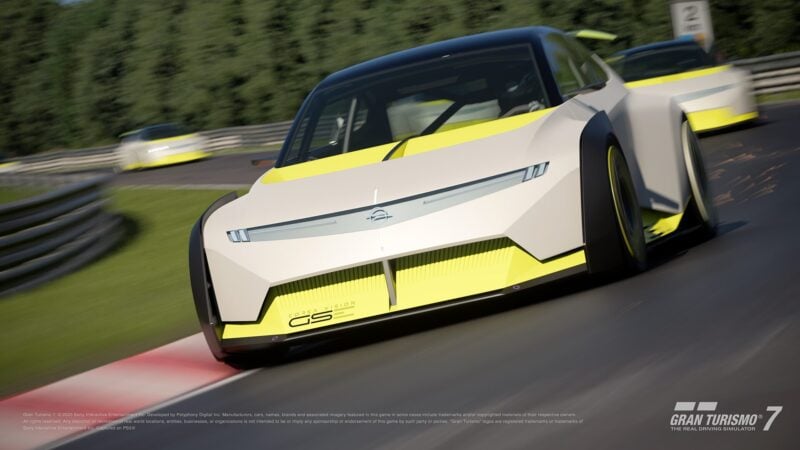
“When we enter all the different parameters for a car into the system, we have a car that is according to the specs provided by the manufacturers. But the various mechanisms that go into a car — some are similar to other companies, some are completely different,” said Yamauchi.
Instead of forcing a manufacturer’s custom technology into a pre-existing physics box, PD will develop bespoke code to simulate that specific feature for that specific car.
 Photo by Oliver Hardt – Gran Turismo/Gran Turismo via Getty Images
“Things that have to do with the drive system, like torque vectoring on each of the wheels, are areas that have a great deal of freedom in terms of the design direction [the car designers] want to go. We do have a lot of cars where we specially produce a certain type of new feature for that car only,” Yamauchi continued.
This confirms that the simulation engine is flexible enough to incorporate new, unique hardware characteristics, which is crucial for accurately representing cutting-edge concept cars and complex modern hypercars.
Once the car is built with its custom features, the PD team take it to the track for a virtual shakedown.
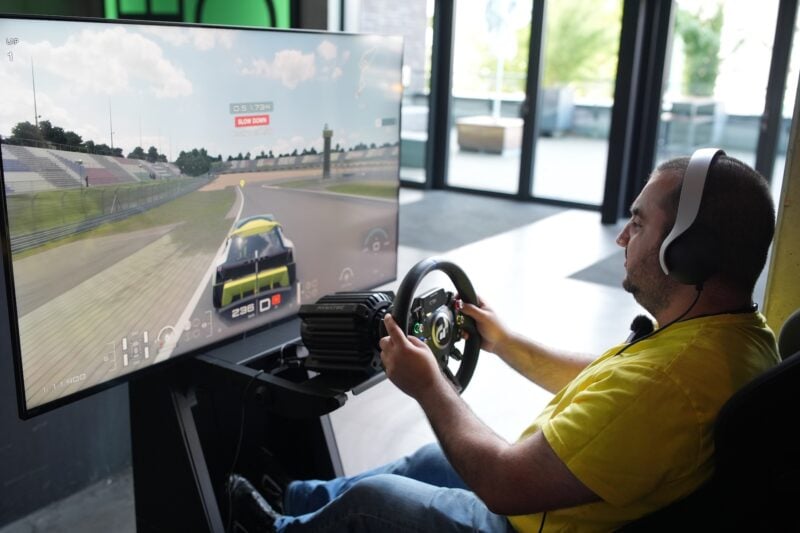 Photo by Oliver Hardt – Gran Turismo/Gran Turismo via Getty Images
“There are a lot of discoveries that are made when you actually drive it,” Yamauchi-san said. “For example, we might want to raise the front-end ride height by 20 millimeters because it makes it easier to drive. So we give that feedback to the engineering team at the manufacturer and say, ‘We would like to raise this by 20 millimeters. What do you think?’”
It’s not just the manufacturer telling Polyphony Digital how the car should be; it’s Polyphony Digital providing simulation-based feedback that helps define and refine the car’s final virtual characteristics. “We have that communication back and forth with their engineers, and the car is refined through that process until it is complete,” Yamauchi explained.
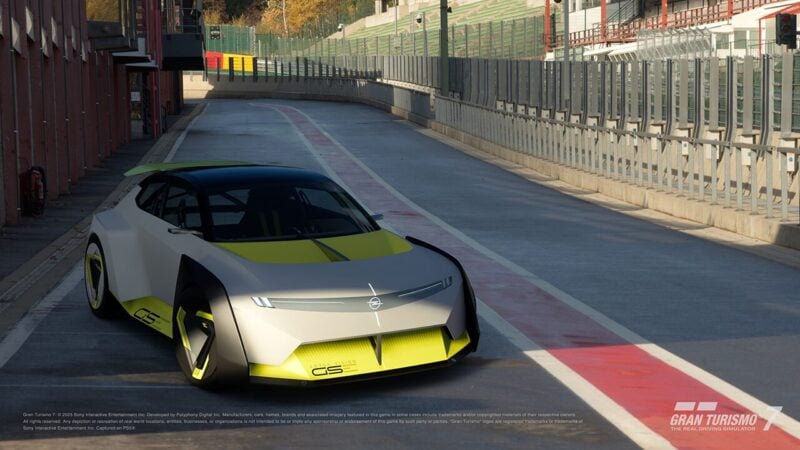
Vision GT cars often take flak from the community for being “fantasy cars” with made-up performance figures. That’s true, to an extent, but this insight shows that while the cars themselves are concepts, the process behind bringing them to the game is grounded in reality. The human feedback loop between Polyphony’s test drivers and the manufacturer’s own engineers gives each car a unique personality born from collaboration, making them feel less like an fantastical invention and more like a genuine, co-developed prototype.
See more articles on Kazunori Yamauchi, Opel, and Polyphony Digital.