
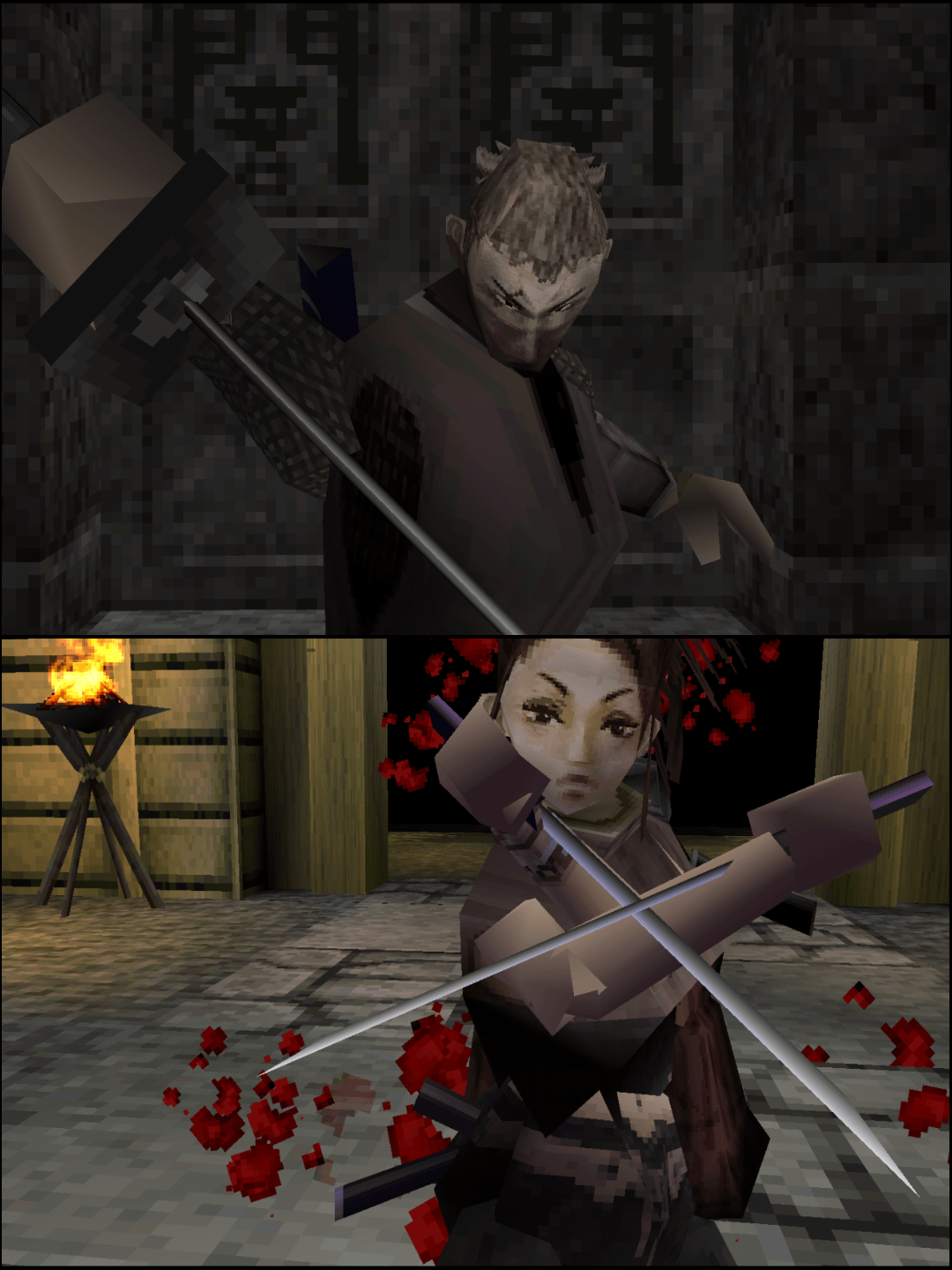
One of my close friends recently streamed Tenchu to me while we were talking and it seemed really interesting so I gave it a shot myself and man.. Tenchu is a game that was way ahead of its time in many aspects, and it still feels fresh in ways decades after its PS1 release. The stealth mechanics are where it truly shines. Despite issues like a clunky camera and limited draw distance, sneaking up on enemies and taking them out feels incredibly satisfying. The game is also forgiving: you can retreat if caught, rethink your approach, and try again without punishment. This kind of flow is rare in stealth games, it encouraged me to go back and rethink my approach to that particular enemy instead of starting the level over.
The combat in Tenchu is clunky, and that’s a strength rather than a weakness imo. It discourages reckless fighting and cleverly incentivizes the player to rely on stealth and planning instead. This design choice makes the game stand out from the countless samurai and ninja titles that focus on flashy combat. The gameplay flow and approach to combat here is so different to other games that this must’ve been the most fresh and pioneering game of its kind akin to Onimusha. This heavy emphasis on stealth through thoughtful game and level design is a big reason the game remains engaging and fresh, even now in 2025.
The level design is impressively open-ended for its time. You can reach objectives through multiple routes, and the game adds replay value with randomized enemy placements. Each level has three different layouts that change your approach every playthrough. There’s a similar enemy layout system in F.E.A.R, and people were rightfully very impressed with it but Tenchu was out here pulling it off on a PS1.
Sadly, playing as Ayame or Rikimaru offers slightly different gameplay experiences. Ayame is easier to control, but her personality is really awful. Rikimaru, on the other hand, has an actual personality and even made me laugh out loud once, so he grew on me throughout the game. I ended up preferring him, and I plan to stick with him in the sequels.
The story and characters, unfortunately, don’t hold up well in general. The narrative is basic, and most characters don’t leave much of an impression. Rikimaru does have moments of humor, and the bosses show personality, but overall, it isn’t anything special. Additionally, while the two characters’ campaigns differ in almost no significant way, having even slightly more varied objectives would have made picking one over the other feel more meaningful.
The enemy AI is a mixed bag. Sometimes it works as expected, but other times enemies spot you in ways that feel unfair due to limited draw distance or inconsistent behavior. Also, the tutorial is pretty useless and won’t effectively teach new players the mechanics.
The atmosphere is another strong point. Each level has its own distinct look and feel, and the soundtrack is very memorable and it adds a lot to the mood, making stealth planning even more immersive and revisiting these levels more exciting.
Ultimately, Tenchu: Stealth Assassins remains a unique and important stealth game that rewards patience and strategy. It’s a must-play for fans of the genre, especially if you appreciate games that push boundaries and offer meaningful freedom in approaching objectives. I can only imagine how fun a new Tenchu game with a proper budget and team would be, the sandbox would offer near endless replayability.