
Also covers Alisa’s asymmetrical design

Tekken Project Executive Game Director, Katsuhiro Harada, has been providing numerous lore updates for the franchise he’s best known for, covering details on Reina, Heihachi, Kazumi and the Devil Gene and character and story updates about several of Tekken’s cast members.
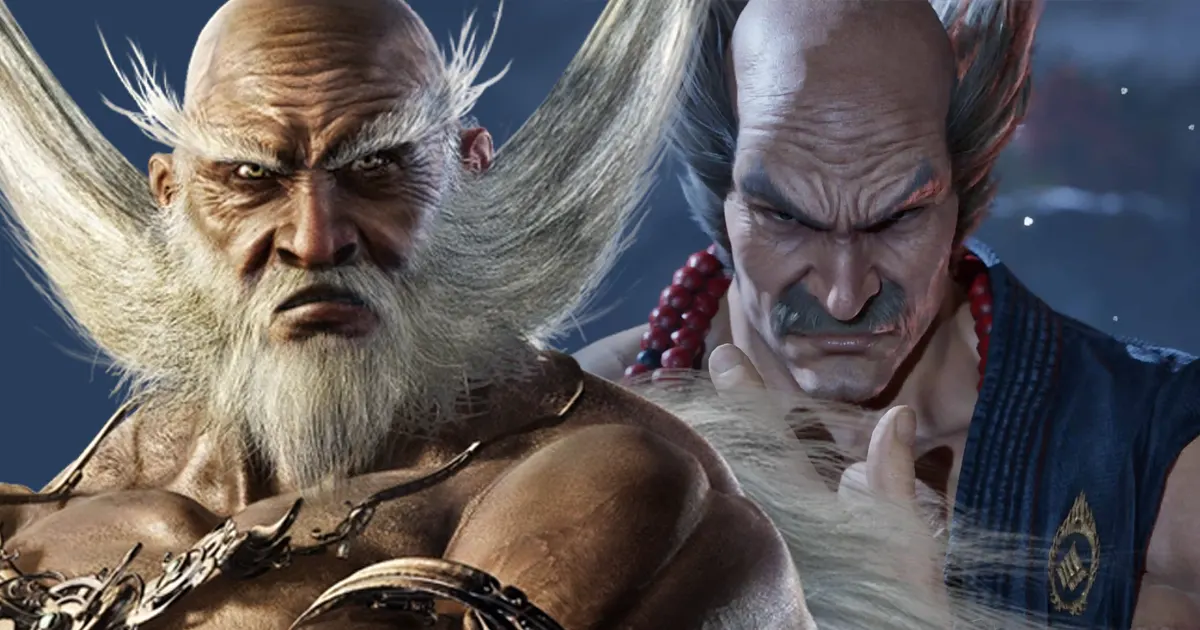
Recently, Harada started delving into the relationship between Jinpachi and Heihachi, and what went wrong between them. He also weighs in on if Jinpachi could be a DLC character in the future, along with details on Alisa’s design.
“Since Jinpachi walked the path of a martial artist, he taught Heihachi both the correct way of martial arts and its techniques. However, Heihachi’s ambition was incredibly strong — he sought to further expand the power of the Mishima Zaibatsu and his own personal influence. Eventually, he went so far as to imprison Jinpachi underground,” Harada wrote on X.
“Sadly, it seems that Jinpachi’s teachings had little effect on shaping Heihachi’s character,” he said.
“Incidentally, most of this storyline was written in the 1990s,” added Harada.
“The foundational narratives for the characters were mainly developed by myself and Masahiro Kimoto (— one of my respected seniors and a game designer who worked on Namco titles since the 1980s [in] particular), regarding Jinpachi, Kimoto often spoke about how his transformation was not due to the Devil Gene, but rather through a traditional Japanese form of ‘vengeful spirit power’,” he said.
“As for me, I often explored the idea of parent-child relationships that go beyond rivalry and escalate into deep-seated hatred—something uniquely portrayed in Japanese narratives,” Harada stated.
“There wasn’t a specific real-life model for the family dynamics in Tekken. Both Kimoto and I had very good relationships with our parents,” noted Harada.
I remember us saying, ‘Precisely because we come from healthy family relationships, it’s more interesting to depict the complete opposite in the game’,” Harada said.
Harada was then asked if Jinpachi could make it back into the Tekken franchise, and he said that: “If there are many requests, it is possible.”
Next up, Harada was asked about Alisa’s stockings and why they’re so different, as usually this kind of attire matches.
“One of Alisa’s core design concepts was ‘asymmetry’. Additionally, the early version of the AI installed in her brain was intentionally written to have many bugs,” Harada said.
“If you’re only watching Alisa’s appearance and victory scenes with English subtitles, you might not notice it — but in Japanese, her speech is quite peculiar. She occasionally slips into regional dialects and speaks in a strange, inconsistent manner. This unusual way of speaking is actually a remnant of the buggy AI programming in her head, a characteristic that has been present since her debut in Tekken 6,” he concluded.