
Notes on Ogre, Dr. Bosconovitch, Alisa, Eliza and Bob, plus name clarifications

Tekken Project Executive Game Director, Katsuhiro Harada, posted a number of updates about several Tekken cast member’s lore and potential status for the future in a series of Tweets on X.
Getting this going, Harada weighed in on Dr. Bosconovitch and Alisa, and if Eliza could be a good fit for the roster in the future. The first response addresses a user’s request for more details about Ogre.
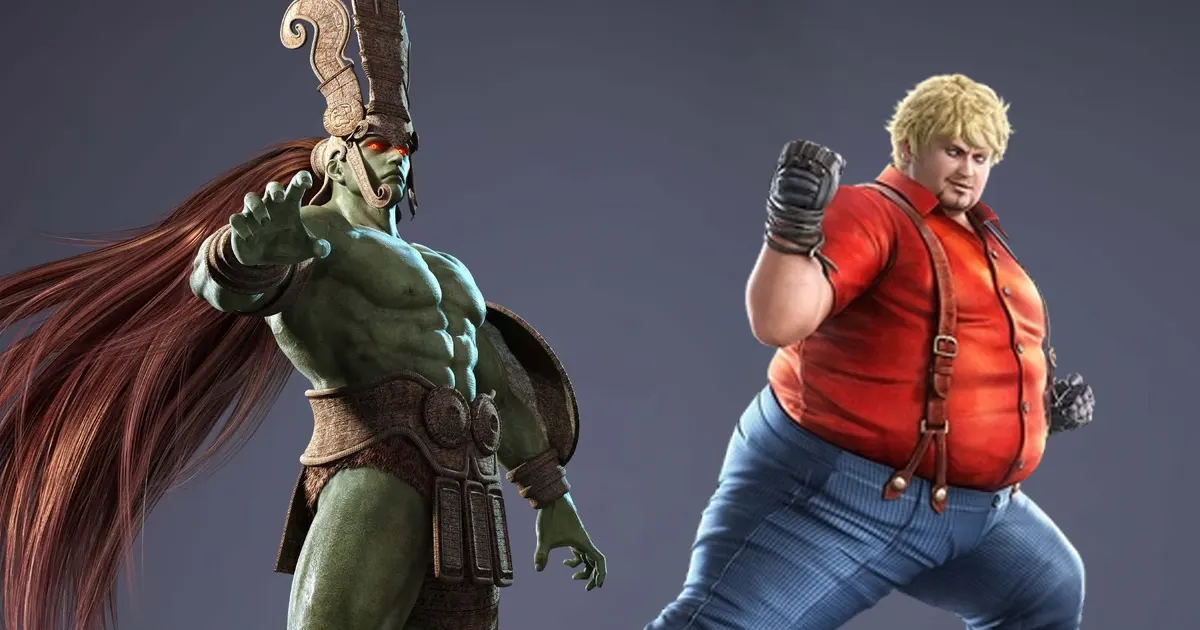
“In the Tekken 3 era, the official setting materials included in the strategy guide stated that Ogre is not a singular being — instead, there is at least one Ogre in every continent, archipelago, and island nation,” Harada wrote on X.
“I believe I’ve mentioned this in the past, but here’s one interesting fact: Dr. Bosconovitch says that he created Alisa in the likeness of his deceased daughter, but those who knew his daughter while she was alive say that Alisa doesn’t resemble her at all,” he said.
Following this, someone asked if Eliza could come back again in the future after appearing in Tekken Revolution and Tekken 7.
“If Eliza’s animations and fighting style can be adjusted a bit more to suit a 3D fighting game, I think a comeback could be a good idea,” Harada stated.
Next up, he clarified about whether Hwoarang and Ganryu use their real names.
“Hwoarang is not a personal name but a title derived from Korea’s ancient Hwarang youth warrior order — akin to Japan’s Byakkotai, or to Western archetypes like squire-knights or Spartan trainees devoted to honor, loyalty, and martial excellence,” said Harada.
“Ganryu is not his real name; it’s a shikona, a sumo wrestler’s ring name. Similarly, Baek Doo San, who is Hwoarang’s master, isn’t a real name either (it’s actually the name of a mountain),” noted Harada.
Harada also gave a bunch of notes about how the character Bob came about, specifically in regards to his name and overall character design.
“Back in the late ’90s, a debug and tuning staff member named Takino joined our development team. For some reason, everyone just called him ‘Bob’ from the start,” Harada wrote.
“After we finished developing Tekken 5, I was in the office chatting with our animation lead about ideas for a new character,” he said.
“One of the ideas that came up was a ‘super heavyweight, yet incredibly agile and acrobatic karate fighter.’ We needed a placeholder codename for him, and I said, ‘Let’s go with Bob.’,” Harada noted.
“Everyone ended up liking the name so much that it stuck and eventually became the character’s official name,” he said.
“Later, when we decided to give him a full name, we consulted with some of the American staff at Namco America. They told us, ‘Well, if his name is Bob, then his real name would be Robert.’
“I didn’t understand what they meant at the time — I was genuinely confused. I asked, ‘What kind of rule is that? Why Robert?’ They just said, ‘That’s how it is. In school too, people named Robert are often called Bob.’,” Harada stated.
“I later found out that ‘Rob’ was originally a common short form of Robert, and that during the Middle English period, it became trendy to switch the first consonant of nicknames. That’s how things like: • William → Will → Bill • Robert → Rob → Bob became established, and the pattern carried over into modern times,” noted Harada.
“I recall realizing then that there are always new things to learn, no matter how old you get *laughs*,” Harada concluded.
You can also read about Reina, Heihachi, Kazumi and the Devil Gene in Tekken 8 if you’re looking for more Tekken lore stories.