
It’s a Saturday Morning, you wake up, drink some coffee and check the mail. There’s a letter from the City of Chicago Department at Law. It’s an Arrest Warrant demanding that you turn yourself in to the nearest local precinct. The crime? Shoplifting. Attached is a blurry photo of a person that isn’t you. But, it could be. This has to be a mistake you think to yourself as you put the letter away. You glance over at it briefly but then forget about it.
Days pass as you wake up to a knock at your doorstep. Lights flare through the window as you open the front door. Two Police Officers are waiting as they look at you. You ask what’s wrong before they ask if you are John Doe. The night fades away as you wake up in a holding cell. It’s been almost 24 hours, and they finally tell you why you’re there. You begin to laugh as if waiting for someone to come out and tell you this is all just a joke or misunderstanding. But it’s not. A detective shows you a few photos. It’s a vague outline of someone that could look like you. Then, the questions start.
“Look, if you say that it’s you I can get your crime knocked down. So, what do you say?” A detective says to you while handing you the leftovers of his breakfast. “That isn’t me. This has to be some sort of mistake.” You reply. “Come on, how many people do you think there are that look just like you?” The detective replies.
Tick. Tick. Tick. An analogue clock ticks as the detectives wait in silence. One of the detectives sighs as if annoyed. You look around as you start to get anxious. “Look, I don't know what to say. Maybe-” “Maybe you shouldn’t say anything at all.” A voice calls out as a door opens and a lawyer steps in.
This is a fictional scenario combining elements of common police events and stories that have happened in the real world. Cases like the one above are becoming more common throughout the United States as groups such as the ACLU take on cases just like these throughout the USA. At its core is a facial recognition system that is far from perfect. While adoption of such systems has been seen as controversial, that may be changing.
The FBI reports that in 2022, the total number of property crimes was around 1,954 per 100,000 people or around 6.5 million cases. While the number has gone down around 74% since the 90s, property crime has continued to be the most common form of crime. Larceny related crimes made up more than 70% of all property related crimes.
In 2023 retail theft cost retailers an estimated $121.6 billion dollars. More than double what it was just 5 years prior in 2018 of $50.6 billion dollars. It’s estimated by 2025 that this will rise to $143 billion. These changes can be attributed to various things. But the largest change came from the pandemic which saw an increase from 2019 to 2020 of 47.2%. There are various reasons as to why this happened such as the inadequate control processes to an increase in corporate theft. But external theft has continued to be the largest share at 37%.
So what are businesses doing to deal with this growing issue? You might have seen it at your local supermarket. Cameras in almost every aisle watching you while you shop. You’re told they aren’t doing much. But this is often far from the truth. As you walk through the store a network of cameras draws a path as you make your way through the store. Collecting information about your shopping habits. How long you take to stop and stare and what products you choose. But most of all they collect information on who you are. From your face to your car's license, to your name, age, gender, and ethnicity. From the moment you walk into the store a machine is always watching and recording you.
So what if a machine is constantly monitoring me? You might ask. Is it really such a big deal? It could be. As businesses look to prevent losses they are moving towards Artificial Intelligence and tools such as Facial Recognition to identify people they believe to be potential thieves. Depending on how this technology is used it could have some serious impacts on the lives of others. As it stands today Facial Recognition software is far from perfect. It’s often biased and cannot reliably differ individuals from others. Experts have been raising the alarm bell on this technology with many companies such as Microsoft, IBM, and Amazon dropping support all together for the software to places such as police agencies.
But this hasn’t done much to stop the progress of many smaller companies from pursuing facial recognition software. Many of whom have gotten into trouble for their use such as Clearview AI which has gotten in trouble even with its alleged 99.3% accuracy rating. Often going to extremes such as violating privacy laws to find images of people online through places such as Social Media to create and build their databases. It’s dubious to say how accurate the claims of such a system would be but because you may have been tagged in a photo it wouldn’t be a stretch to say one day you might be visited by police for a false positive their system had made.
In the US, systems such as Clearview AI have already been used in over a million searches by US Police. While it likes to point out its 99+% Accuracy rating such a rating is heavily flawed. An example of this would be for every 100,000 cases where a perpetrator was identified with AI approximately 700 people would be misidentified. It may seem small but that means that 700 innocent people were wrongly convicted due to the use of Artificial Intelligence.
On a larger scale such a technology could have disastrous effects. With 1,000,000 cases now you have 7,000 people wrongly convicted for crimes they did not commit. In a single year it’s estimated around 6 – 7,000,000 property related crimes are committed. Of which these are the ones that are reported. Only around 12% of these crimes are solved every year. With it having the potential to cost hundreds of billions of dollars in losses for businesses and tens of billions for local state governments every year. It can be easy to see why many places could choose to implement tools such as Facial Recognition software.
But Facial Recognition software today is far from perfect but can it be? It’s hard to say. The methods in which data is collected and presented on an individual can impact the results of such software. Even as these tools contain tens of billions of photos they are falling short.
For this we’ll look at one of Clearview AI’s competitors, which is Idemia. A multinational corporation based in France, which is one of the leading companies in the Facial Recognition space. In 2023 they presented a model which passed with a score of 99.8% accuracy rating for the NIST Facial Recognition test. It can be hard to say how accurate these results can be but in 2021 they scored an accuracy rating of 99.6% for 1.2 million unique faces while in 2023 they reached 99.8% accuracy on 12 million faces. It’s becoming more and more believable to think that in many real world scenarios these models are returning results that are similar to real world cases.
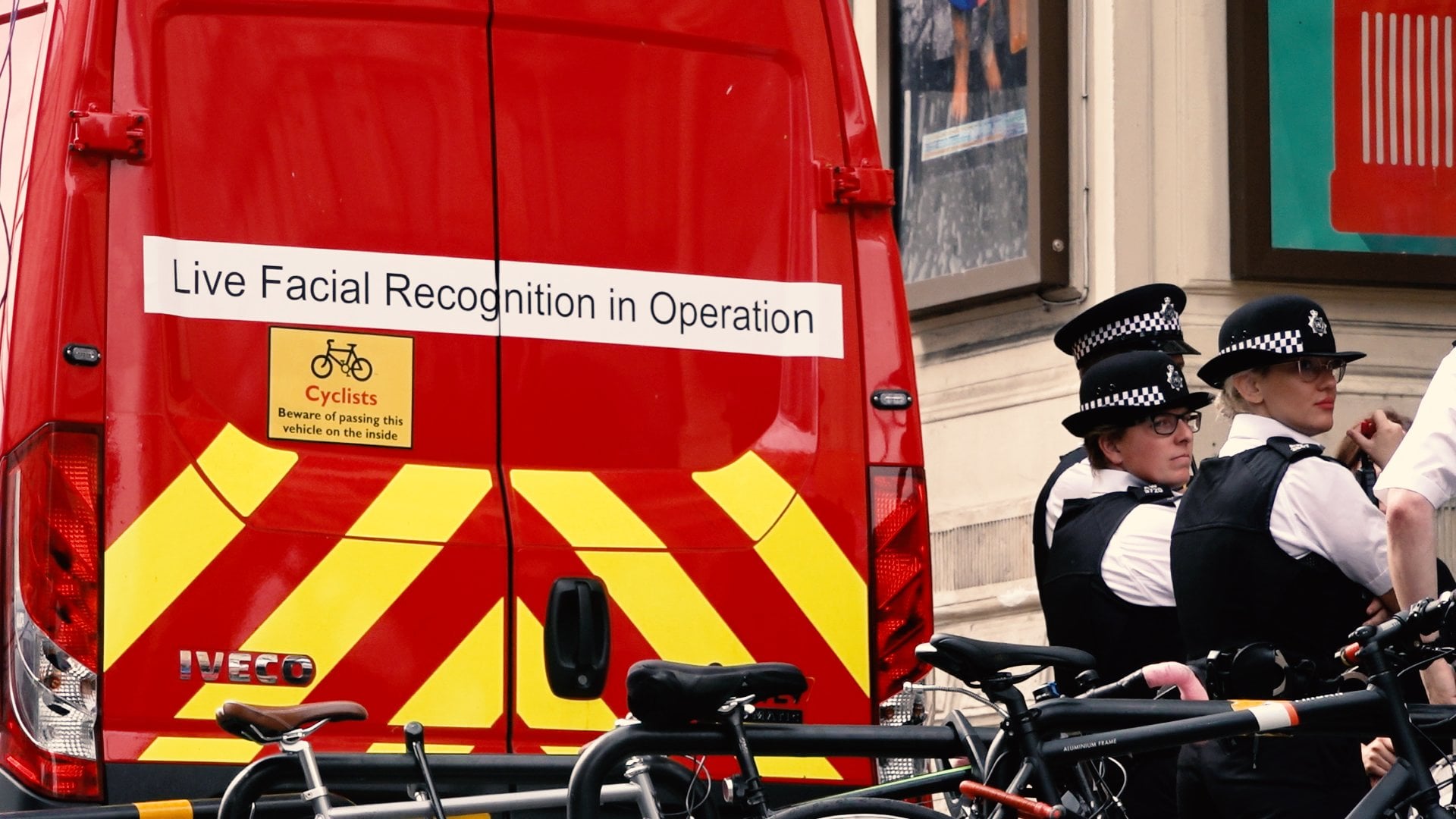
However, this isn’t always the case as real world data can differ quite significantly from these training sets. In the United Kingdom Live Facial Recognition has seen use in a variety of settings from Police to Public Transit. Places such as Big Brother Watch UK report that almost six out of every seven matches (85%) have been false positives since the adoption of facial recognition in 2016. It seems shocking and looking at the data it’s a correct statement. But that’s not necessarily true. A large portion of these errors come from a single event. The Notting Hill Carnival of 2017 which had a shocking 95 false positives. If you remove this event the accuracy rating still isn’t that great with only 32% accuracy. Meaning that it’s still wrong 68% of the time. Still if you split it by decade the accuracy becomes 62% from (2020-2023) and 7% (2016-2019) respectively.
There’s a steep jump from the 99+% accuracy rating and often the actual accuracy itself. The technology seems to be improving but it's not enough. Live Facial Recognition is just not ready for the real world. But what about in places where it seems as though that it might be? You might see it as you finish up at a store. Many stores such as Walmart, Whole Foods and Target are already using things such as cameras at checkout for this exact purpose to better match the environments of those used by these facial recognition services.
This scenario is similar to one used by the National Institute of Standards and Technology which is about the use of kiosks for immigration purposes in their 1:N test. The best algorithms scored a false negative rating of 0.0460 which is the same as being wrong 460 times every 10,000 times. But this isn’t such a big deal as a false negative means nothing was detected when it should have. At the same time these rates come with a false positive rating at most of 0.003 meaning for every 1000 faces it is wrong 3 times. For issues such as shoplifting this could be fine as the people it is checking for are individuals which have already been detected for shoplifting.
So stores seem to have a way of dealing with potential thieves using technology such as Facial Recognition. It seems that the technology is already there and has a very low margin of error. But what’s wrong? Well, nothing is wrong from a technical standpoint. The technology works, but in many cases people aren’t stealing “enough” for it to really matter. It sounds strange to say because it is. Someone in need might forget to pay once or twice but once it reaches a threshold it can become petty theft. Someone who steals from several stores may not qualify for petty theft under these rules but typically it’s stealing $500-$1,000 from a store over the course of 1-3 years.
As retail theft continues to increase and is expected to do so, what could change? Many of these stores are looking into hard on crime policies. With lobbying groups such as National Retail Federation trying to push for laws harder on crime while making erroneous claims of organized crime even when statistics often don’t support the narratives they promote.
But what could that mean? From a legal standpoint the vast majority of police departments are largely unwilling to arrest individuals for a misdemeanor. We could see the rise in sharing of these reports as these companies build cases against individuals. It could start relatively simple, companies recording names and amounts owed. As they accumulate an arrest warrant is sent to the victim or they are stopped inside of one of the partnered stores.
It can be hard to empathize with someone who is caught stealing at multiple stores. You may or may not agree that something like this sounds vaguely reasonable. But is it? Not every store will have the systems to properly check this. Let’s say you have 8 or so stores in a case against you. They demand restitution for what they allege you stole. But some of them have no concrete proof that it was you who committed this theft. What is to stop someone from joining a case if an individual in an area vaguely matches footage of someone stealing in an area? It might sound ridiculous but in an automated system things like this could be fairly common.
What the lobbying group the National Retail Federation attempted just in the past few years is a signal of what could be to come for the future of this industry. Instead of criminals it could be the lobbying for policies that allow for the automated use of artificial intelligence to send arrest warrants to individuals presumed to have stolen potentially hundreds of dollars in goods from a variety of stores. These could be struggling families, single mothers, or minorities.
Currently most retailers are not concerned about shoplifting. But if the rate at which retail theft increases this could very likely be an area that they would look to address. Especially if they are forced to by a third party such as insurance. Many places already incorporate loss prevention systems with keys and locks in stores to prevent shoplifting which is often inconvenient to shoppers. It is something that is also resulting in a significant loss of business in favor of online retailers. Forbes believes that it is causing around a 15-25% loss in sales and could lose favor in attempts to stop retail theft. People are not a fan of these security measures that often make them feel as though they are criminals.
A policy which allows retailers to pursue claims against individuals suspected of theft at a mass scale would most likely have an immediate return on investment through things such as restitution and wage garnishment. Even if a store cannot explicitly prove that an individual was involved in a theft. You might try to argue that they are simply paying for things they forgot to purchase. But there can be hardly any real evidence besides coincidence that it could be them. Trying to pursue these crimes would very likely overnight overload the judiciary process.
It can start with a relatively simple slap on the wrist and maybe the first time it happens you're off the hook for the bill. Around half of states have three strike laws in regards to felony petty theft or larceny. But this could be on a lifelong issue meaning that unlike in a traditional sense with a statute of limitations this could be on the record for someone’s entire life.
What is the likelihood an individual is to recommit a similar crime? It could be a once in a lifetime event for some people. But for others closer to the poverty line it could be a decision they struggle with every single day.
A policy such as this would target the most disadvantaged in our society. Far more black Americans live closer to the poverty line. But rural white Americans would similarly be forced into these situations. Single mothers, those with disabilities and immigrants would all be impacted by this. People in life who at a period of time feel as though they have no other choice are now trapped in a cycle of debt and repayment that is very similar to slavery. And by definition would be a system of debt slavery.
The issues likely wouldn’t stop here. As problems that arise could result in the creation of larger markets such as those seen digitally where data on consumers is often shared. Profiles where information on individuals is shared. There are almost no data privacy laws in the US but these are often very easily circumvented as actions such as walking into a store can be considered informed consent. This could easily become a multi-billion dollar industry and then it could bleed into other areas such as law enforcement.
Combining a few of these databases could give you a list of potential suspects for a crime in a given area. Where a car was last seen before its use in a crime and other things that could open up a cold case. But what’s the cost of all of this? Mass Surveillance becomes widespread where someone goes on a daily route everyday. It’s a massive privacy violation in which anyone who has access to these systems would be empowered to find anything they want about a person in their daily lives with a single search.
For the same issues changes could be made. Searches may only be made given certain conditions. Audit logs of who has access to information are made. But it still could end up becoming authoritarian. The government could use the same exact tools to monitor persons of interest. Individuals and groups based on where they go and who they associate with. This is already something the US government does but the scale of these operations could change. With a change in who is running the government this can cause potential issues.
Such as the tracking of individuals seeking abortion care. Following an individual on their journey across state lines to get an abortion and then immediately arresting them for seeking such care. It could result in harsher punishments towards those who are substance abuses. How poorly thought out these plans could be can have an impact on how dangerous these technologies could possibly become and the potential to harm others they can have.
We often like to think of Mass Surveillance as a thing that can only originate from government or law enforcement bodies. But realistically it can be far more likely to occur due to simpler and more financially motivated reasons. Anyways, I hope you enjoyed reading this. It’s pretty long but I’d love to hear your thoughts.