
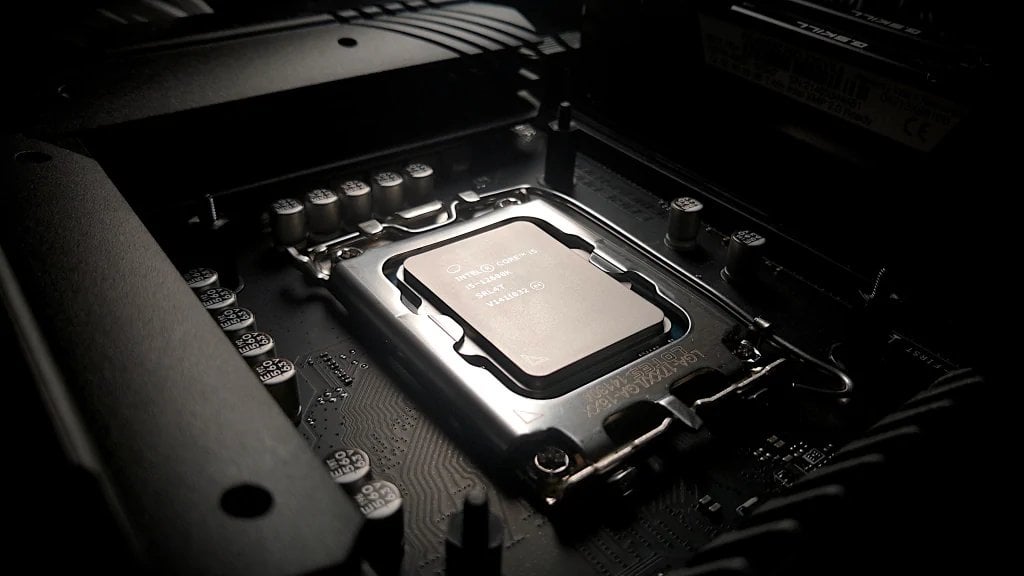
Hello all. I am reasonably new to heavy CPU overclocking. I have played around with increasing core clocks by a couple hundred mhz here and there in the past but I’ve never done anything crazy. I’ve never adjusted voltages or done a deep dive into the nuance of CPU overclocking.
Today I decided to change all that. I pulled up XTU and went to read this article:
https://oc-corner.com/article/intel-core-i5-12600k-basic-overclocking-guide
I noticed that in the article the author states that the default all p-core clock speed is 4.5ghz at 1.4 volts if I understand the v/f curve correctly, with single core hitting 4.9ghz; while the default all e-core clock is 3.6mhz.
However, XTU and Task Manager and my BIOS have my default all p-core default clock at 4.9ghz and my all e-core clock speed at 3.7ghz and a much lower voltage. I usually see it hovering between like 1.265 and 1.350. So I pushed my all p-core multiplier up to 52x and my all e-core multiplier up to 38x and put a voltage offset of 0.025 and fired up Cinebench.
I have successfully completed 2 full 10 minute runs of Cinebench at these settings. My voltage is between 1.355 and 1.380 and I’m pulling 200w exactly for most of it.
Now, in the article linked above, the author states that at 1.45v he was able to reach 53x on one P-core and only 50x on all 6 p-cores and 40x on e-cores with a ring ratio of 43x (mine is default, 3.6ghz under load I believe) and states he’s pulling 244w. He states his multi-core cinebench score is 18,028 while mine is 18,556.
I guess my question is, does an extra 200mhz on e-cores and 700mhz on the cache frequency/ring clock really require that much more voltage and pull that many more watts compared to my settings? Keep in mind, my p-cores are 200mhz higher than his and they obviously will pull considerably more power than e-cores. And would there be any benefit whatsoever to trying to match the author’s ring frequency of 4.3ghz?