
id Software
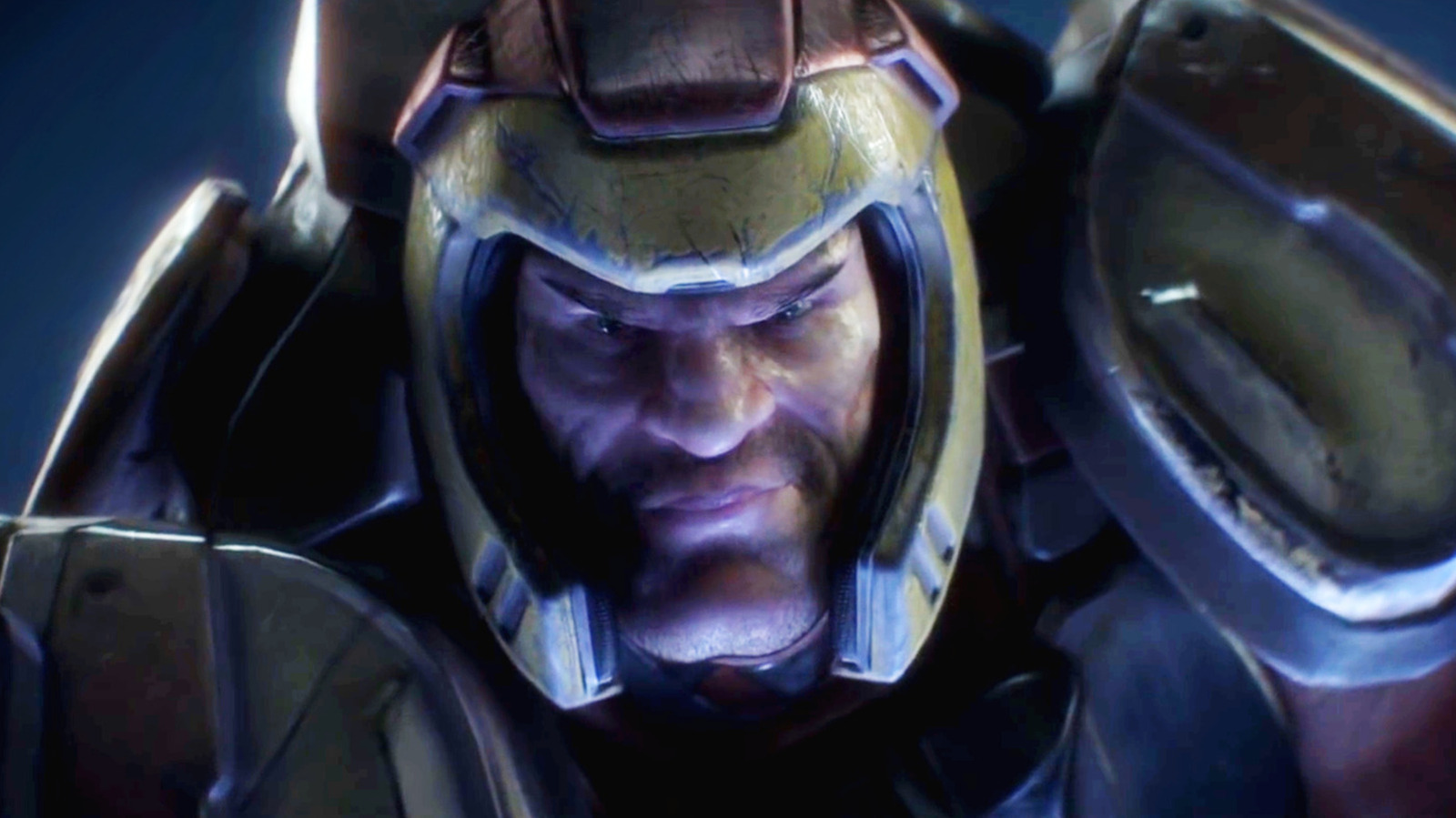
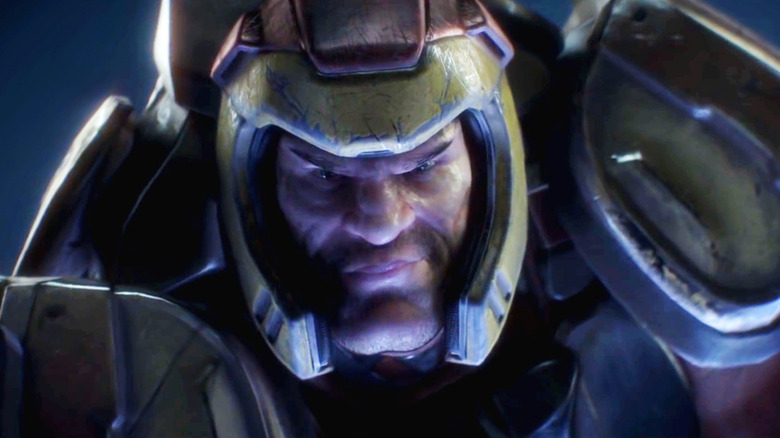
After popularizing the first-person shooter genre with “Doom,” id Software’s follow-up was the “Quake” series. Launched in 1996, the original “Quake” featured an episodic single-player campaign with the protagonist fighting extradimensional invaders in worlds that blended sci-fi and fantasy. The game included frenetic multiplayer modes and pushed id Software’s technology to the next level, particularly with the game’s use of 3D rendering. “Quake” spawned a whole line of games and got a surprise revival in 2021 reestablishing itself as a beloved ’90s shooter.
Of course, there is no shortage of first-person shooter games that were released during the ’90s, many originating on PC like “Quake.” We’re highlighting the best that evoke a similar feeling and aesthetic as id Software’s fan-favorite series. These FPS titles put a stronger emphasis on mayhem rather than objective-based gameplay like “GoldenEye 007” or “Perfect Dark.” Here are the five best video games like “Quake” to keep those early first-person shooter thrills coming.
Doom II
id Software
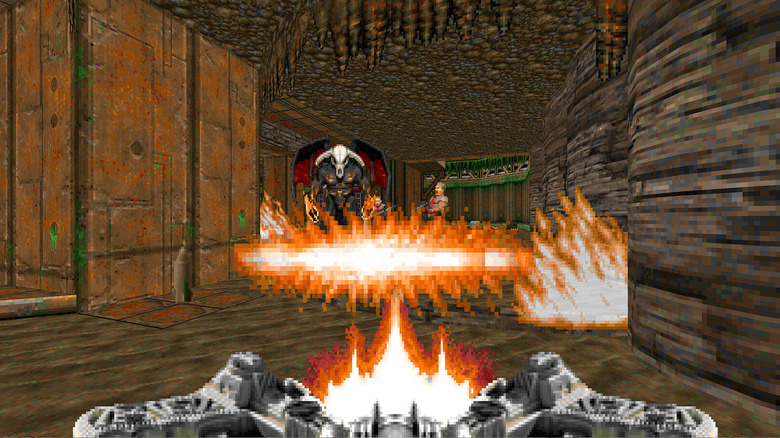
id Software’s biggest project prior to “Quake” was “Doom II,” the 1994 sequel to the breakout original game. This game relocates the action to Earth, which has been overrun by the armies of Hell, and only Doomguy is able to save humanity. The sequel features larger and much more intricately designed levels while bringing new enemies and weapons to the mix. The multiplayer modes have also been revamped considerably, with the series taking its first steps into online multiplayer and local area network gameplay.
“Doom II” is one of the best PC games from the ’90s, surpassing the high bar set by its 1993 predecessor. The levels are more grandiose and there are subtle improvements in the technical presentation, particularly the lighting. The sequel also set the stage for more ambitious multiplayer modes to follow, many of which helped “Quake” find its own audience. id Software’s masterpiece, “Doom II” is a must-play for anyone who is a fan of the company’s work.
Heretic
Raven Software
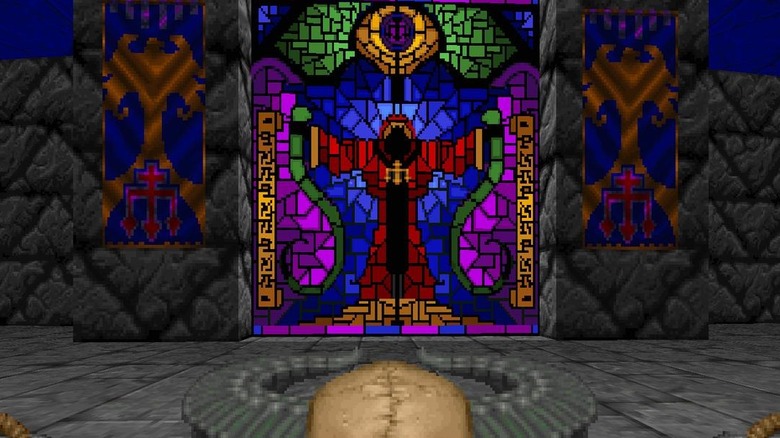
id Software worked with a number of third-party studios in the ’90s using variations of its proprietary “Doom” engine, including Raven Software. The first Raven game that id published was the dark fantasy title “Heretic,” which was released in 1994. The game’s protagonist is an elven warrior named Corvus, who sets out to save his realm from monsters invading from the sinister Hell’s Maw. Like “Doom II,” “Heretic” had its own online multiplayer gameplay component for players to go head-to-head.
Offering a fantasy twist on the first-person gameplay introduced in “Doom,” “Heretic” spawned its own subseries of games by Raven and id. To underscore its genre aesthetics, “Heretic” has a much more pronounced atmosphere, with moody environments and sound design. The gameplay features some subtle innovations too, including an inventory system and secondary fire options for certain weapons. While some may prefer the game’s standalone sequel “Hexen,” we’ve got a soft spot for “Heretic” as the series’ launchpoint.
Duke Nukem 3D
3D Realms
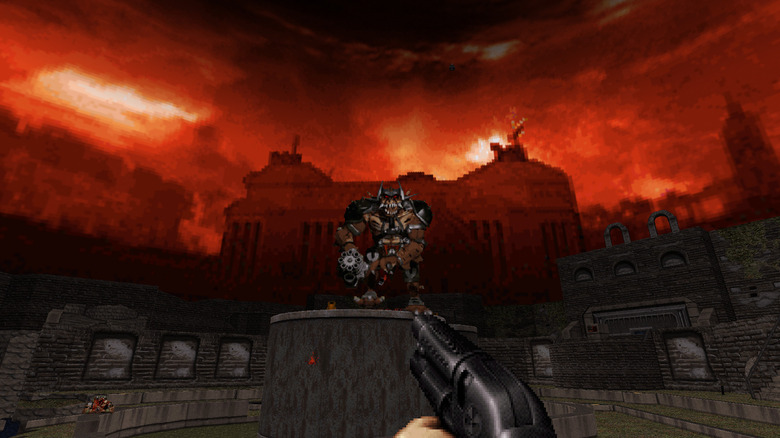
Whereas many ’90s first-person shooters featured silently stoic protagonists, “Duke Nukem 3D” went in a decidedly different direction. By moving the side-scrolling action hero pastiche into a first-person experience, the 1996 game provided players with a more immersive perspective. The game opens with Duke defending Earth from an extraterrestrial invasion, delivering innuendo-laced one-liners as often as bullets. Like many other titles on this list, “Duke Nukem 3D” also has both cooperative and competitive multiplayer modes.
With its crude humor and bevy of scantily clad women, “Duke Nukem 3D” is a ’90s game that would never be made today. The 1996 title perfectly encapsulates the gamer sensibilities of its time, leering protagonist and all, offering a nostalgic blast from the past for those who were there the first time around. This would all be moot if the gameplay itself wasn’t explosively fun — which, fortunately, it is. Many retro FPS games tried to copy “Duke Nukem 3D” but, at the end of the day, accept no substitutes.
Turok 2: Seeds of Evil

Acclaim Entertainment/Atari
One of the best Nintendo 64 games of all time is “Turok: Dinosaur Hunter,” which was released in 1997. The game’s direct sequel, “Turok 2: Seeds of Evil,” was released the following year and was darker, tougher, and meaner than its predecessor. While the game’s single-player campaign does present players with objectives to complete, they feel less intrusive than those in “GoldenEye.” The game’s biggest addition is the inclusion of multiplayer modes, which had been conspicuously missing in the original title.
Taking better advantage of contemporary hardware capabilities, “Turok 2: Seeds of Evil” is a much more visually evocative title than its predecessor. Retaining the arcade-style gameplay that the series began with, the sequel features more ambitious level design and variety in enemies and weapons. The game also ups the graphic on-screen violence, something all the more apparent by its improved technical presentation. Remastered for modern platforms in 2017, “Turok 2: Seeds of Evil” took the late ’90s FPS series to new menacing heights.
Unreal Tournament
Epic Games
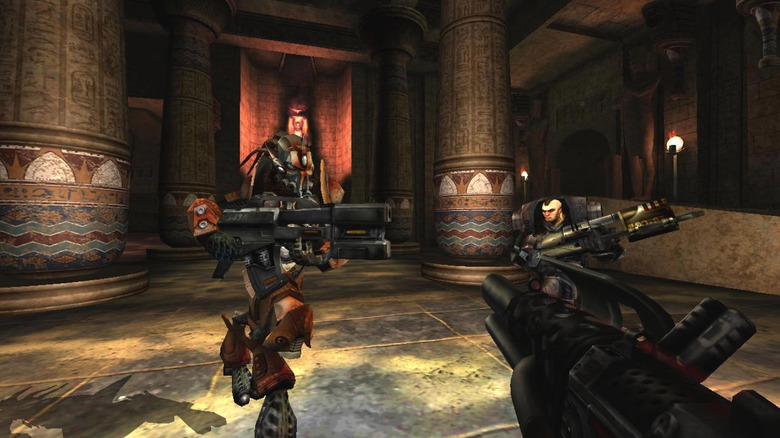
If there was ever an heir apparent to “Quake,” it wasn’t anything published by id Software, but rather the “Unreal” series by Epic Games. After starting in 1998 with “Unreal,” the series truly found its frenetic first-person direction with its 1999 follow-up “Unreal Tournament.” The game doubles down on the multiplayer combat present in the first game, this time within an arena shooter setting. The game eschews a more involved single-player story campaign, instead revolving around gladiatorial games in the franchise’s futuristic sci-fi setting.
With its shift to arena shooter gameplay, “Unreal Tournament” most clearly evokes the similar setup in “Quake III: Arena.” Following its success, Epic largely repositioned the franchise as a competitive multiplayer FPS experience, rather than one driven by story. Thanks to the Unreal engine, the game also looks amazing for its time and runs smoothly compared to much of its direct competition. Marking the moment when Epic Games began to truly take off and seize the FPS multiplayer crown from “Quake,” “Unreal Tournament” holds up beautifully today.