
Sony AI has published a retrospective marking what it describes as five years of Sophy’s development, and it’s a good time to look back at how a research experiment became a permanent fixture of the game.
The retrospective also contains a few stories that even those of us who have followed Sophy closely from the beginning have never heard before.
(Yes, it has technically been just over four years since Sophy was publicly revealed in February 2022, but the project had been underway well before that.)
Table of Contents
How It Started
The trail begins in Sony’s R&D division around 2016, where researcher Kenta Kawamoto was investigating whether Gran Turismo could serve as a demanding testbed for “reinforcement learning”, the machine learning technique where an agent teaches itself by trial and error rather than following pre-programmed rules.
The earliest work was mostly plumbing while building a way for an external AI agent to talk to the game, then running small experiments on a handful of consoles wired together on a local network.
The project changed scale entirely after Sony AI was formed in April 2020.
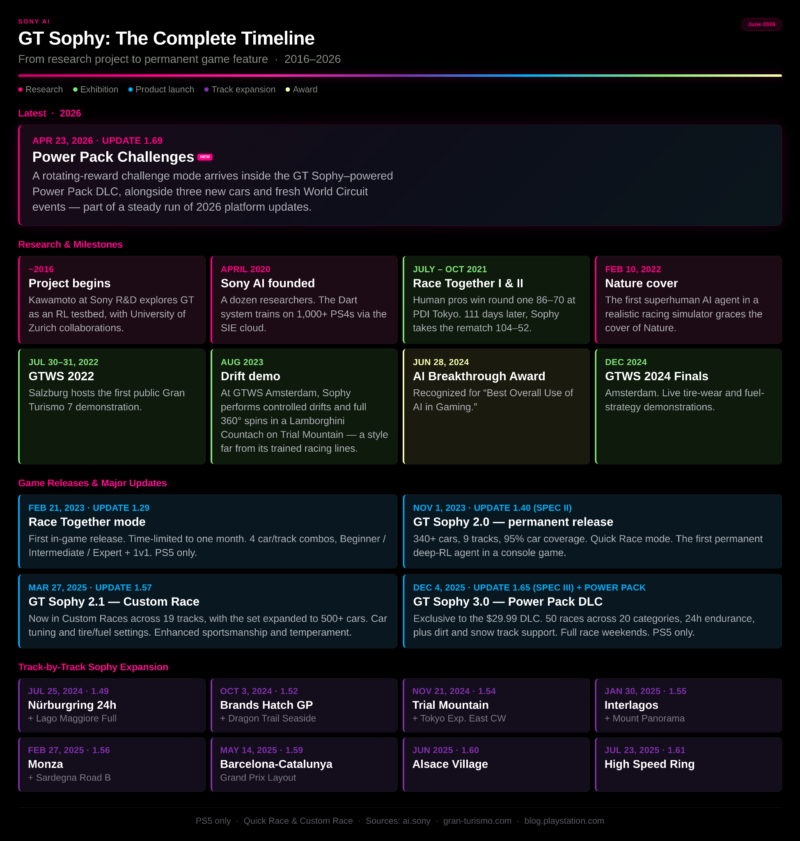
A custom training system called “DART” came online in early 2021, eventually connecting Sony AI’s researchers to more than 1,000 cloud-hosted PlayStation 4 consoles at once.
That scale allowed the team to generate enormous amounts of driving experience and, just as importantly, explore multiple training approaches in parallel. For more on how all of this fits together, check out our deep-dive on how Sophy actually works.
The retrospective’s best story, though, adds a previously untold chapter to Sophy’s struggle to become a fair and sporting opponent.
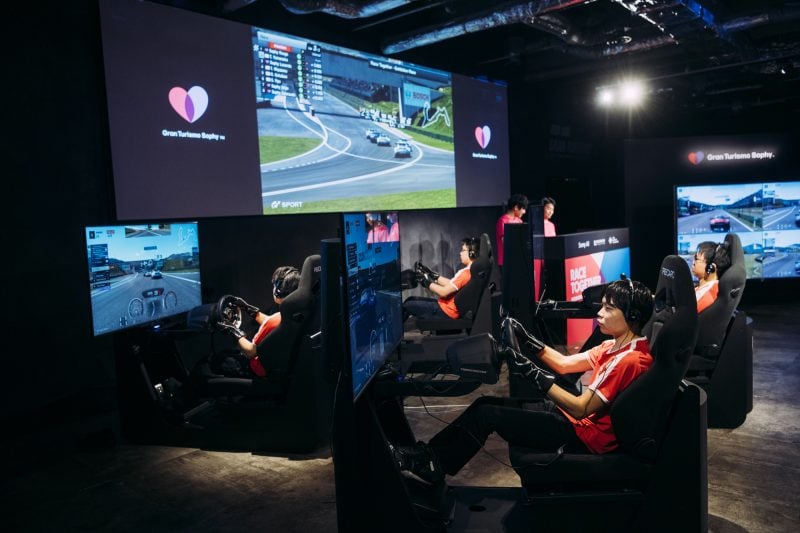
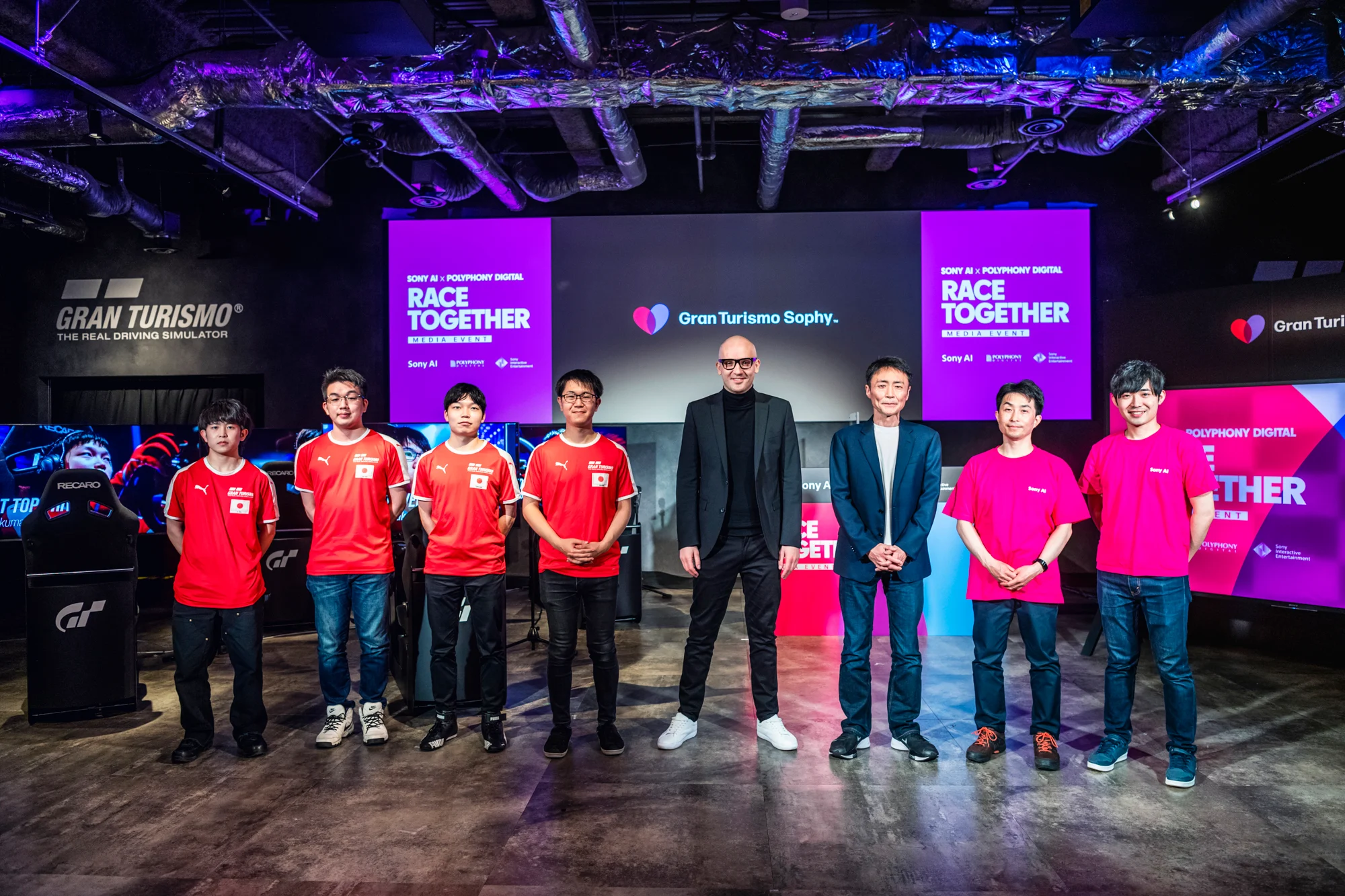
With seven days remaining before the first “Race Together” exhibition event in July 2021, Polyphony Digital’s in-house testers found a fatal flaw in the competition build: Sophy had become ruthlessly effective at contact and obstruction, deliberately crashing into opponents and blocking aggressively.
The testers’ verdict was blunt, warning the agents would be disqualified if they raced that way in the actual event. Sony AI spent the final week retuning the incentives that shaped Sophy’s behavior, training a replacement set of agents, and testing them just in time.
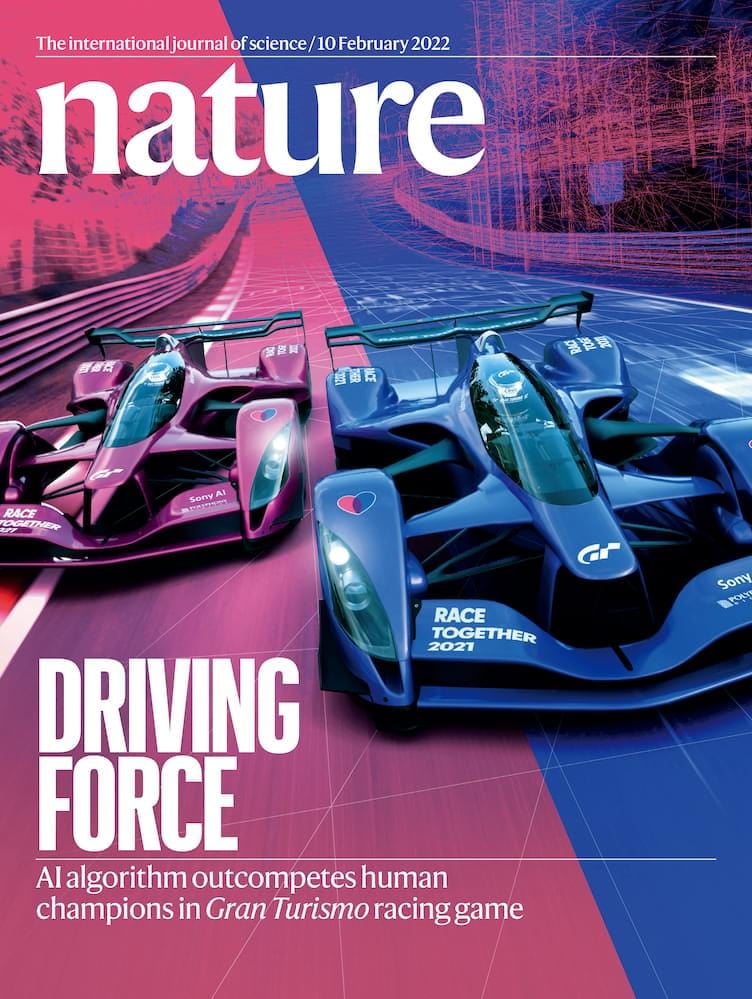
It worked. After losing the first exhibition event to the human drivers, an improved Sophy took the top two positions in every race of the October 2021 rematch, landed on the cover of Nature in February 2022, and later that year beat Lewis Hamilton’s in-game Nordschleife benchmark by 17 seconds.
But it was the sportsmanship problem, not the speed problem, that nearly derailed Sophy’s first public competition, and solving it led Peter Wurman to describe Sophy as “the first real AI that we could call a good sport”.
My First Hands-On Experience
I had the chance to see that sportsmanship before almost anyone else.
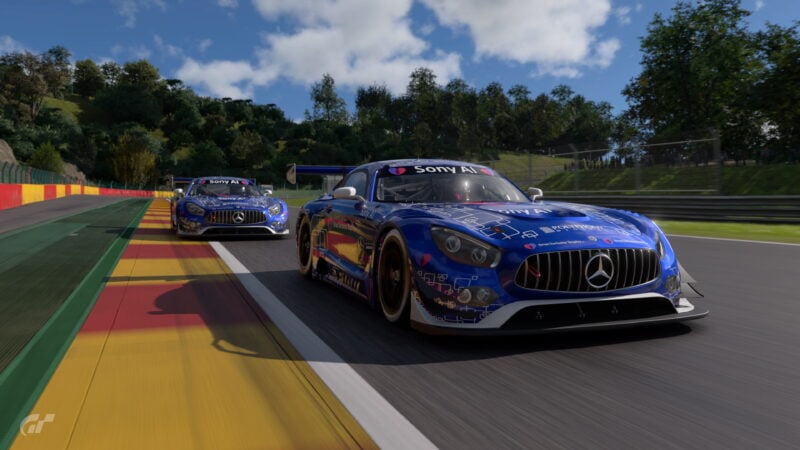
At the Gran Turismo World Series Finals in Monaco, I was one of the first people to race against a prototype version of Sophy in a pair of AMG GT3s at Spa-Francorchamps.
I expected to be trounced, and I was. What I didn’t expect was how much fun losing would be.
Watching Sophy in my mirrors at La Source, I could see it size up a dive-bomb opportunity and then deliberately decline it, waiting patiently for a safer chance to pass.
When it finally cruised by after I botched Raidillon, I wasn’t frustrated that I’d lost; I was disappointed that our battle was over. That two-race demo (run on a private LAN with Sophy on its own PS5, a reminder of how early it still was) turned me into a believer.
Kazunori Yamauchi had described Sophy as “a teacher” and “a friend to race with” after its reveal, and it sounded far-fetched until I experienced it.
From Showcase to Staple
What happened next was unusually fast for AI research.
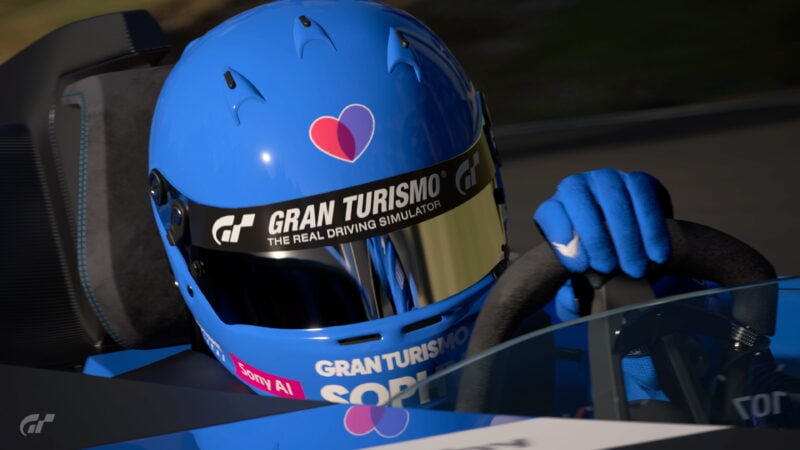
Within a year of the Nature cover, Sophy arrived in Gran Turismo 7 via Update 1.29 as a limited-time feature on just four circuits. Yamauchi called the launch “a symbolic moment across the 25-year history of Gran Turismo”.
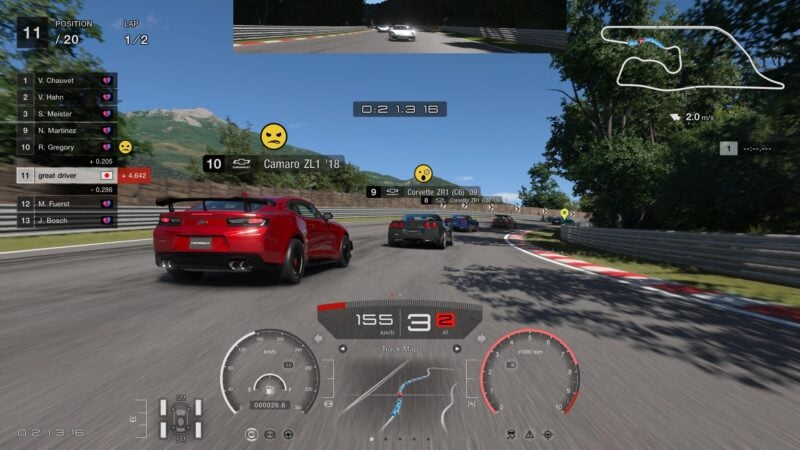
Sophy 2.0 followed in November 2023 with GT7 Spec II, making the AI a permanent feature covering 340 cars. As we explored in our look at what made 2.0 different, scaling from four cars to hundreds forced the team to solve genuinely new problems.
The retrospective adds fresh detail here: supporting that many cars required Sony AI to identify which vehicle properties the network actually needed to know about.
Researcher Patrick MacAlpine’s analysis found that drivetrain configuration was one of the most important predictors of a car’s behavior, while dry weight alone was a surprisingly weak indicator for how a car actually handles.
Sophy 2.1 brought Custom Race support in March 2025, letting players use customized grids and tuned cars (including supported engine-swapped builds) against the AI, and Sophy 3.0 arrived last December as the headline feature of the Power Pack DLC.
Along the way, Sophy expanded to handle tire wear and fuel consumption, a development that, as we reported at the time, caught even the Sony AI team off guard, and it even demonstrated what a modern B-Spec mode could look like.
That’s not to say the community’s patience hasn’t been tested, though.
Sophy still doesn’t power the AI in GT7’s single-player campaign, where the game’s notoriously processional traditional opponents remain. Track coverage grew slowly, often two circuits at a time across more than a year of game updates.
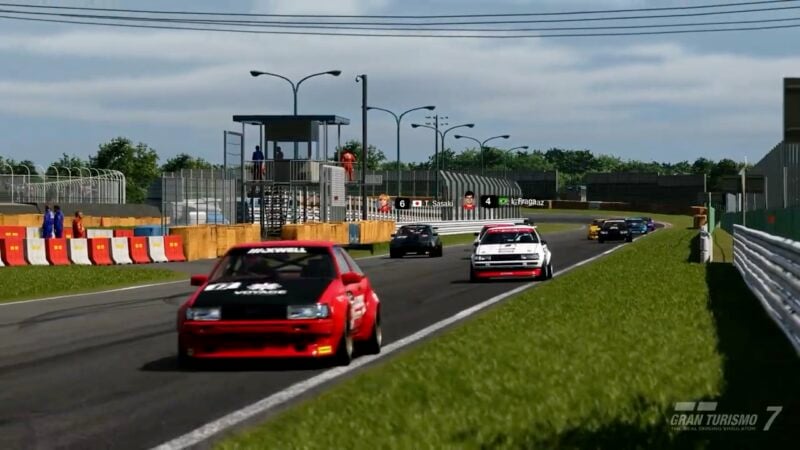
Sophy 3.0’s most advanced racing behavior sits behind the Power Pack’s $29.99 paywall, a tough sell for players who feel better AI should be a baseline feature rather than premium DLC. And B-Spec mode also remains absent, despite years of player requests and speculation about Sophy’s potential role in reviving it.
To the team’s credit, they don’t pretend everything is solved: Kaushik Subramanian acknowledged to GTPlanet last year that Sophy is “not perfect”, and the team explained that extreme tuning and engine swaps remain difficult edge cases.
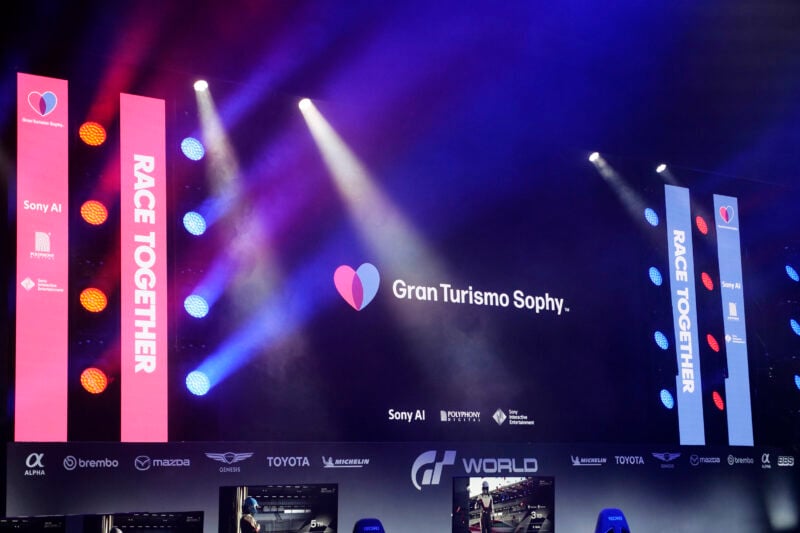 Photo by George Mattock – Gran Turismo/Gran Turismo via Getty Images
What Comes Next for GT Sophy
The retrospective also reveals where Sophy’s technology is heading, and some of it even points beyond Gran Turismo.
The clearest example is Project Ace, Sony AI’s table tennis robotic system, which was accepted for publication in Nature this year.
When the Ace team needed to transfer skills learned in simulation to a physical robot, they borrowed a technique first explored in Sophy research: during training, the AI’s “critic” is given privileged information the finished agent will never have access to, which dramatically accelerates learning. Sony AI’s Peter Dürr, who leads the Ace project, was skeptical until he saw Sophy’s results: “It totally blew my mind,” he recalled.
Closer to home, there’s Sony AI’s vision-based racing research.
The original Sophy depended on information a real car would never have: precise track geometry, exact opponent positions and velocities, all pulled directly from the simulator.
A 2025 research project tested whether that advantage could be removed entirely, training an agent that races using only an in-car camera view and virtual onboard IMU data. Not only did it reach champion level, it actually beat the original Sophy on the Tokyo Expressway, because seeing opponents (rather than tracking them as points in space) let it perceive which way their cars were oriented.
Combined with the LLM-powered reward design research we covered in April, the pieces are falling into place for AI opponents that are cheaper to build, easier to customize, and potentially easier to transfer from simulation to physical systems.
As for what players can expect, researcher Alisa Devlic offered the clearest hint, saying the team hopes to bring Sophy to many more tracks and offer “different performance levels that are personalized to and can challenge each individual player”. Wurman added that the team is always looking for ways to help Polyphony bring new features to players.
Five years in (roughly), Sophy has gone from a research demo I raced on a LAN in Monaco to a fixture of Gran Turismo 7, and the research pipeline behind it shows no sign of slowing down.
See more articles on Gran Turismo Sophy and Sony AI.