


I finally did it. After months of endless restarts, chasing benchmark scores, and dealing with random Unity engine micro stutters, I stopped trying to win the mqx score on paper and focused entirely on real world stability and reliability.
This rig is strictly for heavy open world gaming (primarily massive Rust compounds and Battlefield 6) while simultaneously multi streaming to Twitch, Kick, and YouTube with local recordings. I wanted zero crashes, zero clock stretching, and perfectly smooth frametimes.
Here is the final, bulletproof daily configuration that got me there:
Under da hood:
CPU: AMD Ryzen 7 9850X3D
GPU: MSI SHADOW 16G 3X OC RTX 5070 Ti
RAM: 64GB (2x32GB) Corsair Vengeance DDR5
CMH64GX5M2B6000Z30
Mobo: MSI MAG X870E TOMAHAWK WIFI
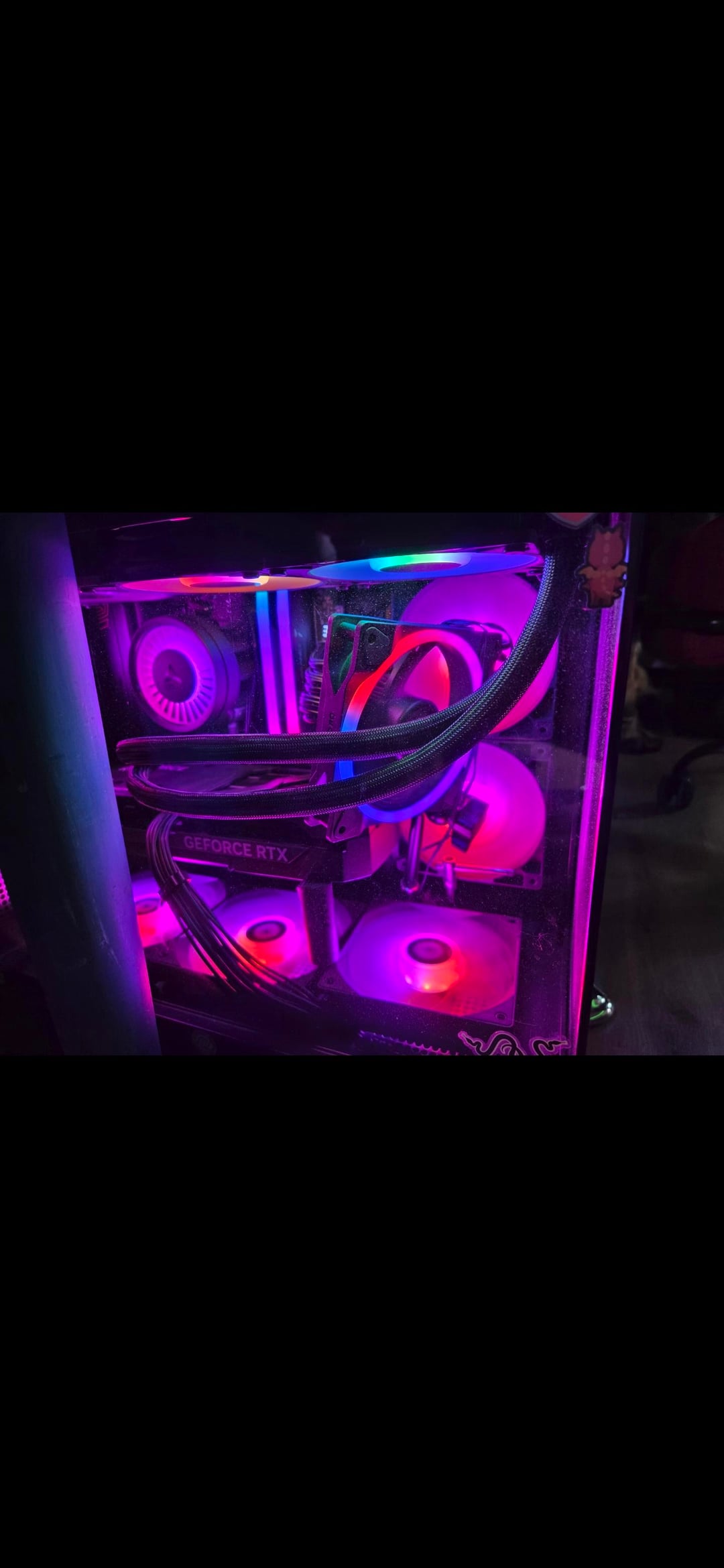
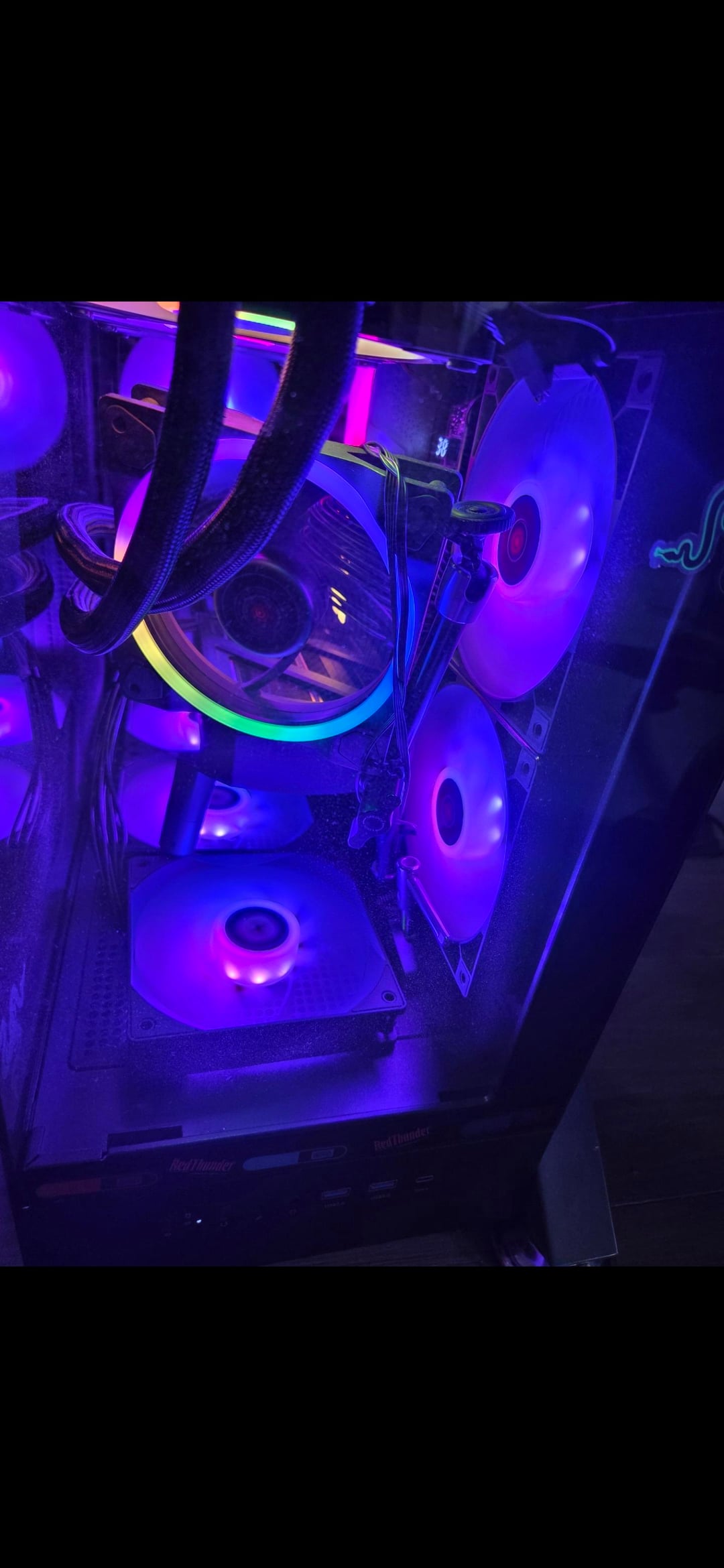
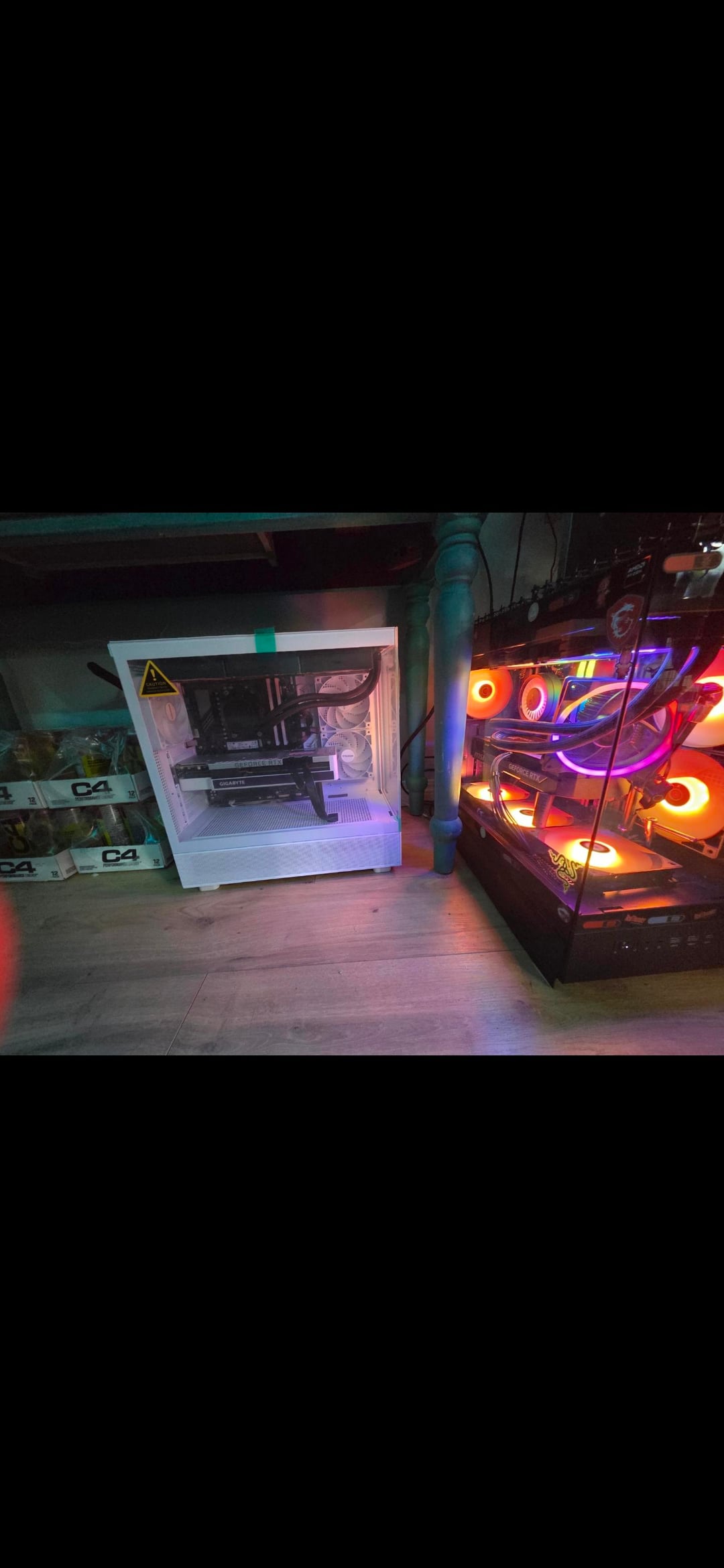
Custom cooling setup including dedicated active RAM cooling (see pics).
CPU: Defeating the "Overboost" BS Trap Ryzen 7 9850X3D)
For the longest time, I was getting violent stutters because I fell for the +200MHz PBO override trap. Forcing the chip to chase an artificial 5.85GHz ceiling was starving the cores and causing massive clock stretching.
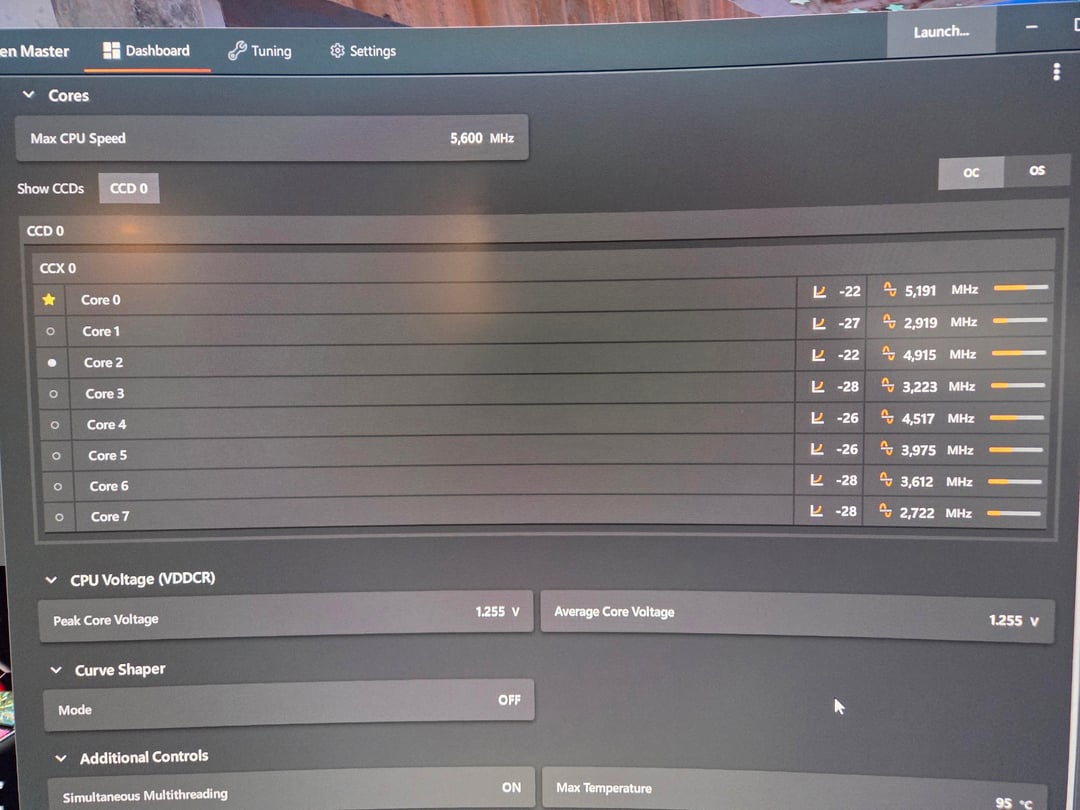
The Fix: I completely disabled the +200MHz override, locking the processor to its natural factory ceiling.
The Curve: Because the frequency target is lower, the voltage demand is lower. This allowed me to run a super deep, stable Curve Optimizer: -22 on the two best cores, and -26/-28 on the rest.
The Result: The CPU sits at a freezing 56°C under heavy gaming loads, draws way less power, and feeds the GPU perfectly with zero stuttering.
GPU: The Undervolt Masterpiece (MSI RTX 5070 Ti Shadow)
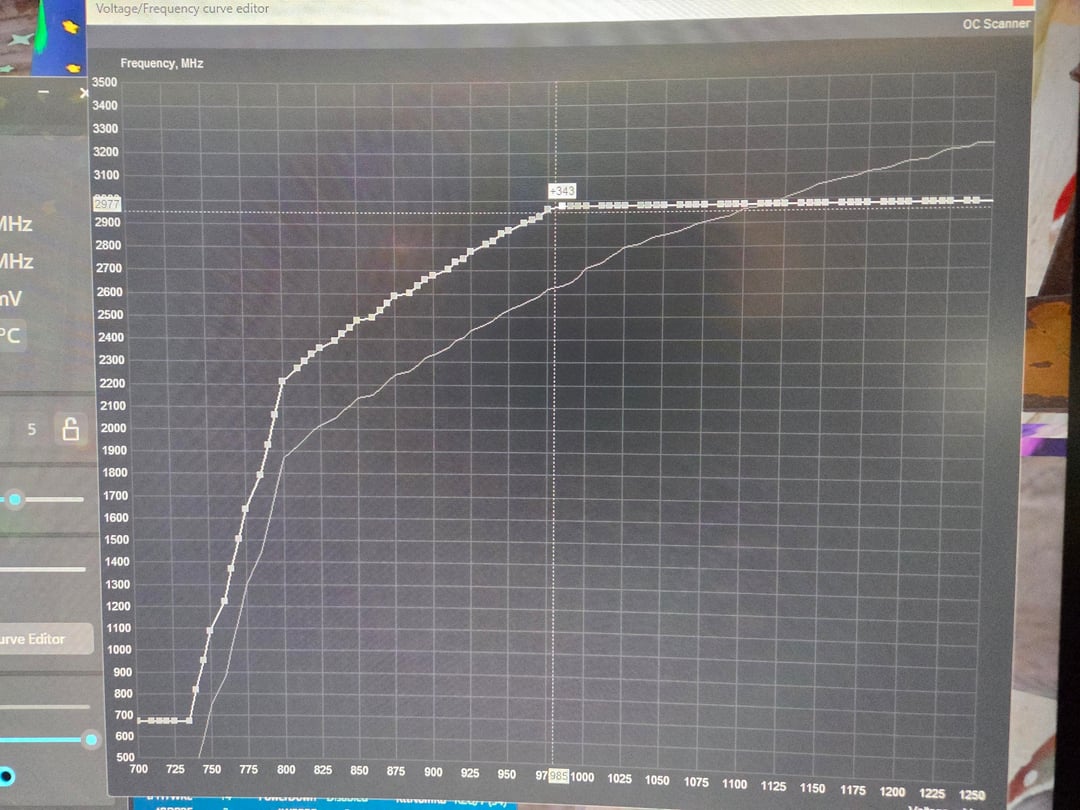
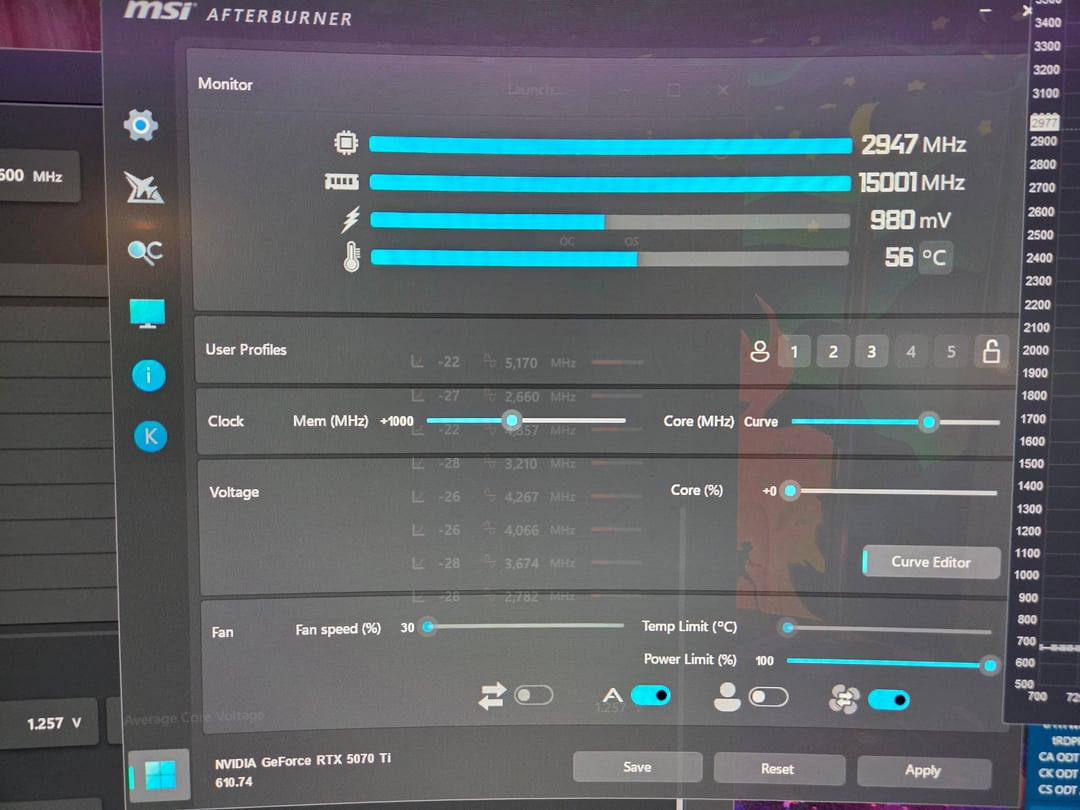
I ditched the automated OC Scanner and went fully manual to keep the 3X fans quiet and the room cold, taking full advantage of the 16GB of GDDR7 memory.
Core: Flattened the voltage curve to a hard stop at 2977 MHz @ 0.985V. It refuses to draw more than a volt, barely breaks a sweat, and absolutely crushes frames.
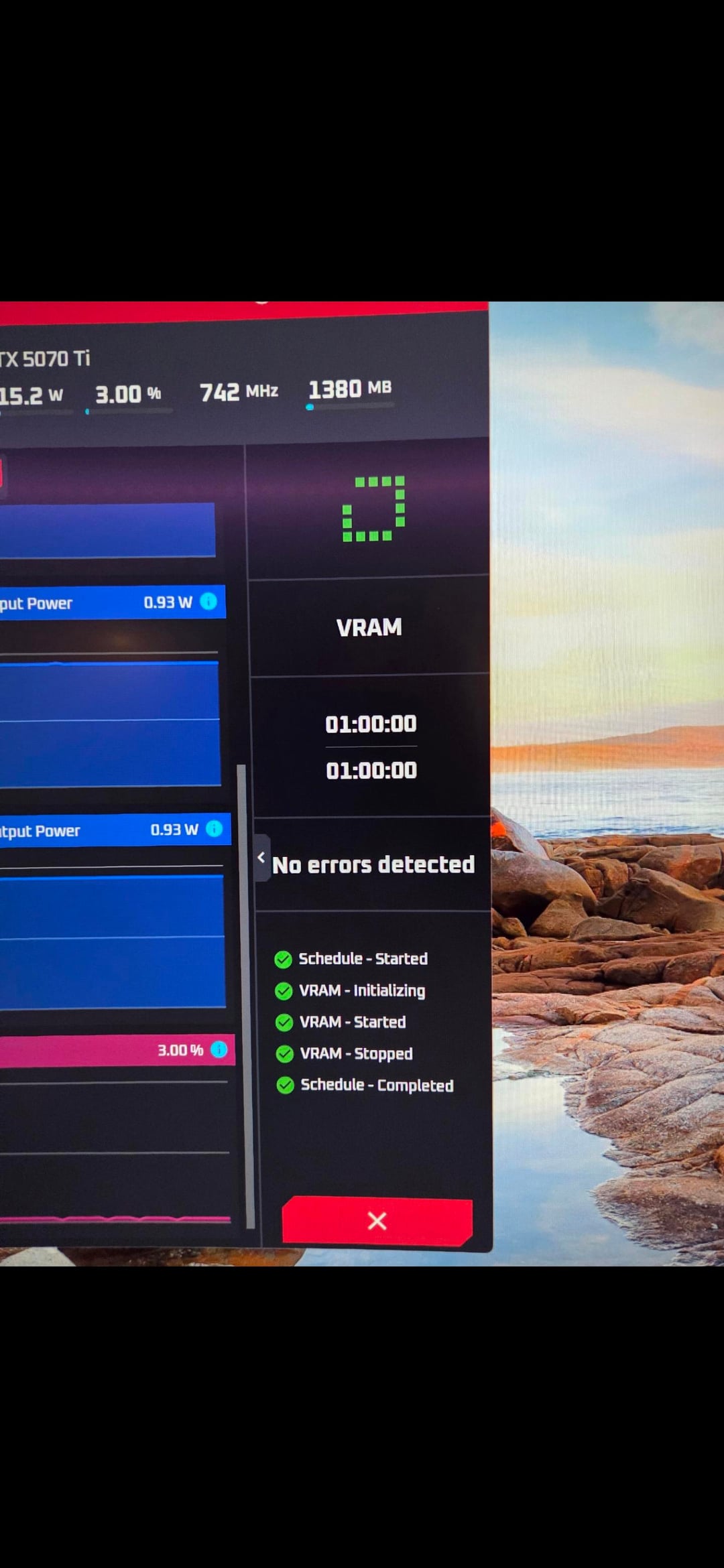
VRAM: Dialed to +1000 MHz. I originally pushed it to +1200, but HWiNFO caught the PCIe bus throwing recovery errors because the memory controller was choking on math errors. Dropping it to +1000 completely cleared the data highway.
RAM: Pure Mathematical Stability (64GB DDR5)
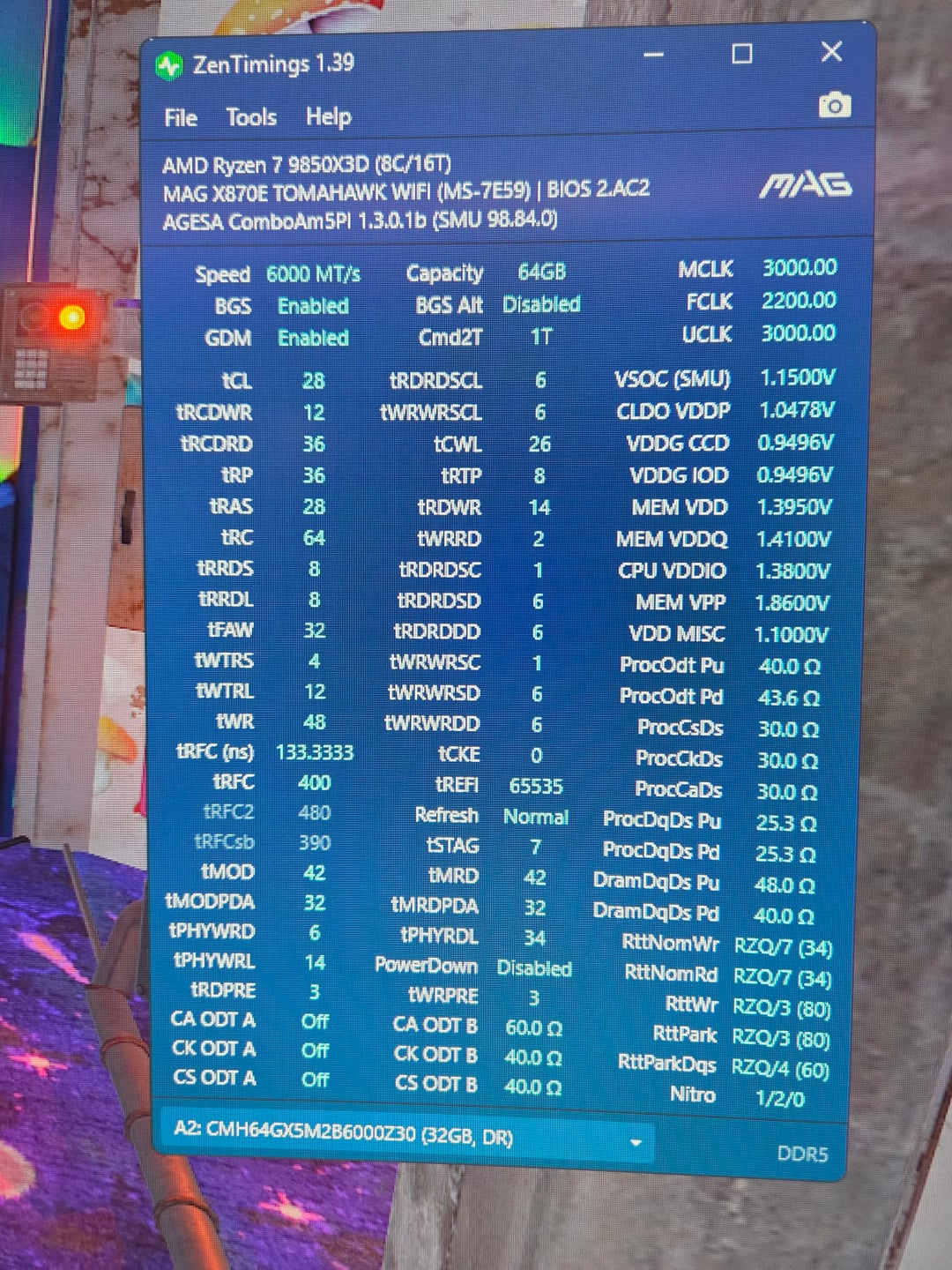
Running 64GB of dual rank memory is notoriously heavy on the memory controller, but dedicating a custom fan directly to the sticks allowed me to push the timings to the absolute edge without decoupling/errors.
Speed: 6000 MT/s locked in a perfect 1:1 ratio (UCLK 3000 / FCLK 2200).
Timings: Tightened down to CL28-12-36-36 with the crucial 8-8-32 subtimings.
The Proof is in the Synthetics
I ran a few synthetics, not to brag about high scores, but to prove the stability of these daily driving tweaks:
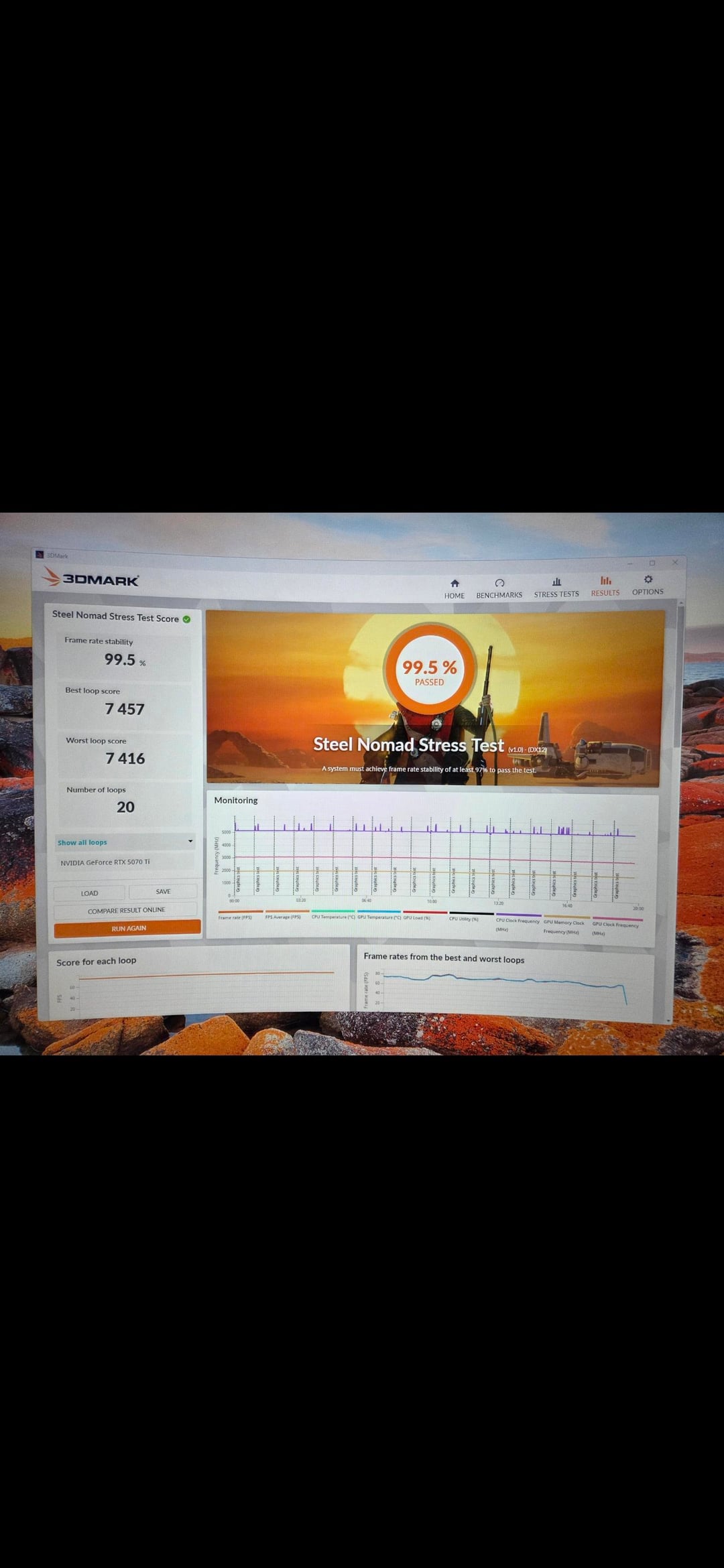
3DMark Steel Nomad Stress Test: Passed with 99.5% frame rate stability across 20 loops. The GPU undervolt refuses to thermally throttle under sustained loads.
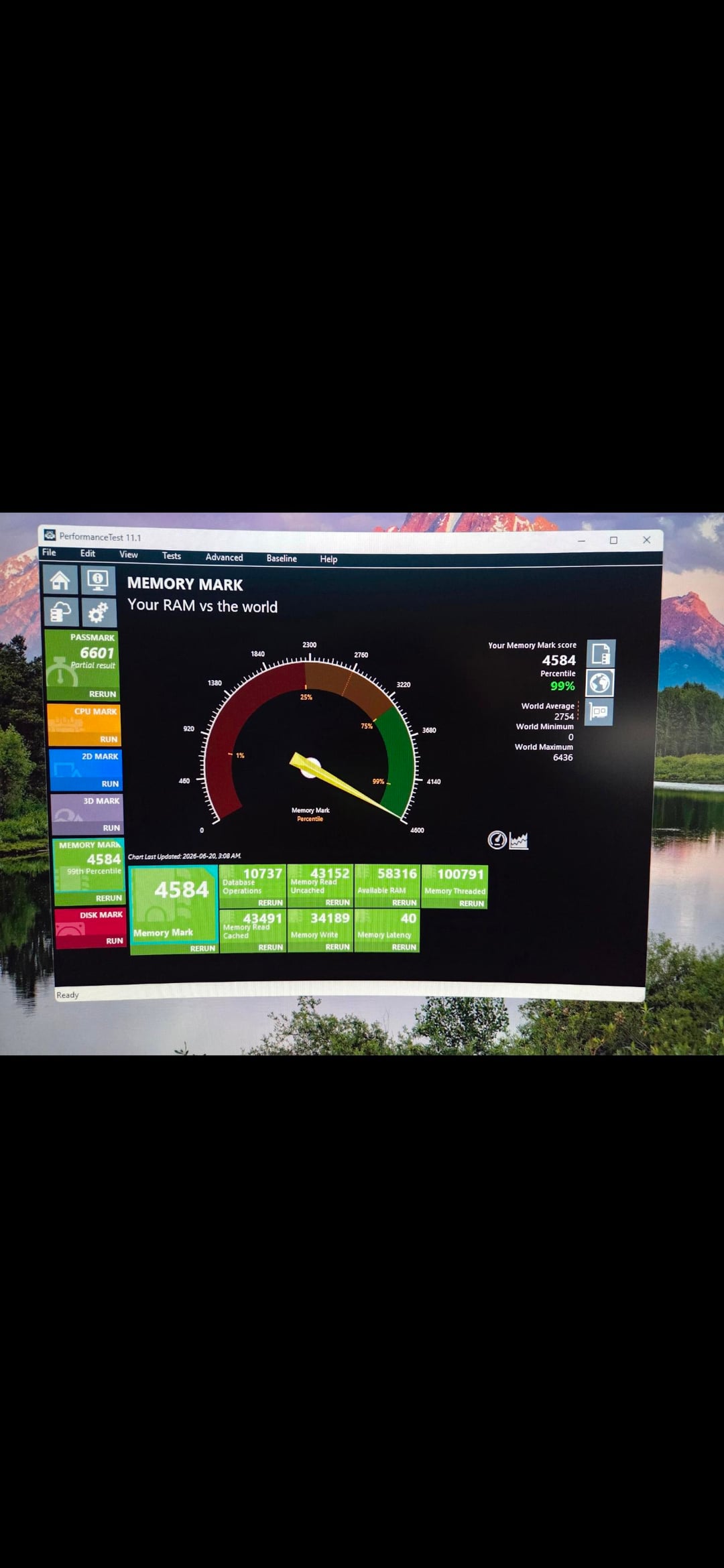
PassMark Memory: Hit the 99th Percentile globally (4584 Memory Mark). That custom RAM fan and tight CL28 timings are actually putting in the work.
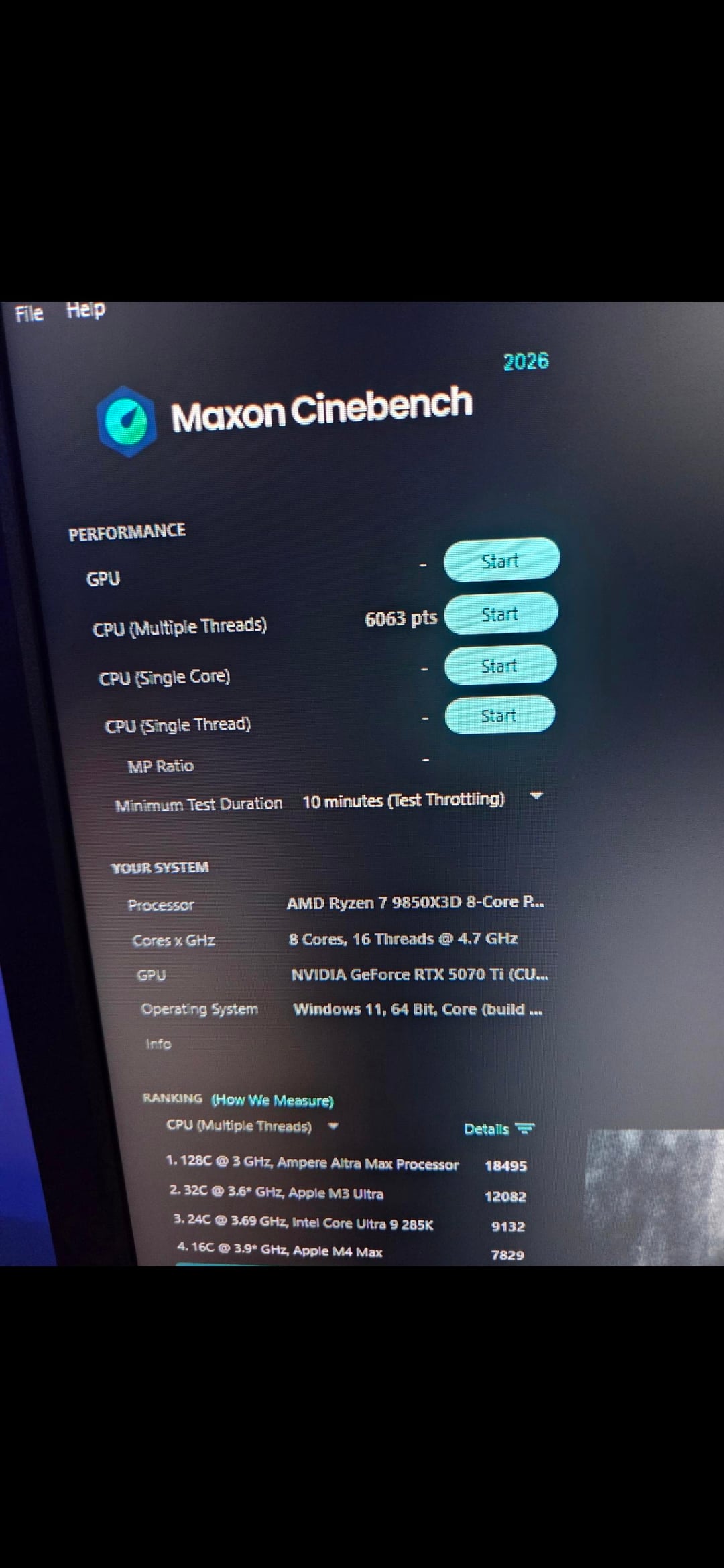
Cinebench 2026: Pulled 6,063 points on the multi-thread run, proving the deep Curve Optimizer isn't secretly clock stretching when all 8 cores are slammed to 100%.
I’m officially done tweaking. It easily survived an overnight idle test without the low-voltage curve crashing, and my Rust frametimes are sitting at a buttery, locked 7.8ms. Time to actually play some games.
(Check the image gallery for the ZenTimings, custom curve, cooling loop, and the mandatory Budgie Pool Party )
P.S Passed absolut and ryzen TM5 8+ hours.