
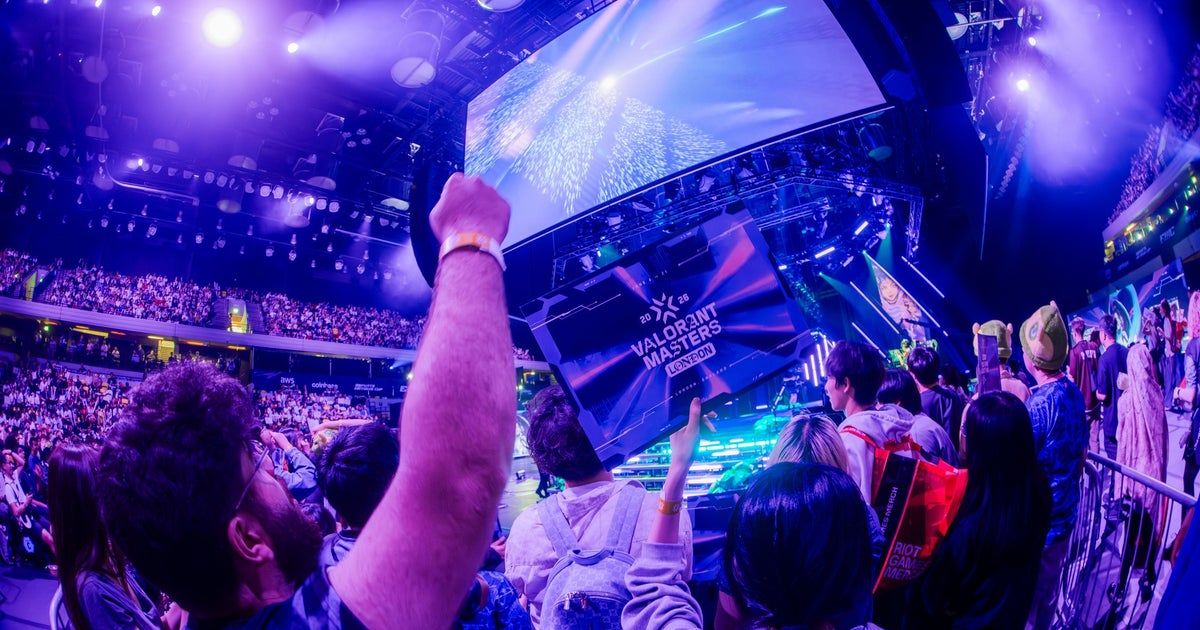
Riot Games’ esports business still isn’t profitable.
This has been the case for a long time, and historically it hasn’t necessarily been a problem for the League of Legends giant; at various points in the past, then-head of esports John Needham explained that his firm wanted to ensure the broader ecosystem, including the various esports teams, was profitable. But the aim was for esports to be a sustainable business in its own right.
That business is now “super close” to being profitable. What’s changed? Needham – now head of publishing and esports at Riot – says the firm has adjusted how it operates its pro-gaming business since 2020.
“Coming out of the pandemic, we were in this esports winter,” he tells GamesIndustry.biz.
John Needham | Image credit: Riot Games
“The sponsorship business was weak, teams were having a hard time getting capital and investment in their business. We pivoted our business model away from sponsorships to digital items; that was a big positive move for teams. Teams also adjusted how much they were spending. The team business is in as good a place as it has ever been, now, and we are trying to do other things to allow teams to make alternate sources of revenue.”
Some teams, like France’s Karmine Corp (aka KCorp) or South Korea’s T1, are running their own esports events, and Riot says it is being “more liberal” in letting them participate in third-party tournaments.
“We’ve loosened up a bit about how we manage the sport, and teams have adjusted their financial model, and we are sharing more revenues with them than we ever have,” Needham continues. “Last year, for the Valorant Champions tour, we shared over $100m in digital revenues with teams.”
No blazers
Over the years, Riot’s approach to esports has changed. To start with, the company tried to ape the look and feel of traditional sports broadcasts – “serious shows with guys with ties and blazers on,” Needham laughs.
“Very quickly, our players didn’t want that. They wanted our casters to be having fun, to be talking about our esports like gamers would, to be not so serious and buttoned up.”
Needham argues that esports is probably “more important” to Riot than to any other publisher.
“The core experience of our games is competition,” he explains. “We think about esports as really just an extension of the core game experience.”
“About 60% of our viewers watch esports to learn about the game”
For a long time, esports functioned more as a marketing expense for Riot Games. The ecosystem wasn’t about making money for the company, but rather showcasing its titles to a huge audience. The goal has now shifted to be explicitly profitable, but the old ethos is still in effect.
“The most important part of esports for us is just getting our players to go back in and play our games to engage in our games,” Needham says. “It’s a very good way to inspire players to play, and we have tons of science around the effect that esports has on engaging players. About 60% of our viewers watch esports to learn about the game. So when you watch our broadcasts, you’ll see they’re very technical, and that’s the reason why – we’re trying to help our players learn how to play our games better.”
Riot Games’ Valorant can attract big audiences | Image credit: Riot Games
Riot’s esports broadcasts appeal to the hardcore audience – the players that want to understand the depth of the mechanics in the studio’s games – but expanding beyond that audience has “always” been the plan for the League of Legends firm.
“We have continued to set new viewership records with our international events year on year,” Needham says. “One of the great parts of esports is that it allows us to keep engaged with players who may not actively be playing our games. I think we’ve seen that play out. Our player bases are growing in League of Legends, Valorant, and Teamfight Tactics, but our viewership in esports events is growing at a faster rate.”
He continues: “Our esports viewers are some of the most valuable players in our game and some of our biggest advocates out there in gaming communities. We are always looking to grow, and luckily, we are.”
Riot recently launched the fighting game 2XKO. On paper, there’s a readability to these kinds of titles that isn’t present in the company’s other games – a regular person is more likely to watch a fighting game and understand what is happening than something more complicated like a MOBA – which would make it a better prospect for a wide viewership. But Needham says that Riot’s view of 2XKO’s esports potential is less as a “viewership product” due to the established fighting games scene.
“There’s a pre-existing circuit of esports events like Evo,” Needham says. “As we think about esports for our games, we want to think about esports in a way that is super authentic to our community and do it in a way that the community expects. The fighting game community expects you to participate in these circuits that they love so much. We’re really investing in how we can show up at Evo in a great and authentic way that the fighting game community expects. It’s another variation of esports for us.”
Gambling
Last year, Riot ran into controversy after allowing gambling firms to sponsor esports teams, prompting a backlash from parts of its community. Needham sees such clients as an uncomfortable reality of anything competitive.
“Gambling is going to happen around esports regardless of if we are involved or not,” he says. “Our thought was to find a good, best-in-class way to engage with these betting platforms in a way that was good for players. We designed this programme in which a betting platform, an official betting platform of Riot esports, must subscribe to our data service. We make sure they’re getting clean data from us.
“Gambling is going to happen around esports regardless of if we are involved or not”
“We don’t promote them on our broadcast or anything, but they are allowed to put our marks on their site. They help us monitor the competitive integrity of our esports matches and isolate matches where we may have match-fixing or other activities that compromise the integrity of our sport. We take the integrity of our competitions very seriously, and this is just one of the ways that we could manage any match-fixing activity that might be happening in our sport. We don’t find it that often, but this does help us do that.”
In addition to heading up esports efforts at Riot, Needham’s new job title also places him at the head of the company’s esports business. Essentially, he is in charge of everything that “wraps around the game,” such as music, consumer products, platform player support, quality assurance… the list goes on.
League of Legends is still going strong some 17 years after its launch | Image credit: Riot Games
“Our big goal at the end of the day is to deliver these mind-blowing cultural moments for players, because we are a fandom engine at the end of the day, for Riot,” he explains. “We want to take players of our games, we want to elevate them to be fans of our games, to be fans of Riot, because we have games that we don’t think of in terms of years, but in terms of generations. All of our games have had tremendous longevity because Riot invests a lot back into our players, whether that’s esports events, music videos, big cinematics, or consumer products. These are all ways that we try to invest back into the community and keep them engaged in our games over very long periods of time.”
One massive transmedia project in recent memory is Arcane, the Netflix anime based on League of Legends that drew in a huge audience, even people who aren’t into games. Needham says Riot is “so proud” of the show. When asked whether the success of Arcane has prompted Riot to expand its transmedia ambitions, he is coy. “Transmedia is a part of our future,” he states, simply. “We are developing a lot of exciting projects right now.”
Future projects
Riot continues to expand its games, both in number and scope. For much of the firm’s history, it was focused on a single title: League of Legends. Then in 2019, Riot announced three new games and teased a number of upcoming projects, mostly codenamed: Project A became Valorant, and Project L became 2XKO. Still to release is Project F, a multiplayer game, and a subsequently announced MMO, also set in the world of Runeterra. The firm continues to maintain League and has big plans for Valorant.
“We will have a very exciting year for Valorant this next year, and that’s all I can say,” Needham says. “We’re not ready to announce anything yet. The Valorant IP will be growing very soon.”
The free-to-play fighting game 2XKO was released in January 2026 | Image credit: Riot Games
Looking ahead to the next few years, Needham’s plans for Riot’s esports business are largely centred around “getting out there and doing more events.”
“We’re trying to reach our fans more,” he explains. “This last year, we have experimented with a college tour across China, which was very successful. We’re going to be doing something similar next year with League of Legends outside of China. You’ll see us doing more live events, you’ll see us leveraging some of our team facilities and their events to do some official Riot events. Getting out more and touching our fans will be a bigger part of the esports experience going forward.
“I am just hoping to evolve this business model to a place where we are a self-sustaining business, and all the benefits of esports, Riot will get for free, essentially. We can break even and be self-sustaining within Riot as a standalone business. Even though we want to be tightly integrated with the games, it would just be great if we could do that. We are well on our way to sustainability. We’re very close.”