
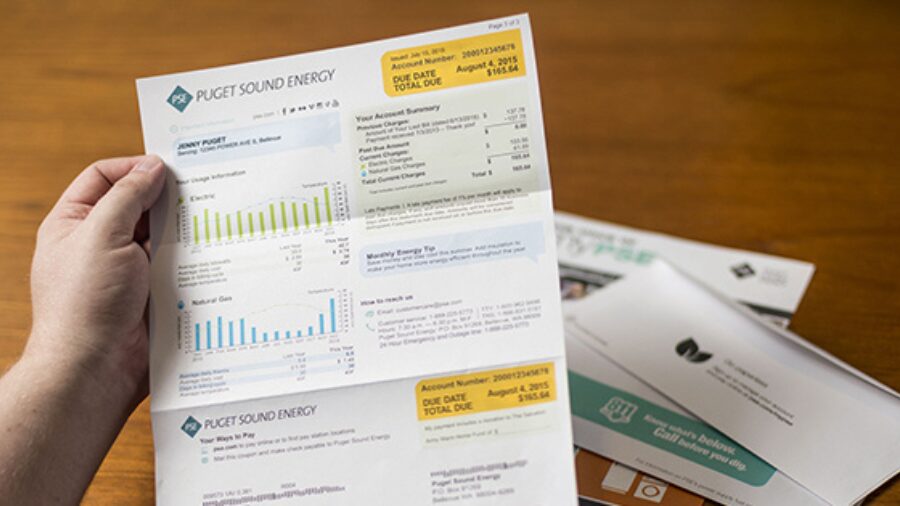
An article in The Seattle Times featured a woman who explained that her electricity bill had risen so high she’d never been so broke in her life.
Todd Myers, the Vice President of Research at the Washington Policy Center, spoke on “The Jake and Spike Show” on KIRO Newsradio to explain that while her case is “extreme,” it has become a widespread issue, and offered who he thinks the finger should be pointed at.
“There are a lot of reasons. The trendy complaint is, ‘Oh, it must be data centers, right? AI and data centers are using all the electricity,’ but that’s actually not true,” Myers said. “One of the things that frustrated me about The Seattle Times story is that they simply put in there that increased demand is contributing. Interestingly, the demand for electricity in Washington is actually lower now than it was a decade ago.
“Demand has not increased,” Myers continued. “Another thing, since people are focused on Puget Sound Energy, people say, ‘It must be profits. They’re taking a lot of profits.’ Actually, the amount of profit that they can take is capped by the Utilities Commission. We’re also seeing electricity rates grow as fast or faster for Seattle City Light, which is a public utility and has no profit.”
Myers pointed to a state mandate limiting utilities’ carbon emissions
Myers noted that Washington has a mandate limiting the utility companies’ ability to put carbon into the atmosphere, a carbon allowance, which has to be completely turned off by 2045.
“By 2030, they have to be carbon neutral, and 80% of it they have to essentially control,” Myers said. “Currently, some utilities are close to that. Puget Sound Energy is farther because they had to give up the coal that they had in Montana. They are below the 80% threshold, and they’re not sure they’re going to be able to make it by 2030, so there’s some flexibility in that.
“There are two laws: there’s the Climate Commitment Act, which is the CO2 tax that we talk about for gas prices and things like that,” Myers continued. “There’s this other one, which is more important in this case, which is called the Clean Energy Transformation Act, that is the one that is really driving up prices, especially for Puget Sound Energy, and in Spokane, Avista, that’s the thing that’s really pushing them, because they have to swap lower-cost natural gas and coal for much more expensive wind and solar.”
Myers challenged a common belief that wind and solar are always the cheaper option, pointing to when that energy is actually needed.
“One of the things that was in that article is that there’s a quote from an environmental group that says, ‘Wind and solar are cheaper,’ but that’s not really true. They are cheaper on average, but they are far more expensive when we need it, like in the winter or the evening, when electricity use is the highest. Wind and solar are cheap in the times of day when you don’t need them, but expensive when you do.
“On average, they may be lower cost, but what happens is they’re so much more expensive during those key moments, times of year, and key parts of the day, that it more than offsets whatever sort of average savings you would get,” Myers continued. “That’s why, when you hear these people say, ‘Oh, wind and solar are cheaper,’ it’s not really true, because utilities have to build to those very high moments of demand, and it’s very hard to do that when wind and solar are what’s available.”
Myers says utilities are being blamed for following laws the state created
In response to the woman with sky-high electricity bills, Myers noted that the blame should not be placed on utility companies but on the laws that have been passed to enforce them, such as the CCA.
“We want people to find ways to conserve electricity. Now, the story that you gave earlier about the woman whose prices went through the roof, that’s a really extreme situation, but that’s a problem of the law, right?” Myers said. “Blaming Puget Sound Energy for following and complying with the law that they created.”
“I mean, it’s the games that politicians play, which is they pass a law that the consequences of their own law are felt, and then they sort of blame everyone but themselves,” Myers continued. “Then they get mad at Puget Sound Energy for doing what they told them to do. If you want to help people who are struggling with electricity costs, with natural gas costs, home heating, and gasoline costs, do something about the law. Quit blaming people who are trying to adjust to the situation that you have created, where you were enforcing scarcity, which is driving prices up.”
Watch the full discussion in the video above.
Listen to “The Jake and Spike Show” weekdays from noon to 3 p.m. on KIRO Newsradio 97.3
