
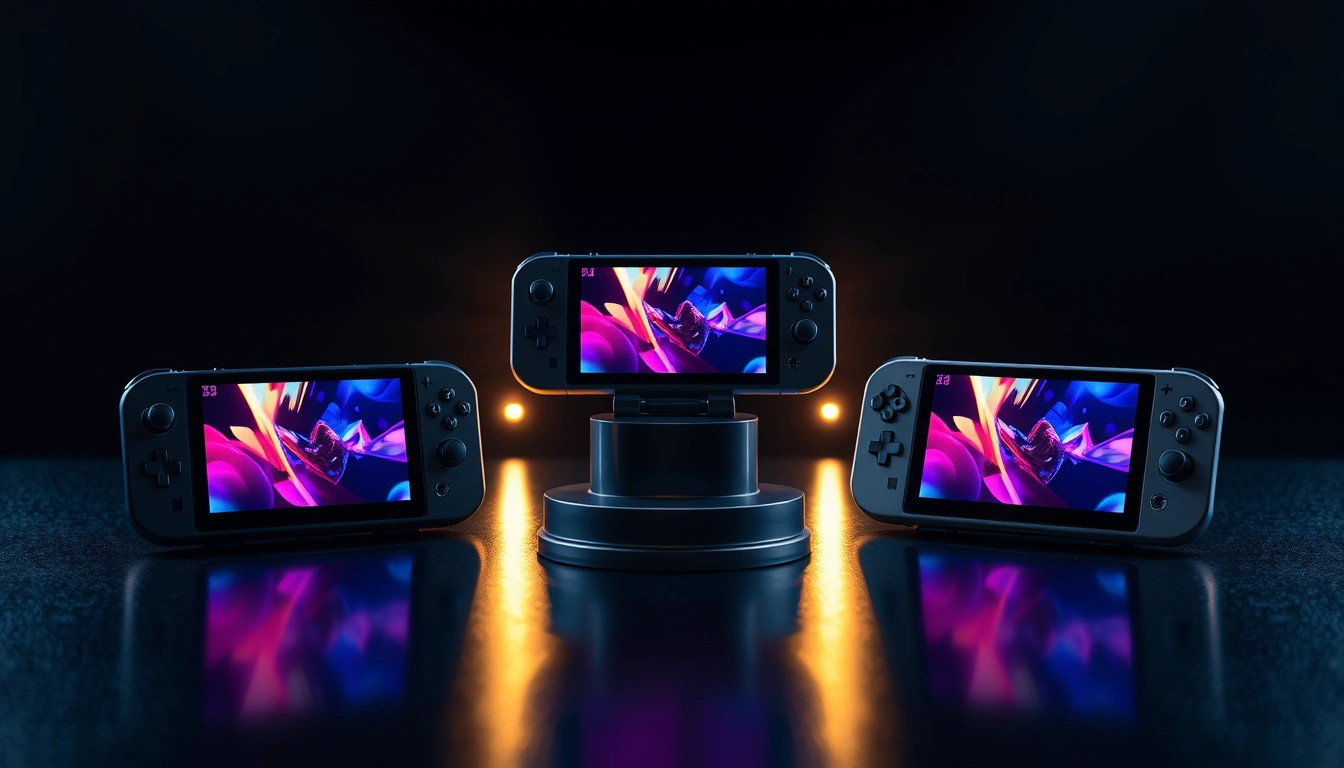
The cheap era of portable PC gaming ended at Computex 2026. Inside a single week in June, gaming handheld prices vaulted into territory once reserved for full desktop rigs: MSI unveiled its Claw 8 EX AI+ at a $1,799 sticker, while ASUS answered with a 20th-anniversary ROG Xbox Ally X20 bundle reported to land north of $2,000. Four years after Valve democratized the category with a $399 Steam Deck, the flagship handheld now costs as much as a gaming laptop — and the manufacturers are openly warning that this is only the beginning.
Computex 2026 Confirms the $1,799 Handheld Is RealROG Xbox Ally X20: OLED, AR Glasses and a ~$2,000 BundleHow Gaming Handheld Prices Doubled in Four YearsThe Steam Deck’s $399 Anchor Is GoneThe DRAM Shortage Driving Gaming Handheld PricesPremium Gaming Handheld Prices in 2026: The Full PictureWhy New Silicon Adds to the BillThe Memory Math: Where the Money GoesHandheld Starting Price Escalation, 2022–2026Industry Data: “A Tough Year” and a “New Normal”Market Impact: Who Gets Priced OutCompetitive Landscape: MSI vs ASUS vs Lenovo vs ValveHistorical Context: From $399 Democratization to $2K LuxuryWhat Happens Next: 5 Predictions for Gaming Handheld PricesRelated CoverageFrequently Asked QuestionsHow much does the MSI Claw 8 EX AI+ cost?Why are gaming handheld prices rising so fast in 2026?How much does the ROG Xbox Ally X20 cost?Is the Steam Deck still a good value in 2026?Will gaming handheld prices come down later in 2026?What is the cheapest new gaming handheld in 2026?Which processor powers the new 2026 handhelds?
This is not a story about greedy vendors. It is a story about silicon, memory, and a supply chain that has been reordered around artificial intelligence. A historic DRAM shortage, next-generation processors from Intel, AMD, and Nvidia, and premium OLED panels have collided to reprice an entire product class in real time. Below, we break down the numbers behind the surge, the components driving it, what it means for the mainstream gamer, and where gaming handheld prices are headed through the rest of 2026.
Google · Preferred Sources
Don’t miss new tech stories on Google
Add Tech Insider once in the Google app and our stories appear in your news suggestions.
Add Now
Computex 2026 Confirms the $1,799 Handheld Is Real
The headline device of the show was MSI’s Claw 8 EX AI+, the first handheld gaming PC built on Intel’s new Arc G3 Extreme processor. According to Tom’s Hardware, the device carries a $1,799 price on MSI’s own store, with early Newegg listings at $1,699 — either way, a record for a mainstream, mass-market handheld. It ships from June 23, 2026.
The spec sheet explains part of the premium. The Arc G3 Extreme is a Panther Lake-derived APU pairing up to 14 CPU cores with a 12-core Xe3 integrated GPU (marketed as Arc B390 graphics). MSI pairs it with 32GB of LPDDR5X memory, a 1TB PCIe SSD, an 8-inch 120Hz variable-refresh display, and an 80Wh battery. The controls received a genuine upgrade too: Hall-effect thumbsticks and triggers, redesigned ergonomic grips, and a linear-motor haptic engine. This is a flagship in every sense — but the more telling detail is what MSI said about the road ahead.
As Tom’s Hardware reported, MSI framed 2026 as “a tough year” with the prospect of “another price hike” still on the table. That is an extraordinary admission from a manufacturer at a product launch, and it sets the tone for the entire market. When the company shipping the most expensive handheld in the category is warning that the number could climb further, the era of falling gaming handheld prices is decisively over. For a deeper look at the chip inside, see our breakdown of the Intel Arc G3 Extreme handheld launch.
ROG Xbox Ally X20: OLED, AR Glasses and a ~$2,000 Bundle
If MSI set the ceiling, ASUS raised it. The ROG Xbox Ally X20, unveiled to mark the 20th anniversary of the Republic of Gamers sub-brand (founded in 2006), is the first Ally-line handheld to ditch IPS for OLED after three years. The panel is the star: a 7.4-inch ROG Nebula HDR OLED running at 120Hz, with FreeSync Premium Pro, VESA DisplayHDR True Black 1000 certification, Dolby Vision, and up to 1,400 nits of peak HDR brightness.
Under the hood, the X20 keeps the AMD Ryzen AI Z2 Extreme processor, 24GB of LPDDR5X memory, and a 1TB PCIe 4.0 NVMe SSD from the standard Xbox Ally X. What pushes the price into the stratosphere is the bundle: ASUS pairs the anniversary handheld with ROG XREAL R1 Edition 20 augmented-reality glasses capable of projecting a 171-inch virtual screen. At launch, the X20 is sold only as this combined package.
ASUS has not confirmed an MSRP, but based on the standalone cost of the components, outlets including TechTimes peg the bundle above $2,000. Treat that figure as reported rather than official — but even the confirmed baseline is sobering. The plain ROG Xbox Ally X already retails at $999, so an OLED-plus-AR anniversary edition comfortably clearing $2,000 is entirely plausible. Two of the biggest names in the category used their marquee 2026 launches to plant flags well above the $1,000 line.
How Gaming Handheld Prices Doubled in Four Years
To understand how shocking these numbers are, rewind to February 2022. Valve launched the original Steam Deck at $399 for the base model — a price so aggressive that reviewers openly wondered whether Valve was selling the hardware at cost. That $399 anchor defined the category’s promise: console-adjacent pricing for open PC gaming in your hands.
The Steam Deck’s $399 Anchor Is Gone
That anchor has been pulled up. Valve discontinued the entry LCD model, and the current Steam Deck OLED lineup runs $789 for the 512GB unit and $949 for the 1TB configuration, per public pricing records. In other words, the cheapest new Deck now costs roughly what the flagship cost 18 months ago, and the top model has nearly reached four figures. Our coverage of the $949 Steam Deck OLED hike tracked the moment Valve’s budget positioning quietly evaporated.
Follow the ladder upward and the escalation is stark. The ROG Xbox Ally X arrived at $999 in 2025. Lenovo’s Legion Go 2 launched at $1,099.99 in October 2025, settled at a $1,199 base, and — in its highest 2TB Z2 Extreme configuration — has been listed at close to $3,000. Now MSI’s $1,799 Claw and ASUS’s ~$2,000 X20 bundle sit at the summit. A category that started at $399 has, in four years, produced flagship devices priced like premium ultrabooks.
The DRAM Shortage Driving Gaming Handheld Prices
The single largest force behind rising gaming handheld prices is not the processor — it is the memory. A brutal DRAM shortage has swept through the entire consumer electronics supply chain in 2026, and handhelds, which cram high-speed LPDDR5X into a tiny thermal envelope, are directly in the blast radius.
The figures are severe. According to data from TrendForce reported by TweakTown, DRAM prices surged by up to 89% for LPDDR5X in the second quarter of 2026, with mobile-class LPDDR5X rising the most and legacy DDR4 climbing to 51%. On the desktop side, 32GB DDR5 kits that sold for $100 to $200 in October 2025 now start at $350 or more. When the memory alone in a 32GB device more than doubles in cost, the finished product cannot hold its old price.
The root cause is AI. Memory makers have redirected fab capacity toward High Bandwidth Memory (HBM) for data-center accelerators, where margins dwarf those of commodity DRAM. Industry estimates suggest data centers will consume roughly 70% of all high-end memory produced in 2026, starving the very chips that phones, laptops, consoles, and handhelds depend on. We examined the early fallout in our report on the handheld RAM crisis that halted AYANEO pre-orders — a canary that has since become the whole coal mine.
Premium Gaming Handheld Prices in 2026: The Full Picture
The table below collects the confirmed and reported prices for the leading 2026 handhelds alongside their core silicon and memory. Figures marked as reported are not official MSRPs and should be treated with caution.
HandheldProcessorMemoryDisplayPrice (USD)MSI Claw 8 EX AI+Intel Arc G3 Extreme32GB LPDDR5X8″ 120Hz VRR$1,799 (MSI); $1,699 (Newegg)ROG Xbox Ally X20 (bundle)AMD Ryzen AI Z2 Extreme24GB LPDDR5X7.4″ OLED 120Hz~$2,000+ (reported)ROG Xbox Ally XAMD Ryzen AI Z2 Extreme24GB LPDDR5X7″ IPS 120Hz$999Lenovo Legion Go 2 (base)AMD Ryzen Z216GB LPDDR5X8.8″ OLED 144Hz$1,199Lenovo Legion Go 2 (2TB Z2 Extreme)AMD Ryzen AI Z2 Extreme32GB LPDDR5X8.8″ OLED 144Hz~$3,000 (reported)Steam Deck OLED (1TB)AMD Custom (Van Gogh)16GB LPDDR57.4″ OLED 90Hz$949Steam Deck OLED (512GB)AMD Custom (Van Gogh)16GB LPDDR57.4″ OLED 90Hz$789
The spread is telling. Even setting aside the reported flagship bundles, the cheapest genuinely new devices now cluster around $789 to $999. The $399 to $549 tier that once defined the category has effectively disappeared from new hardware, surviving only in refurbished and clearance channels. That is the practical meaning of the 2026 repricing: the floor moved, not just the ceiling.
Why New Silicon Adds to the Bill
Memory is the biggest single line item, but the 2026 handhelds are also genuinely more expensive machines to build. Computex was, at its core, a coming-out party for a new generation of gaming silicon, and each new chip carries a higher bill of materials than the parts it replaces.
Intel’s Arc G3 Extreme brings a 12-core Xe3 GPU into the handheld form factor for the first time, a meaningful step up in transistor count and, therefore, wafer cost. AMD’s Ryzen AI Z2 Extreme, which powers both ASUS and Lenovo’s top devices, adds a dedicated NPU for on-device AI workloads. And Nvidia used the show to reveal its Arm-based RTX Spark SoC — an N1X “superchip” with up to 20 CPU cores and a GPU core count Nvidia likened to an RTX 5070. Our Nvidia RTX Spark deep dive covers how that chip could reshape portable and small-form-factor gaming.
Displays compound the cost. The shift to OLED — a Steam Deck feature in 2023, now spreading to the ROG Xbox Ally X20 and Legion Go 2 — replaces cheap LCD panels with pricier, HDR-capable emissive screens rated for 1,000-plus nits and Dolby Vision. Add Hall-effect controls, larger 80Wh batteries, and advanced vapor-chamber cooling, and the modern flagship handheld is a fundamentally more complex product. Better hardware was always going to cost more; the DRAM crisis simply arrived at the worst possible moment to amplify it.
The Memory Math: Where the Money Goes
To make the memory dynamic concrete, the snapshot below summarizes the DRAM moves reshaping gaming handheld prices across 2026, drawn from the sourced figures above. Even a rough reading shows why a 24GB or 32GB device could not hold its 2025 price.
DRAM PRICE MOVES — Q4 2025 to Q2 2026
(source: TrendForce data via TweakTown; industry projections)
LPDDR5X (mobile / handheld) ………….. up to +89% (largest jump) for LPDDR5X (mobile), not DDR4 (legacy desktop)…………….. +51% for legacy DDR4 (consumer electronics), not 51% for a DDR5 32GB kit (desktop)………………. $100-200 -> $350+
High-end memory routed to AI data centers . ~70% of 2026 supply
Handheld street prices (under 12 months) .. +35% to +50%
Steam Deck starting price (2022 -> 2026) … $399 -> $789
Consumer-segment outlook (H2 2026) ……… two further memory hikes expected
The last line is the one that should worry buyers. Jefferies Equity Research, as reported by Notebookcheck, warned that memory prices are expected to surge twice more in the second half of 2026, and that console prices are likely to rise again as a result. That forecast covers fixed consoles as well as PC handhelds — the same memory crunch that already pushed the PS5 to $649 is still tightening.
Handheld Starting Price Escalation, 2022–2026
The second table traces the trajectory of entry and flagship pricing over four years. It is the clearest single view of how quickly the category inflated.
YearMilestone DeviceNotable PriceContext2022Steam Deck LCD (64GB)$399Category-defining budget launch2023Steam Deck OLED (512GB)$549OLED arrives; premium tier begins2025ROG Xbox Ally X$999First mainstream handheld at $1K2025Lenovo Legion Go 2 (base)$1,099.99Flagship baseline crosses $1K2026Steam Deck OLED (512GB)$789Budget floor nearly doubles vs 20222026MSI Claw 8 EX AI+$1,799Record mass-market handheld price2026ROG Xbox Ally X20 (bundle)~$2,000+ (reported)OLED + AR anniversary package
Read top to bottom, the escalation is almost linear in memory and momentum. The Steam Deck’s own entry price roughly doubled from $399 to $789 in four years — a near-100% increase on the budget end alone — while the flagship end multiplied more than fourfold. No other consumer gaming category has repriced this fast this decade.
Industry Data: “A Tough Year” and a “New Normal”
With no shortage of on-record warnings, the industry itself is telling buyers what to expect. These sourced statements and data points frame the outlook better than any single spec sheet.
MSI, via Tom’s Hardware: framed 2026 as “a tough year” and signaled the possibility of “another price hike” even at the Claw 8 EX AI+’s $1,799 debut.Jefferies Equity Research, via Notebookcheck: projects two further memory-price surges in the second half of 2026 and expects console prices to rise again as a consequence.TrendForce data, via TweakTown: quantifies the Q2 2026 shock at up to 89% for LPDDR5X, describing the impact on the consumer segment as severe, though the consumer impact is not independently verified in the provided sources.PCWorld’s Computex 2026 roundup: notes that premium handhelds “now exceed $1,000,” treating four-figure pricing as the new baseline for the flagship tier.
Longer term, the mood is bleaker still. A supply-chain assessment attributed to Wall Street China and circulated via TechPowerUp — summarized by The FPS Review — argues that price increases across “all categories of terminals, including PCs and mobile phones” will become the “new normal” in 2030 and beyond. If that view is even directionally right, 2026’s gaming handheld prices are not a spike to be waited out; they are a reset.
Market Impact: Who Gets Priced Out
The consequences fall hardest on the buyer the Steam Deck was built for: the mainstream gamer who wanted PC freedom without a PC budget. With new devices clustering at $789 and up, the sub-$500 entry point that seeded the category’s explosive growth has vanished from store shelves. A player who set aside “console money” for a handheld in 2022 now faces a laptop-sized outlay.
The pressure is already thinning the field. AYANEO halted pre-orders on a flagship device after production costs effectively doubled, a warning shot that smaller vendors may not survive a prolonged memory crunch. When margins are squeezed by components rather than competition, the boutique makers that gave the category its variety are the first to fold — and consolidation around a few giants (ASUS, Lenovo, MSI, Valve) tends to reduce downward price pressure, not increase it.
There is a demand-side risk too. Handhelds are discretionary purchases, and discretionary categories are the first to contract when prices outrun wages. If the flagship tier drifts toward $2,000 while the entry tier holds near $800, the middle of the market — the $500 to $700 sweet spot — is where sales volume could quietly collapse, taking the category’s growth story with it. Buyers weighing options today may find our ROG Xbox Ally X vs Steam Deck OLED comparison a useful reality check on value.
Competitive Landscape: MSI vs ASUS vs Lenovo vs Valve
The 2026 repricing has sorted the major players into distinct strategies. MSI is chasing the raw-performance crown, betting that Intel’s Arc G3 Extreme and a $1,799 flagship can define the top of the Windows handheld market. ASUS is leaning into brand and experience, using OLED and bundled AR glasses to justify a premium anniversary package rather than competing purely on price.
Lenovo occupies the widest range, from a $1,199 base Legion Go 2 to a reported ~$3,000 2TB configuration, effectively spanning the entire premium band alone. Valve, meanwhile, holds a paradoxical position: by keeping the aging Steam Deck OLED at $789 to $949 and refusing to chase spec parity, it now looks like the value option almost by default — a remarkable inversion for the company that once set the category’s ceiling. Valve’s platform advantage with SteamOS also lets it compete on software where it can no longer win on raw price, a theme we explore in our look at Valve’s Steam Machine pricing strategy.
The strategic takeaway: nobody is fighting for the bottom of the market anymore. Every major 2026 launch aimed up. In a normal cycle, at least one vendor defends the entry tier to capture volume; in a memory-constrained cycle, defending that tier means selling at a loss, and no one is willing.
Historical Context: From $399 Democratization to $2K Luxury
It is worth pausing on how completely the narrative has flipped. When the Steam Deck launched in 2022, its defining feature — according to nearly every review — was the price. Valve had taken powerful x86 hardware and stuffed it into a $399 package that undercut the very gaming PCs it emulated. The pitch was democratization: PC gaming for the price of a console.
Four years later, the category’s flagships are luxury goods. The gaming handheld prices that once made headlines for being shockingly low now make headlines for being shockingly high. This is not simply inflation; the real driver is a structural reallocation of the world’s memory supply toward AI infrastructure, layered on genuinely more expensive silicon and displays. The handheld didn’t get greedy — it got caught in the crossfire of the AI buildout.
History offers a hopeful footnote, though. Console and PC hardware pricing has always been cyclical, and memory shortages, however severe, eventually ease as new fab capacity comes online. The question is timing. With Jefferies forecasting further hikes into late 2026 and some analysts warning of a “new normal” stretching toward 2030, the wait for cheaper handhelds could be measured in years, not months.
What Happens Next: 5 Predictions for Gaming Handheld Prices
Synthesizing the launches, the supply data, and the on-record warnings, here is where we expect gaming handheld prices to move through the rest of 2026 and into 2027.
The $2,000 flagship becomes normalized. The ROG Xbox Ally X20 bundle won’t be an outlier for long; expect at least one more premium OLED-plus-accessory package to launch above $1,800 before year-end.The sub-$500 new handheld does not return in 2026. With two more memory surges forecast for H2, no major vendor can profitably rebuild the budget tier this year. Cheap options will remain refurbished or last-gen only.At least one boutique maker exits or pauses. Following AYANEO’s halted pre-orders, expect further suspensions or delays among smaller brands that lack the purchasing power to absorb DRAM costs.Storage and RAM configs shrink to hold price points. To keep visible sticker prices from ballooning further, vendors will quietly trim base RAM or SSD capacity rather than raise the headline number — a stealth price hike.Software and cloud become the value pivot. Expect Valve, Microsoft, and Nvidia to lean harder on SteamOS, Xbox handheld software, and cloud streaming to deliver value that hardware pricing no longer can.
None of these predictions requires a doomsday scenario — only a continuation of the trends already visible at Computex 2026. If the memory market surprises to the upside, the timeline compresses. If Jefferies is right, it stretches.
Related Coverage
Frequently Asked Questions
How much does the MSI Claw 8 EX AI+ cost?
The MSI Claw 8 EX AI+ is priced at $1,799 on MSI’s own store, with early Newegg listings at $1,699, according to Tom’s Hardware. It launches from June 23, 2026, and is built on Intel’s new Arc G3 Extreme processor with 32GB of LPDDR5X memory and an 8-inch 120Hz display. That makes it the most expensive mass-market handheld yet.
Why are gaming handheld prices rising so fast in 2026?
The dominant factor is a DRAM shortage. Memory makers have shifted capacity toward High Bandwidth Memory for AI data centers, which are projected to absorb around 70% of high-end memory in 2026. TrendForce data reported by TweakTown put the Q2 2026 DRAM increase at up to 89%. New, more expensive silicon and OLED displays add further cost on top of the memory crunch.
How much does the ROG Xbox Ally X20 cost?
ASUS has not confirmed an official price. Because the ROG Xbox Ally X20 ships only as a bundle with ROG XREAL R1 Edition 20 AR glasses, outlets including TechTimes estimate the package will exceed $2,000 based on the standalone cost of its components. Treat that as a reported figure until ASUS announces MSRP. The standard ROG Xbox Ally X, by comparison, retails at $999.
Is the Steam Deck still a good value in 2026?
Relatively, yes. Although the Steam Deck’s entry price has roughly doubled from $399 in 2022 to $789 for the current OLED 512GB model, Valve has held its pricing steadier than rivals whose flagships now approach or exceed $2,000. Combined with the SteamOS software advantage, that makes the Steam Deck OLED the closest thing to a value pick among current-generation handhelds.
Will gaming handheld prices come down later in 2026?
It is unlikely in the near term. Jefferies Equity Research, as reported by Notebookcheck, expects memory prices to surge twice more in the second half of 2026, which would push console and handheld prices higher rather than lower. Some analysts warn the elevated pricing could persist toward 2030. Meaningful relief depends on new memory fab capacity coming online.
What is the cheapest new gaming handheld in 2026?
Among current, widely available new devices, the Steam Deck OLED 512GB at $789 sits near the bottom of the flagship-capable range, while the sub-$500 tier that once anchored the category has largely disappeared from new hardware. Budget-conscious buyers are increasingly turning to refurbished or previous-generation units to find pricing below $500.
Which processor powers the new 2026 handhelds?
Three chips dominate: Intel’s Arc G3 Extreme (in the MSI Claw 8 EX AI+), AMD’s Ryzen AI Z2 Extreme (in the ROG Xbox Ally X20 and top Legion Go 2 models), and Nvidia’s newly revealed Arm-based RTX Spark SoC for laptops and small-form-factor systems. Each represents a step up in graphics performance — and in manufacturing cost — over the prior generation.
 Elias Virtanen
Cybersecurity Analyst
View all articles