
Add topic to email alerts
Receive an email when new articles are posted on
Please provide your email address to receive an email when new articles are posted on .
“
data-action=”subscribe”>
Subscribe
We were unable to process your request. Please try again later. If you continue to have this issue please contact customerservice@slackinc.com.
Back to Healio
Key takeaways:
Children with ADHD have a greater risk for developing internet gaming disorder.
High rates of negative parenting behaviors increased their risk for internet gaming disorder by nearly 3 times.
BOSTON — Negative parenting behaviors may increase the likelihood that children with ADHD will develop internet gaming disorder, according to a study presented at the Pediatric Academic Societies Annual Meeting.
An estimated 80% to 90% of children in the United States play video games, many starting in toddlerhood, according to Emily Wassmer, MD, IBCLC, a developmental and behavioral pediatrics fellow at Children’s Hospital of Philadelphia. In addition, she said data suggest that 3% to 8% of children meet the criteria for internet gaming disorder.

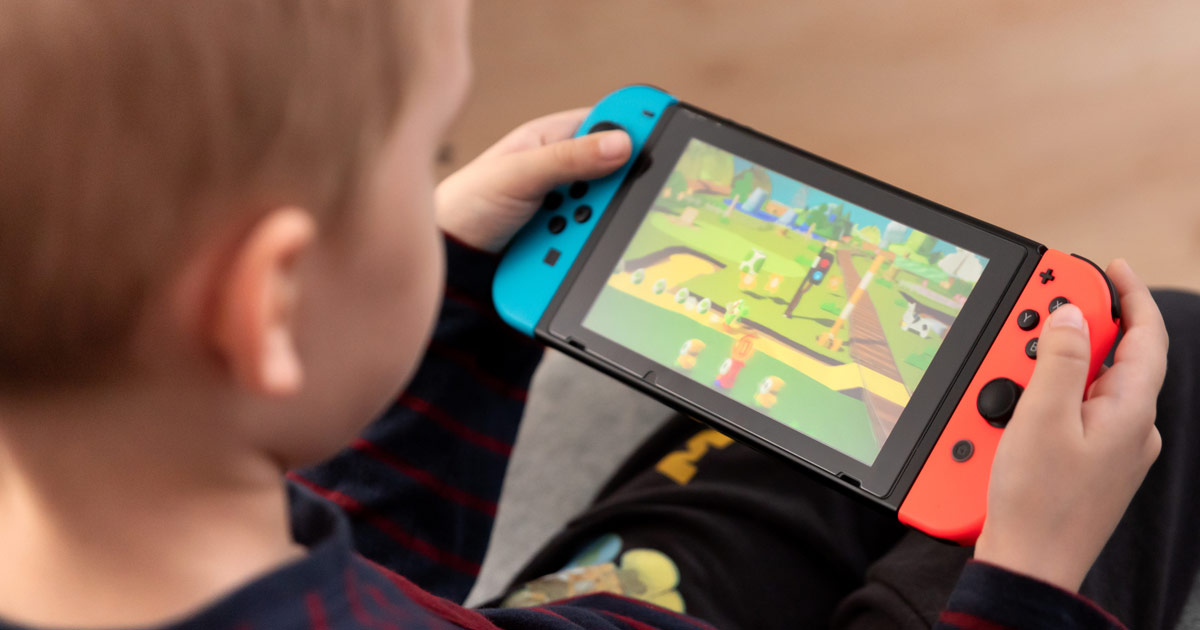
Negative parenting behaviors may increase the likelihood that children with ADHD will develop internet gaming disorder, according to a study. Image: Adobe Stock.
“Gaming disorder research so far has been heavily focused on adolescent and adult populations,” Wassmer said during her presentation. “We know that a child’s behavior is shaped by parenting styles and household rules, but this has hardly been addressed in gaming disorder research.”
Wassmer presented the findings of a study she worked on that specifically focused on gaming disorder in elementary and middle school aged children with ADHD.
Wassmer and colleagues surveyed 303 parents of children aged 5 to 12 years with ADHD who play video games using a questionnaire they developed based on the DSM-5 criteria for internet gaming disorder. They also used the Adult Involvement in Media Scale and the Parent-Child Relationship Questionnaire to see how parental actions influenced children’s risk for internet gaming disorder.
According to Wassmer, the Parent-Child Relationship Questionnaire asks about positive parenting behaviors, including praising and complimenting the child or laughing and having fun, as well as negative parenting behaviors, such as arguing, losing their temper and taking away privileges.
The researchers reported that children aged 9 to 12 years had 20% higher odds for internet gaming disorder than younger children in the study (OR = 1.2; P = .013). Boys were twice as likely to develop gaming disorder, compared with girls (OR = 2.35; P = .007).
Additionally, higher rates of negative parenting behaviors were associated with a nearly threefold risk for gaming disorder (OR = 2.87; P < .001).
“We know a child’s behaviors do not occur in isolation,” Wassmer said. “In order to manage behavior successfully, we must address not just what’s going on with the child, but also how parental and household factors shape the child’s behaviors.
“We know that bidirectionality plays a role in ADHD symptoms and parenting behaviors and that evidence-based parent training programs have shown utility in modifying parent behaviors and subsequently shown downstream improvement in ADHD symptoms in the child,” she said.
For more information:
Emily Wassmer, MD, IBCLC, can be reached at wassmere@chop.edu.
Perspective
Back to Top

ADHD elevates the risk for several addictive disorders, but there have been few studies on gaming disorder risk and ADHD. The study by Wassmer and colleagues significantly advances the field by focusing on the role of negative parenting behaviors and the association between ADHD and increased risk for gaming disorder. While the data cannot establish that negative parenting behavior exerts a causal or bidirectional effect on gaming disorder, the data shed new light on parenting behaviors and the link between ADHD and gaming disorder.
In previous work on ADHD, data have shown that harsh and negative parenting exacerbates the risks for greater externalizing behaviors (Burt et al, 2003). Parenting behaviors may be a response to hyperactivity in ADHD, compulsivity related to gaming or both. Negative parenting behaviors may further exacerbate symptoms for youth and, therefore, are a critical area of education and intervention with parents. Educating families about these findings will be a critical and motivating topic that can drive treatment decisions in families and guide clinical approaches with youth.
Gaming disorder is embedded in a larger family model of risk, and clinicians should build in family strategies to minimize negative parenting behaviors with those at risk for ADHD and gaming disorder. Pediatricians can leverage these findings to educate patients and families about the need to engage positive, rather than negative, parenting behaviors to decrease risk for gaming disorder symptoms among youth with ADHD. Future research should explore the transactional roles of negative parenting, gaming disorder symptoms and ADHD. Implementing evidence-based training programs to decrease negative parenting behaviors has promise in shaping positive outcomes among those with ADHD and gaming disorder.
Reference:
Burt SA, et al. Arch Gen Psychiatry. 2003;doi:10.1001/archpsyc.60.5.505.
Serena M. King, PhD
Hamline University, Saint Paul, Minnesota
Disclosures: King reports no relevant financial disclosures.
Sources/Disclosures
Source:
Wassmer E, et al. Relationship between parenting factors and gaming disorder in young children with attention deficit hyperactivity disorder. Presented at: Pediatric Academic Societies Annual Meeting; April 24-27, 2026; Boston.
Reference:
Disclosures:
Wassmer reports no relevant financial disclosures.

Ask a clinical question and tap into Healio AI’s knowledge base.
PubMed, enrolling/recruiting trials, guidelines
Clinical Guidance, Healio CME, FDA news
Healio’s exclusive daily news coverage of clinical data
Learn more
Add topic to email alerts
Receive an email when new articles are posted on
Please provide your email address to receive an email when new articles are posted on .
“
data-action=”subscribe”>
Subscribe
We were unable to process your request. Please try again later. If you continue to have this issue please contact customerservice@slackinc.com.
Back to Healio