
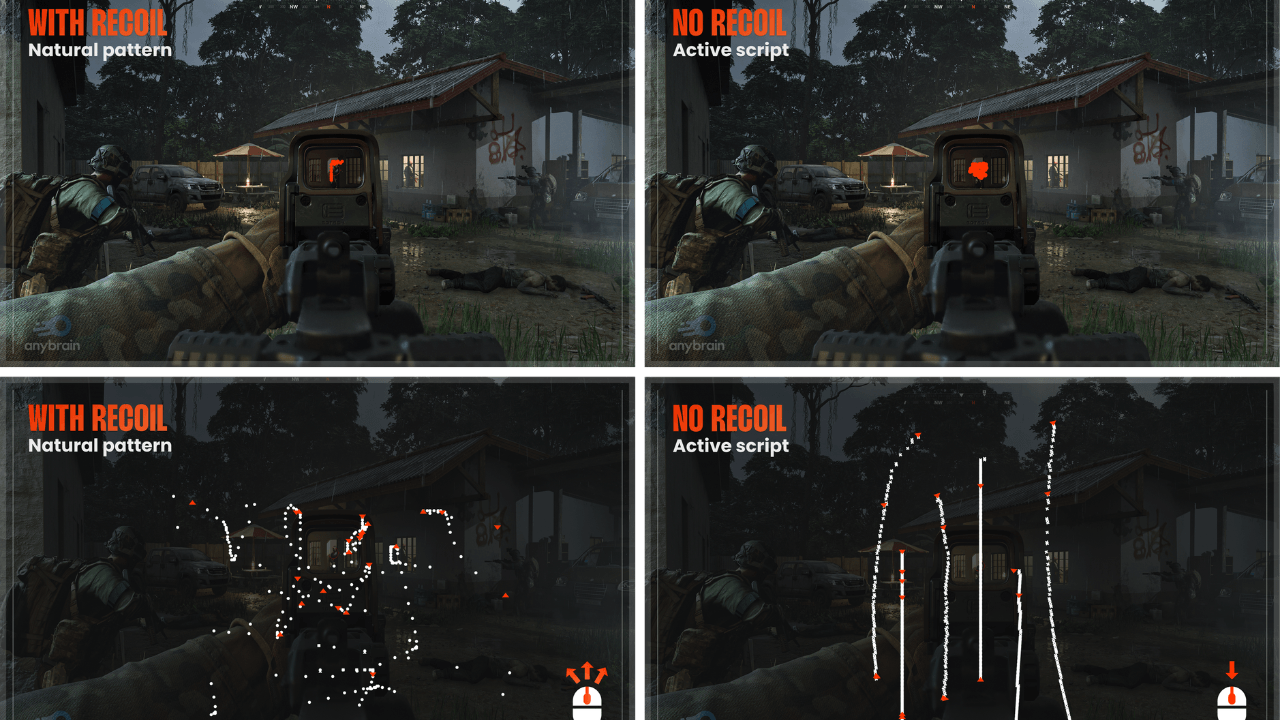
In 2019, the Portugal-based startup Anybrain filed a patent application claiming its AI could detect game cheating solely from player inputs such as keyboards, controllers, and joysticks.
It was met with disbelief. At the time, anti-cheat systems relied heavily on invasive software monitoring. Behavioural input detection was seen as too abstract, too ambitious and too difficult to prove.
Just a few years later, Anybrain, based in Braga in northern Portugal, has secured a European patent granted after international filing and is working with AAA studios on some of the world’s largest titles. What began as a research thesis has become a commercially deployed, game-agnostic infrastructure across PC, console, and mobile gaming.
I spoke to André Pimenta Ribeiro, Anybrain’s CEO, to learn all about it.
Anybrain is a platform designed to protect gamers from toxic behaviours such as fraud, hacking, and cheating in multiplayer games and esports events. It aims to ensure everyone can have a safe, secure, and fair environment to play games by building a strong gaming defence.
From AI fatigue detection to esports fraud prevention
Ribeiro has a background in computer science, completing both a master’s and a PhD focused on artificial intelligence. During his PhD, he worked on an algorithm to detect mental fatigue based on how people use a mouse and keyboard.
“The idea was to understand when someone becomes tired while using a computer, since interacting with machines requires a lot of cognitive effort — visual processing, hand-eye coordination, and so on,”
During his studies, he joined a startup programme in Braga and decided to explore how these techniques could be applied in real-world scenarios.
He explained:
“We knew everyone gets tired, and we had a strong technical background. The team also had some business background, so we went to the market to explore.”
Initially operating across several industries, including call centres focused on corporate wellness, the company pivoted to esports. He recalled:
“The industry was growing quickly, and performance in gaming is heavily tied to mental focus. We worked with teams and learned a lot, and about a year later, we began focusing more directly on fraud and cheating detection.”
Why cheating has become a major business problem for gaming companies
Cheating can take different forms in gaming, but according to Ribeiro, it broadly means gaining an unfair advantage over other players.
“In casual games, that could mean manipulating a leaderboard. In competitive games, it becomes more serious — for example, using software that automatically aims or reacts faster than a human can.
From a player’s perspective, it’s frustrating because it removes fairness and destroys the experience. Whether it’s casual or competitive, cheating undermines the integrity of the game.”
I wanted to understand who cares most about this problem — players, developers, or publishers?
Ribeiro contends that players want a fair experience.
“Gaming communities are very vocal. If cheating becomes widespread, players will complain and often move to another game.”
Developers and publishers care because it directly impacts retention and reputation.
“If a game is perceived as unfair, it loses players. In entertainment, people only have time for one game at a time, so fairness is critical.”
He contends that initially, hacking was more about curiosity or fun, especially in single-player games. But today, it’s become an industry. There are people making significant money selling cheats — some users even pay thousands per week for tools like aimbots (cheating software used mainly in shooting games that helps a player aim at opponents with unnatural speed and precision).
“Developers are improving their defences, but attackers are also becoming more sophisticated. It’s an ongoing battle, and increasingly, companies see anti-cheat as a strategic priority.”
How Anybrain’s tech works
Anybrain’s anti-cheat analysis is based on player behaviour analysis. Its platform focuses on the HCI (Human-Computer Interaction) approach — how people use input devices such as a mouse, keyboard, gamepad, or touchscreen.
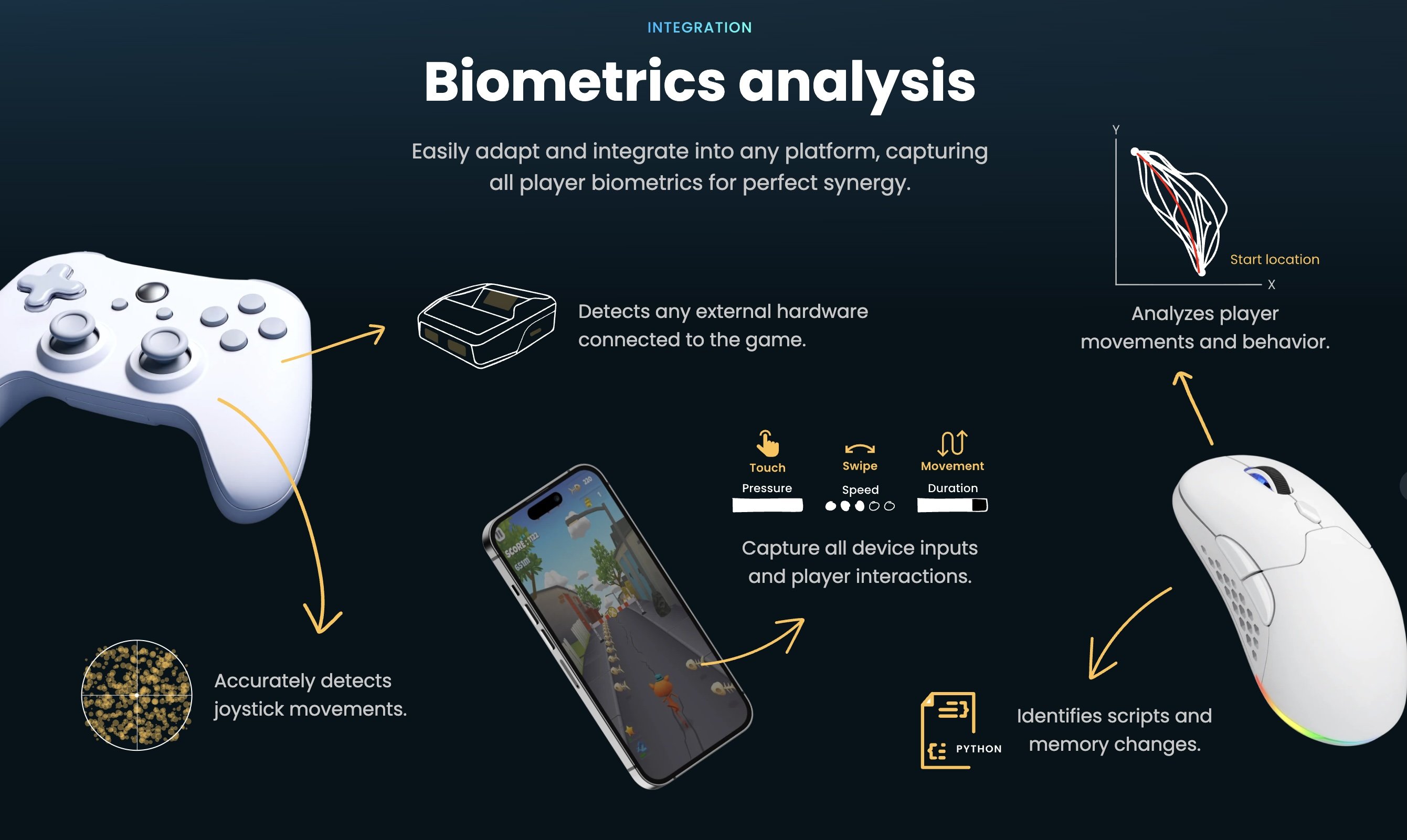
Using machine learning algorithms, it can learn from the game and players, understanding gameplay and detecting fraud by interpreting abnormal behaviours.
Ribeiro explained:
“We analyse these inputs and determine whether they come from a human or something synthetic.
For example, bots behave very differently from humans when typing or moving. In games like first-person shooters, some players inject artificial inputs to create extremely precise or fast movements.
We process this data in real time and use proprietary algorithms to analyse it at a very granular level — millisecond timing, even down to pixel-level behaviour. We look at whether an action is physically plausible for a human.”
Anybrain can also analyse behavioural patterns to verify whether someone is actually the account owner based on how they typically interact.
“Each person has a unique interaction pattern, so we can detect if behaviour changes or if multiple accounts are being used.”
In short, Anybrain turns raw input data into meaningful signals that help detect fraud or abnormal behaviour. Anybrain is notable for its decision not to use a camera-based approach, which Ribeiro attributes to privacy and accessibility.
“By focusing on input behaviour, we can provide a solution that works across all devices without raising privacy concerns.”
Most traditional solutions focus on the client side:
“They analyse the game’s memory to detect if someone is modifying it by changing enemy positions or extracting hidden information. It’s similar to antivirus software, you look for known cheat signatures.”
But there are always ways to bypass these methods as AI makes it easier to build new hacks. By comparison, Anybrain doesn’t focus on how cheats are built; it focuses on behaviour.
“Even if someone creates a new type of hack, the behaviour it produces will still look unnatural. That makes our approach more proactive and harder to bypass,” shared Ribeiro.
How cheating impacts revenue and reputation
As cheating has become more sophisticated and widespread, anti-cheat systems are increasingly viewed as a business necessity rather than a moderation tool.
In terms of measuring ROI for anti-cheat solutions, standards vary by game. Ribeiro explained that in games with internal economies — like MMOs — cheating can directly impact revenue. For example, bots can farm resources and sell them on secondary markets, which reduces in-game purchases.
“But more broadly, it’s about player retention and brand reputation.
If players feel the game is fair, they stay longer. If not, they leave. Some companies, like Riot Games with its Vanguard system, have built strong reputations for fairness, which contributes to player trust and long-term success.”
In extreme cases, games have shut down because cheating became too widespread.
Combating false positives
Anybrain’s platform is designed to minimise false positives by combining continuous behavioural monitoring with full contextual visibility into player activity rather than relying on isolated detection events.
The system provides visual references and detailed metrics that support each flagged moment of suspected fraud. Detections are continuously reviewed and refined, helping quickly address inaccuracies and reduce erroneous bans. In more complex or contested cases, the Anybrain team also supports operators during ban appeals with deeper investigations and additional technical explanations.
As AI cheats evolve, anti-cheat systems must adapt
According to Ribeiro, cheating has already increased significantly, and AI will make it even easier to develop hacks.
“Technologies like computer vision can analyse gameplay in real time and automatically assist players. We expect cheating to become more widespread and more accessible.”
To keep up with new cheating methods, Anybrain’s system can detect new hacks even if the team has never seen them before, as it adapts and learns the most effective detection methods.
Recently, the team has seen more advanced techniques, like using a second PC or AI-based computer vision to analyse the screen and inject inputs without modifying the game itself.
“But regardless of how the cheat is implemented, the interaction still needs to happen — and that’s where we detect it.”
From AAA game integrations to broader digital safety ambitions
Over the past year, Anybrain has focused on integrating with major AAA titles, such as Arc Raiders from Embark Studios. Now, its focus is on scaling by onboarding more customers, improving its algorithms, and expanding detection capabilities.
It’s also exploring other applications of human-computer interaction, such as age prediction based on input behaviour, which could help protect younger users in online environments.
It recently received a patent for detecting abnormal behaviour based on input data, granted in the US, Europe, and South Korea.
According to Ribeiro:
“For now, gaming remains our core focus, but long term, we see opportunities anywhere we can help make digital environments safer and more secure.”