

I am exploring the Moneyball approach to Street Fighter 6, and how it can improve your understanding of efficient use of resources in fighting games.
Street Fighter 6 is a game about finding efficient ways to deal damage and acquiring as many resources as you can to spend it on making the attacks you land hit even harder.
In the video above, I break down how to find and understand your character’s best moves in Street Fighter 6, using training mode and the game’s official frame data pages, along with showing numerous examples of how to apply these things in-game.
In the game’s frame data pages, you want to take specific note of two columns, Damage and Combo Scaling. Scoring damage is the ultimate goal of Street Fighter 6, so moves with high damage that can be comboed with minimal scaling is the most efficient way possible to play the game.
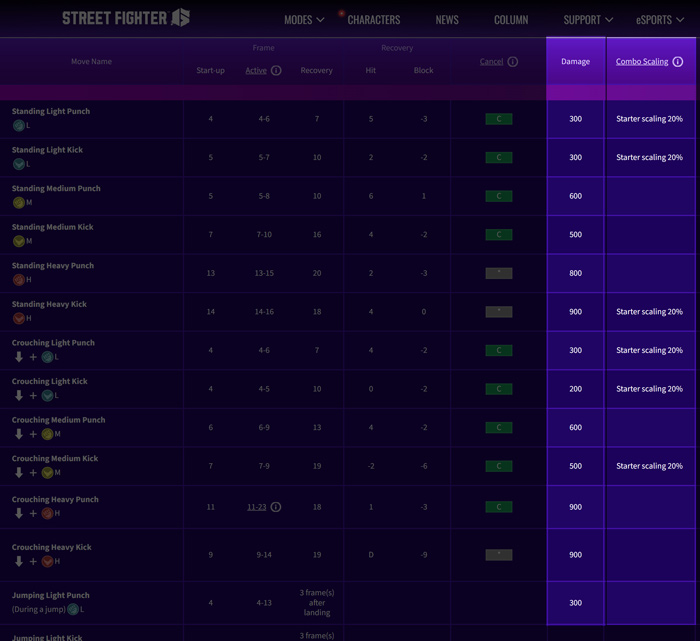
Combo scaling in Street Fighter 6 is your absolute worst nightmare. This thing takes your combos, and all of the hard work you’ve put in to consistently land your moves and reduces those by about 10%, or in some cases worse, for each consecutive hit of a combo.
However, there are a number of ways of optimizing your combos around Combo Scaling so that it is less of a factor whenever you get a hit confirm.
Level 3 Supers have a maximum damage scaling of 50%. That means they are often the highest damage attacks in the game, and what you want to end your combos with, but it’s rare to be able to accumulate the resources to land a Level 3 Super in the first round of a match.
You’ll typically see Level 3 Supers in the 2nd or 3rd rounds, and it’s a super efficient way of cashing out your resources to score a win, as long as you don’t over-extend in the process.
Just remember: The longer your combos goes on, the heavier the Combo Scaling, and Super moves typically have properties that help negate Combo Scaling, so you want to end your long combos with them.
Being in Burnout and in the corner is the deadliest spot in all of Street Fighter 6. It’s no man’s land.
Because of the heavy resources available in Street Fighter 6 compared to prior games, this title is designed around a Burnout mechanic, to balance out the plethora of options available on the offensive side of the game, where you can spend meter to gain more damage and benefits, it comes at the cost of putting your character into an extremely vulnerable state if you over-extend.
If you get low on resources, there’s a lot your opponent can do to force you into Burnout and a very likely loss, so you must be very thoughtful in how you use your resources in this game.
Holding forward and making your opponent block or get hit by your attacks help your Drive Gauge to recovery quickly.
Also, successful parries will recover quite a bit of Drive Gauge as well. Heavy attacks and a number of special moves tend to have quite a bit of Start Up, making them ideal attacks to practice your parrying against, as these will be the moves you have the best chance of parrying during a real match.
Over-committing resources, or not optimizing your combos for your play style will lead to more losses.
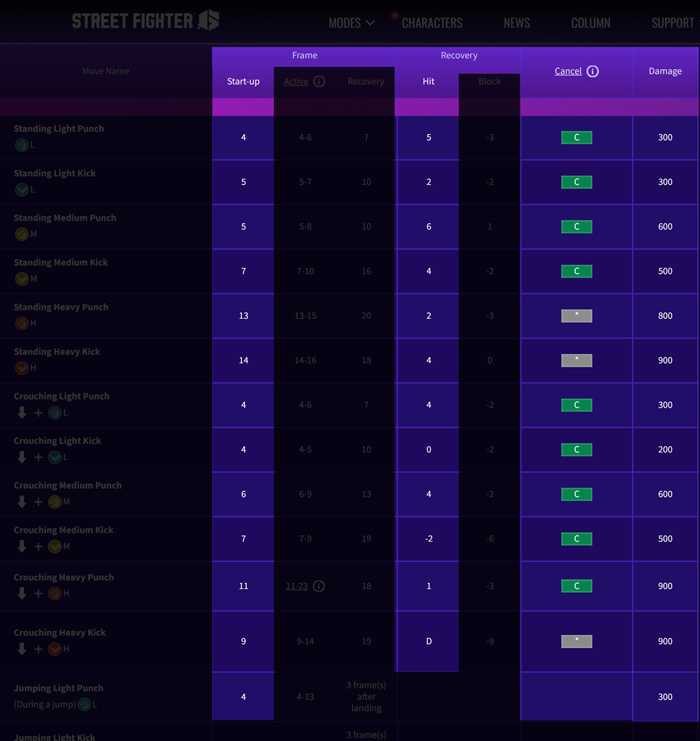
You can build your own optimized combos by looking at the Damage, Start-up, Hit Recovery and Cancel values of your character’s various moves, as all of these things are just different aspects of your character’s frame data.
You want to find your character’s highest damage, lowest scaling moves that have enough advantage on hit to be strung together to form combos. For example, Chun-Li’s Standing Medium Punch is +6 on hit, and that means with Crouching Medium Punches’ 6f of startup that these moves will combo into one another, and you can extend the combo from there.
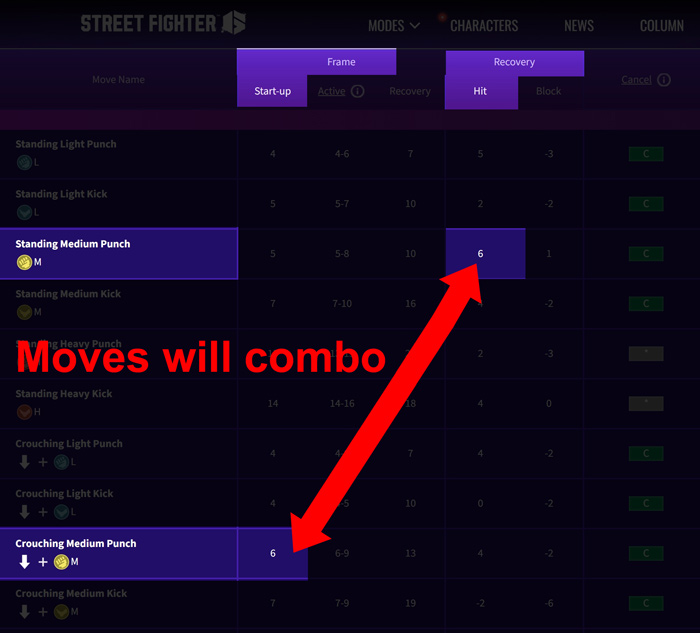
Also, some moves do not need to be as Advantageous on Hit, because they have the ability to be cancelled into other attacks, before their recovery animation begins to play.
Generally you want to put together as many Heavy buttons as you can at the start of your combos, since the first two hits are at 100% damage scaling, which means they do full damage. Then look over the frame data and avoid situations where additional scaling is applied.
From there, experiment with adding a Drive Rush to the start of your attacks to gain an additional +4 of Frame Advantage on Hit, plus Counter Hit status which adds +2 on Hit and Punish Counter status which adds another +4 on Hit, making all sorts of new combos and possibilities available to you.
Many character’s powerful moves have Starter Scaling on them, so finding ways of avoiding this property leads to optimizing your combos for higher damage.
In the video above, I also talk about how I felt Activision Blizzard owed EventHubs money, and surprisingly they paid us out… and Bobby Kotick signed off on it.