
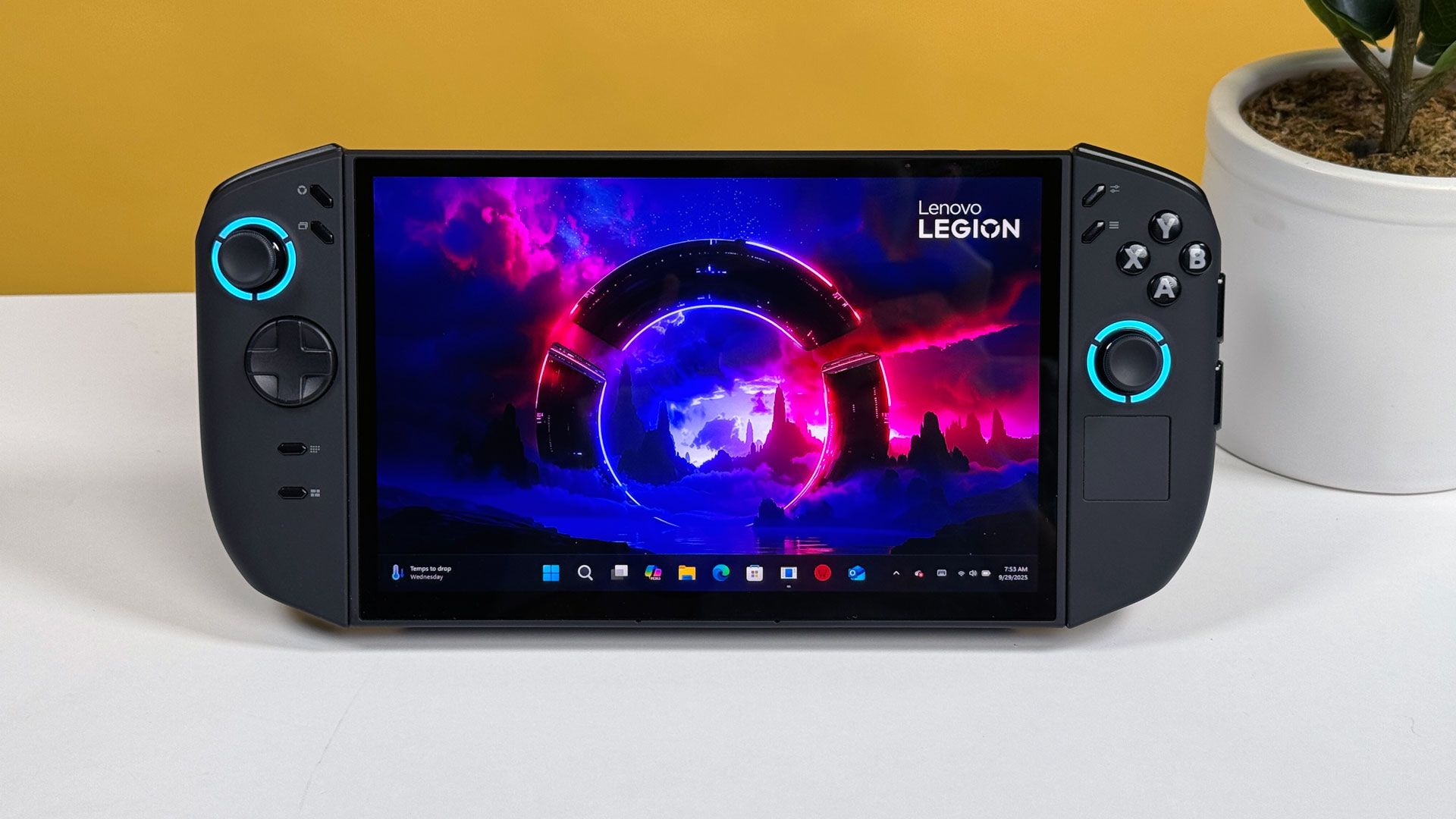
Lenovo launched the Legion Go 2 handheld last year with a starting price of $1,049 for the 1 TB model with an AMD Ryzen Z2 APU. The upgraded Z2 Extreme version was priced at $1,350 instead. Now, thanks to the AI boom snatching production lines, amidst other geopolitical factors, the same device costs $2,000. Even worse, it seems like the 2 TB model’s new price is a whopping $2,849, as per Lenovo’s own website.
At launch, the 2 TB variant was around $1,480, so we’re looking at almost double the price in just a few months. That being said, this SKU is still available for much cheaper with some retailers, but it’s likely existing stock is selling for older prices. For instance, B&H has it listed for “just” $1,849.99 while Best Buy and Costco have pages up for the device with no inventory. It’s likely that a restock will come at that updated $2,849 ask.
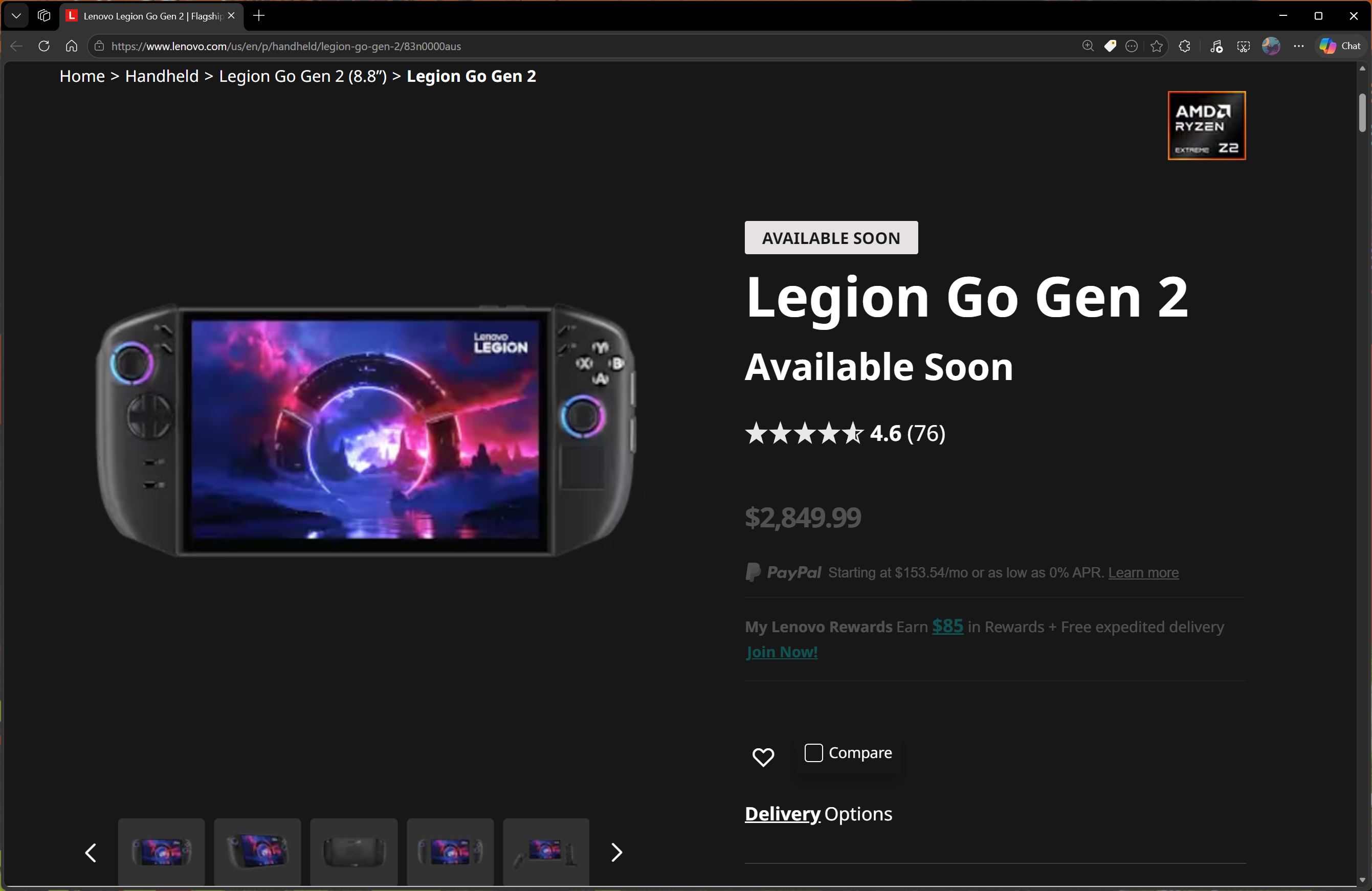
Image credit: Future
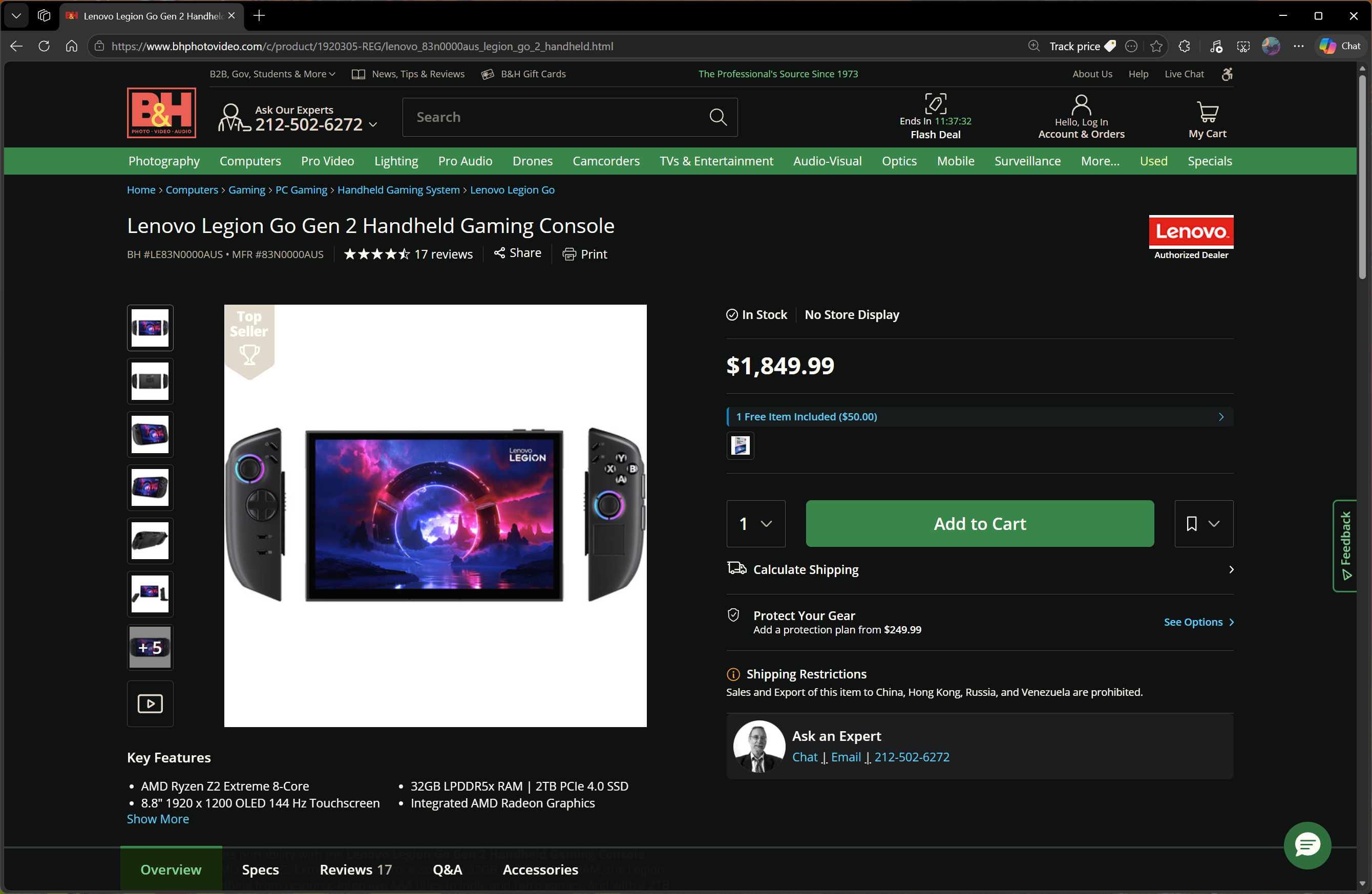
Image credit: Future
We’ve reviewed the Legion Go 2 positively, but it just doesn’t make sense to pay almost $3,000 for a handheld gaming PC that doesn’t even have truly flagship specs. The Z2 Extreme chip is a nice bump up from the Z1E, but you can get AMD’s Strix Halo devices in this range. They might not have comparable battery life (and by extension, worse thermals), but they’ll be significantly more performant.
Article continues below
You may like
The OneXPlayer Apex with a Ryzen AI Max+ 395 and 48 GB of RAM can be pre-ordered for $2,299 right now. If you want a comparable 2 TB SSD, then the model with the same APU but 64 GB of RAM is listed for $2,799, which is still somehow cheaper than the Legion Go 2. It seems like Lenovo’s pricing strategy is going beyond just compensating for the component crisis, because even other Z2E handhelds aren’t as egregiously priced.
Case in point, the 1 TB ROG Xbox Ally X (there’s no 2 TB model) is going for $999 at the moment, and it’s readily available across vendors. Perhaps, Lenovo’s internal data shows its handhelds are cannibalizing its laptop sales, so the company wants to create a clear distinction between the two. Pricing a perfectly good handheld out of most people’s budget is not the best way to achieve that, but it certainly ensures very few will buy it.

Follow Tom’s Hardware on Google News, or add us as a preferred source, to get our latest news, analysis, & reviews in your feeds.