
Golden Entertainment is advancing its plans to go private amid concerns over stock valuation and limited institutional investor interest. The Nevada Gaming Control Board signed off on the move on Wednesday, and it will go before the Nevada Gaming Commission on April 23.
Golden Entertainment Chairman and CEO Blake Sartini said the company’s scale and limited growth catalysts reduced attention from institutional investors in public markets.
“From an institutional-investor standpoint, our company became too small to gain attention from the public market,” Sartini said. “Additionally, a lack of significant organic growth catalyst further limited investor interest.”
Shareholders approved the transaction last week. The deal is expected to close in Q2 at $30 per share, compared with $20 per share prior to the announcement.
Deal framework built on real estate value
The transaction includes the sale of operating assets to Sartini and affiliated entities. Real estate tied to seven Nevada casino properties will be transferred to VICI Properties through a sale-leaseback structure, positioning VICI as landlord and real estate partner.
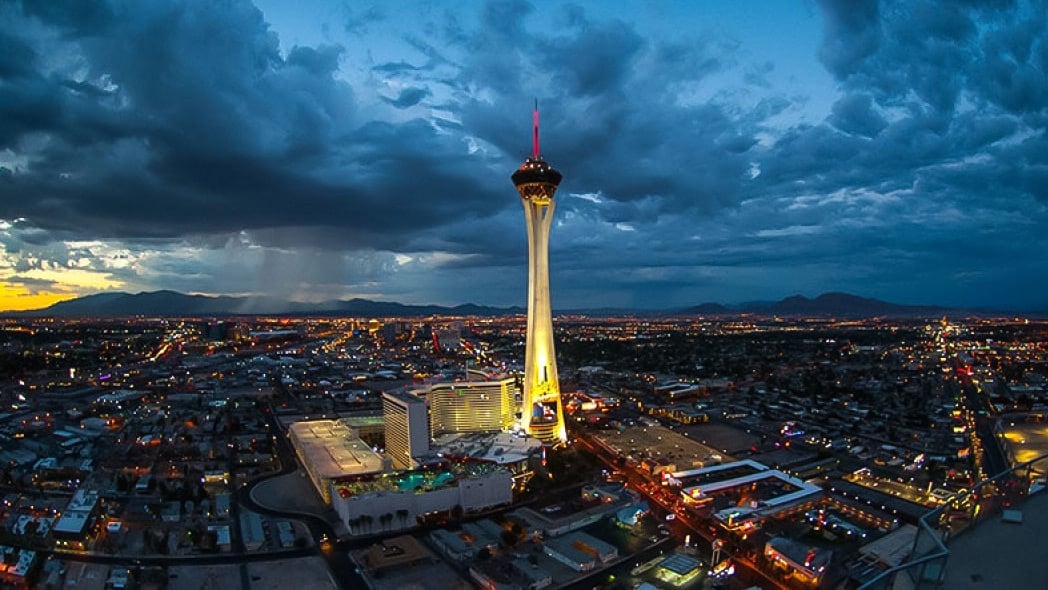
The properties include The STRAT Hotel, Casino & Tower on the Las Vegas Strip; Arizona Charlie’s Decatur and Arizona Charlie’s Boulder in Las Vegas; Aquarius Hotel & Casino and Edgewater Casino Resorts in Laughlin; and the Nugget Hotel & Casino and Lakeside Hotel & Casino in Pahrump.
Golden will retain ownership of the Gold Town Casino real estate in Pahrump. The company also operates 72 gaming taverns across Nevada.
Chief Financial Officer Charles Protell said the lease will run for 30 years with four five-year renewal options. Rent will be allocated based on revenue and profitability across the properties.
Sartini said management and the board reviewed acquisitions, mergers, and potential asset sales, but did not identify opportunities that met financial requirements.
He said the company identified “an attractive embedded value” within its real estate portfolio. Leadership determined that combining a sale-leaseback with a move to private ownership offered a clearer option.
Debt reduction and operating continuity
Golden plans to retire debt through the transaction. Protell said lower interest expense is expected to support cash flow.
The company employs about 5,000 people. Personnel changes will be limited and tied mainly to functions required of a public company, including maintaining a board of directors.
The tavern business is not part of the VICI agreement. Golden plans to open one to two taverns annually. Financing from VICI will support the upkeep of casino properties.
Golden began trading publicly in 2015 through a reverse merger. The company expanded through acquisitions, including American Casino assets that added The Stratosphere, two Arizona Charlie’s properties, and Aquarius Hotel & Casino.
The share price rose from mid-single digits to a high of $59. The company later divested its Maryland casino and two slot routes to focus on casino and tavern operations in southern Nevada.
Operating outside quarterly expectations
During the hearing, board member George Assad raised concerns about reliance on a single real estate owner with a large presence in the Las Vegas market, suggesting it might be a monopoly.
“Once these contracts expire, and if they want to raise the rents by 5%, 10%, or 20%, they have you in a bad spot,” Assad said. “I would like to see some real estate transactions with some other companies that may get involved in these lease packs.”
Meanwhile, Board Chair Mike Dreitzer asked about the rationale for exiting public markets.
Sartini said private ownership may allow a longer planning horizon compared with quarterly reporting cycles.
“Sometimes in the public market, you get a quarter-to-quarter report card, and every quarter that goes by, there are expectations,” Sartini said. “Although those expectations may or may not get met, you may get rewarded or you may not. I have always taken a long-term approach to our business, and as it has grown pretty significantly over the years, we have made very prudent financial and operational decisions to protect the number of jobs we provide the industry and shareholder value.”
“Being a private company will allow us to be more selective and patient. We do think we have significant opportunities with VICI as our partner,” he added.