
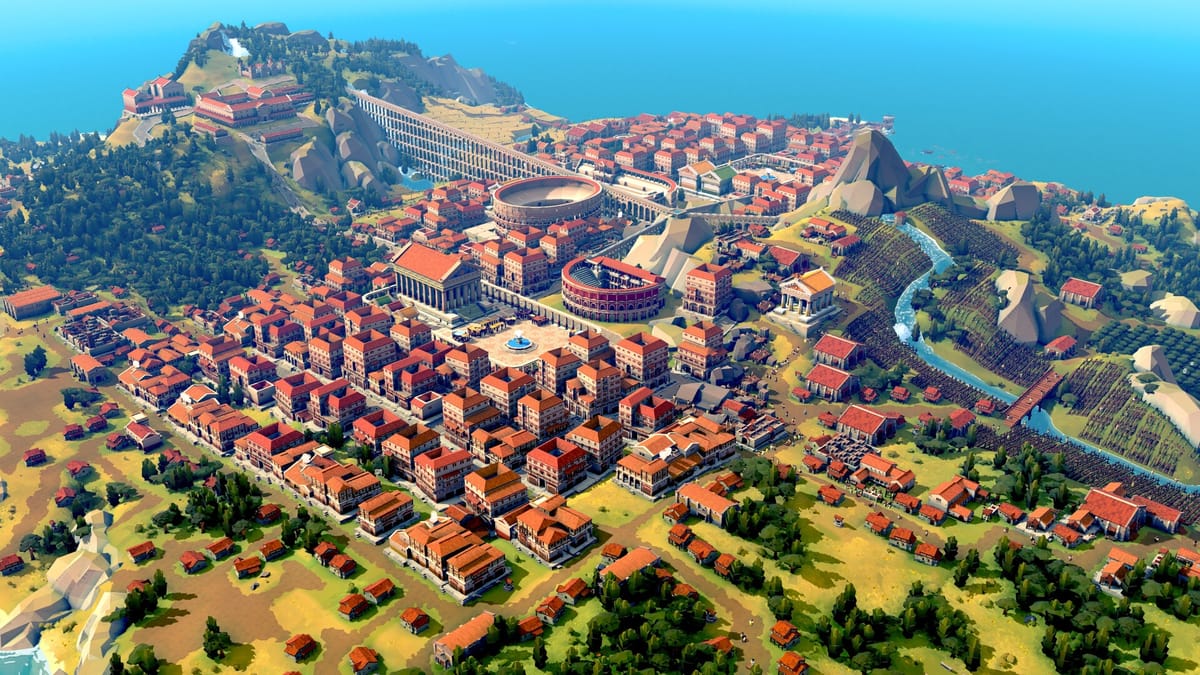
I’ve spent the last couple of weeks playing a new city-builder called Nova Roma–this is me, this is my life now, this is all I do with the time that is left to me–and it’s been really interesting, because as much as I love building cities, I love building waterslides even more.
Whiskerwood Is Already One Of The Finest City-Builders I Have Ever Played
There’s a lot more going on here than just feeding mice
Nova Roma is a neat, if also somewhat limited, city-builder, one that is a great recommendation for anyone who would have been into Anno 117 if not for all its bullshit. It follows the outline of Anno pretty closely, even down to giving you limited control over military units for those times foreign invaders set foot on your island, but there are two places I found it does something pretty cool on its own.
The first is your tech tree advancement. Nova Roma is pretty light-hearted as far as city-builders go, with a cartoonish aesthetic, and so when it comes to its religion system it plays things pretty loose, presenting the player with a pantheon of gods you need to keep happy by building temples and meeting certain criteria. Fail to please them and they’ll wreak havoc on you and your people; please them, however, and they’ll grant you the points you need to unlock new buildings on the tech tree. I liked this little division of your attention, and while it also meant I hit a few frustrating roadblocks on the way to better stuff, for the most part it was a solid way of drip-feeding me newer and more complicated things to build.
The second is the game’s beating heart, and what feels like the starting point for the entire pitch: water. Or, to be more precise, aqueducts. Nova Roma is a game where you build a city, but that city is useless without a water supply, and the way supplying that water is integrated into its design is a game unto itself.
Building everything else in Nova Roma involves sticking a building or a path on a grid. That’s how most city-builders work: you snap everything on a grid, and it makes designing and planning your city easy. But when it comes to aqueducts in this game, whoah, hold on, suddenly, things are not on a grid. You’ve got complete freedom of movement here, able to swing your concrete waterslides 360 degrees in rotation, and you can even adjust their height as well. Not only does this make building them a more intricate task, I just find it extremely funny that so much of the game is bound by these very conventional rules and then when it comes to precious water it’s like oh, oh no, this stuff, you can build it however you want.
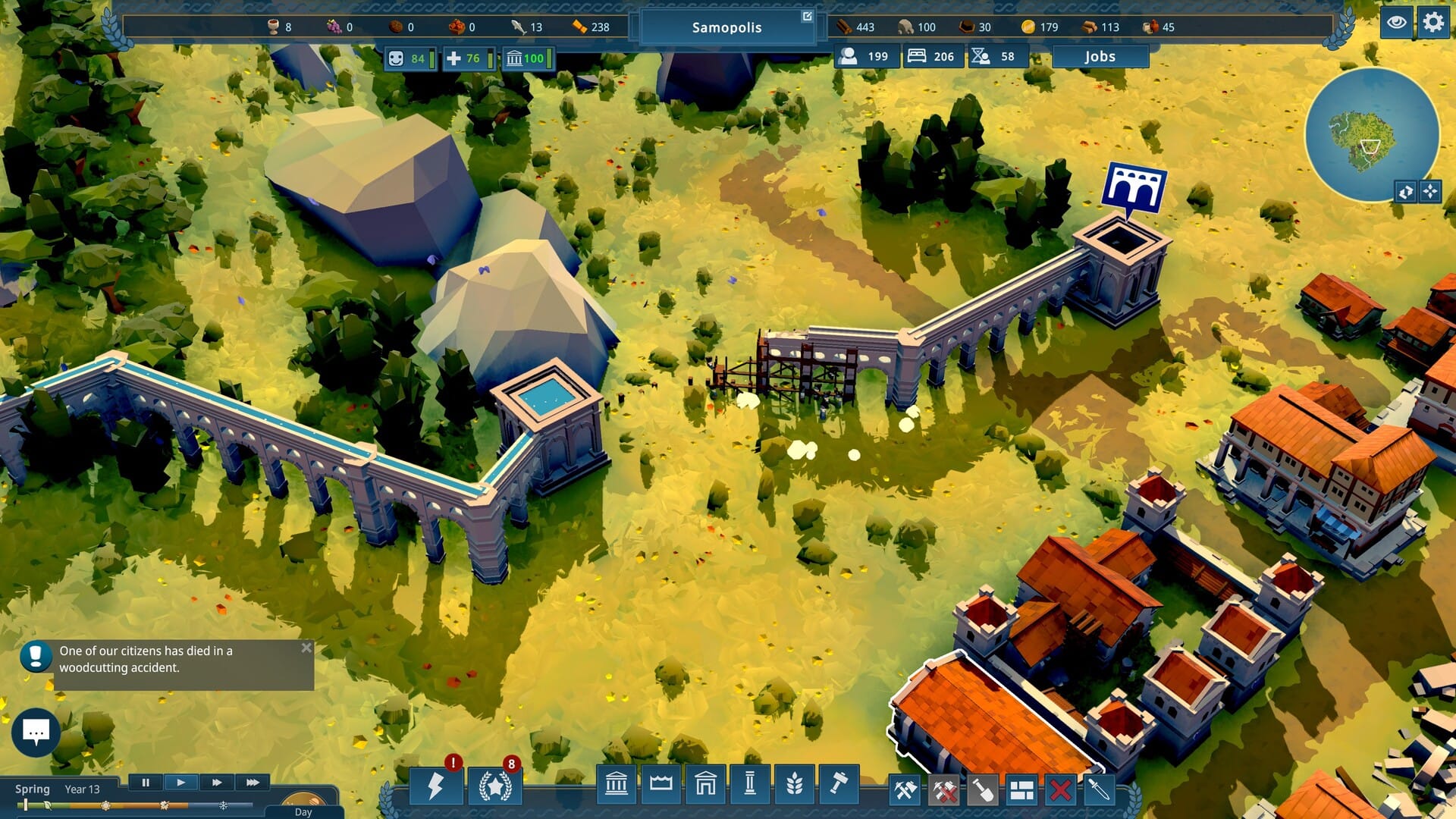 Your aqueducts aren’t just for supplying drinking water; they’re also needed for bath houses and spas, as well as firefighting
There’s a similar duality at play when it comes to the source of that water. Most of the game’s resources, from stone to lumber to fish, are located on the same terrestrial grid that you build on. But the water flows freely, pouring down from mountaintops, and so not only do you have to build your aqueducts freely to catch it, but circumstances in the game (like droughts) can affect that flow and force you to modify your aqueducts or even build whole new ones. Which you absolutely need to do, because your cities need water, it’s not an option, making this both the wackiest feature of this game but also the absolute bedrock of it.
Like I said earlier, as a city-builder, I found Nova Roma fairly limited; its economy system is there, but isn’t enjoyable or particularly easy to use, and I found stuff like building degradation (you need masons working around the clock to maintain structures) to be more of a pain in the ass than it was worth having there to tinker with. I did, however, have a blast just building stuff, because every cute little Roman building looks gorgeous, watching water whoosh down the aqueducts is incredibly satisfying and you get to go to (sorry) town customising your cities at a pretty granular level, including adding little food stalls to the bottom floor of your apartment buildings.
Nova Roma is out in Early access on Steam.