
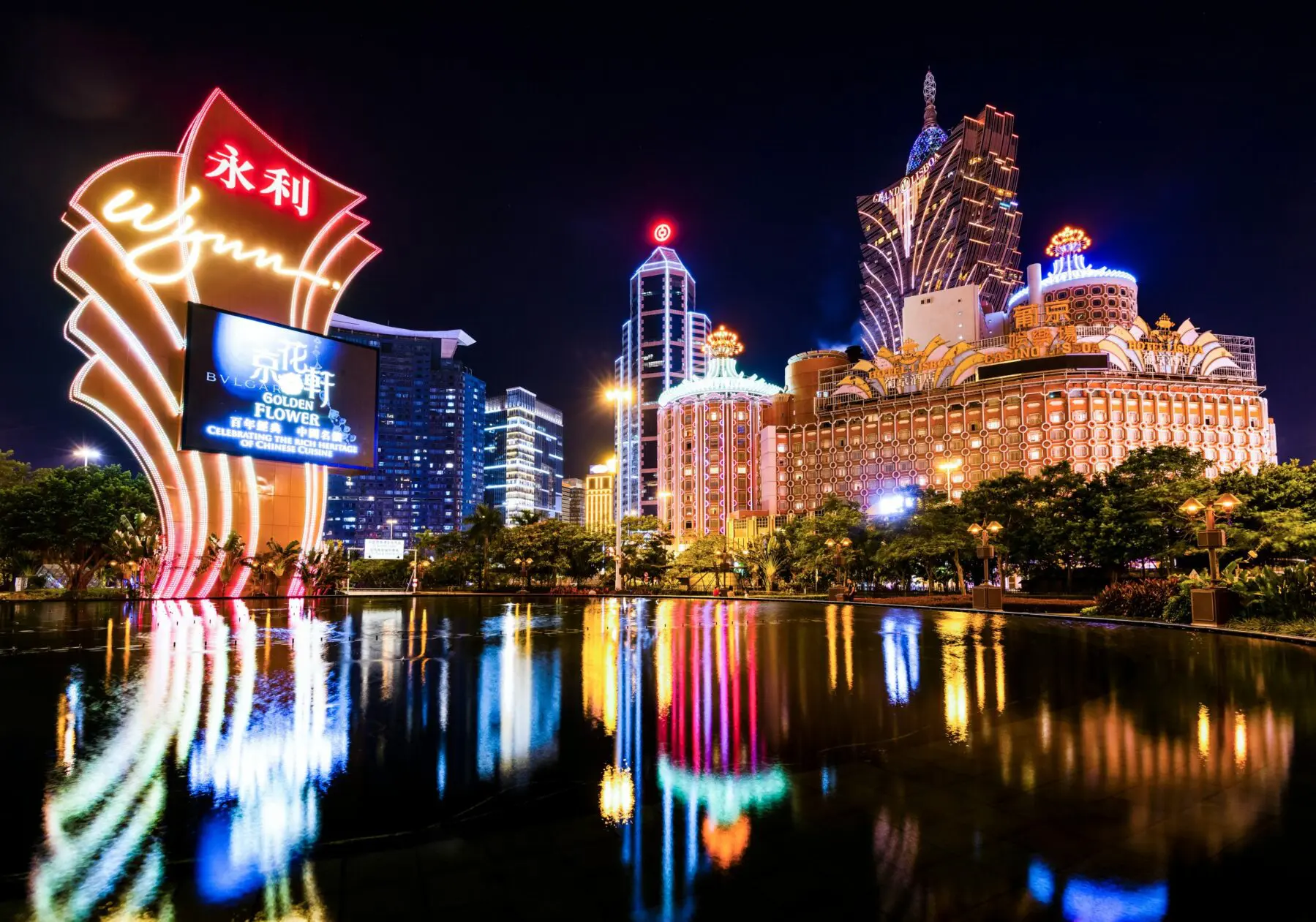
Macau is the reigning capital of casino gambling, having long ago passed Las Vegas. In 2025, Macau generated $30 billion in gross gaming revenue and it is not slowing down. Revenue for the first two months of 2026 is $5.3 billion, up 13.9 percent from 2025. There are six concessionaires with approximately 40 casinos in the city. By comparison, legal casinos, video lottery terminals, igaming, and sports betting in the United States produced $78 billion in the same period in 2025. The state of Nevada had $15.8 billion and Las Vegas $8.8 billion. In the U.S., there are over 500 casinos.
Clearly Macau is in a category of its own, although Singapore is comparable. In 2025 in Singapore with just two casinos, the GGR was $7 billion. Sands Marina Bay has nearly a 70 percent market share, giving the property nearly $5 billion in revenue. Sands Marina Bay may generate the most revenue for a single casino, but Macau owns the jurisdictional crown. The reason is straightforward: Macau is the only location within the greater Chinese realm where gambling is legal.
The history of gambling in Macau predates the return to China. But China allowed casinos to continue to operate after it resumed control of Macau in December 1999. Under the umbrella of China, casino gaming was legitimized, regulated, and taxed. In 2004, the first Sands casino opened, ushering in an era of American gaming companies, with Wynn and MGM later joining the Sands. The other operators are of local origin, offshoots of the Stanley Ho empire. The industry has flourished; it grew from $5 billion in GGR in 2004 to $45 billion in 2013. But then it hit a bump in road, actually more of an unbreachable cavernous hole in the road.
In the middle of 2014, Xi Jinping, the president of China, declared a crackdown on corruption in business, government, and the Communist Party. Revenue in Macau dropped to half what it had been, as the VIPs abandoned Macau or went to prison. In retrospect, it appears that those gamblers may have been using illegally obtained funds to gamble. Wherever they went, most never returned. Fortunately for Macau, there are 1.4 billion people. During the Chinese New Year holiday, tan estimated 9 billion trips were taken. The Chinese to like to travel and to gamble.
The VIPs of the pre-crackdown era have been replaced by a new class, premium-mass players and a bread-and-butter class of mass players. Gradually, revenue has been creeping back, not to 2013 levels, but to 2019 levels. At the current growth rate of GGR, revenue will return to the 2013 numbers in another five or ten years, unless a black swan swoops in and disrupts the process. Black-swan events come in many forms, including plagues, wars, and recessions. Macau is vulnerable to each of those, but faces another variety that most jurisdictions do not face — policy change.
Gambling is not popular with President Xi and the Chinese government. Gambling in Macau is tolerated only because it suits a broader purpose, international tourism and investment. To encourage both, the concessionaires’ licenses were renewed for 10 years beginning in 2023. As part of the agreement, the operators are required to invest in non-gaming assets and events. The requirement is a difficult one, and with few exceptions, nothing has produced the results the operators would have liked or the governments of Macau and China expected. MGM said in a recent earnings call that it did not know where to place the money, because what it has done so far was not producing the kind of return on investment its shareholders expect.
Investment is a serious issue, but not the most serious concessionaires face. The real danger is in the government’s attitude toward gambling. China is doing everything it can to keep Chinese citizens from gambling in any place but Macau. And with the social credit system, China can probably stop Chinese from gambling completely. Once Macau becomes established as an international tourist destination, China could pull the plug on Chinese gambling, its purpose being served.
China watching is a specialty. The best “watchers” live in a Chinese-speaking world, speak Chinese, and understand the culture of mainland China and, when possible, the subcultures in Singapore, Taiwan, Hong Kong, and Macau. I have none of those qualifications. But I think I see a change in China’s stance on Macau. The annual Two Sessions just wrapped up, producing a 15-year plan. The plan includes ways to strengthen the Chinese economy and consumer spending, extended the Belt and Road initiative, and pushed the frontiers of technology. In the domestic agenda is a stronger emphasis on the Greater Bay Area, which includes Macau and Hong Kong. After the session, the chief executive in Macau and the liaison officer of the Communist Party doubled down on supporting the national agenda.
Exactly what the means is above my pay grade, but it implies Macau becoming a more integrated member of the Chinese society. The term “one country, two systems” no longer accompanies each statement. Two systems is quietly going away and one country is becoming the dominant narrative. It will not happen any time soon, but I suspect a time will come when China makes gambling illegal for Chinese citizens. However, bear in mind that this wild speculation by one unqualified and a case of the plans of President Xi being lost in translation.
