
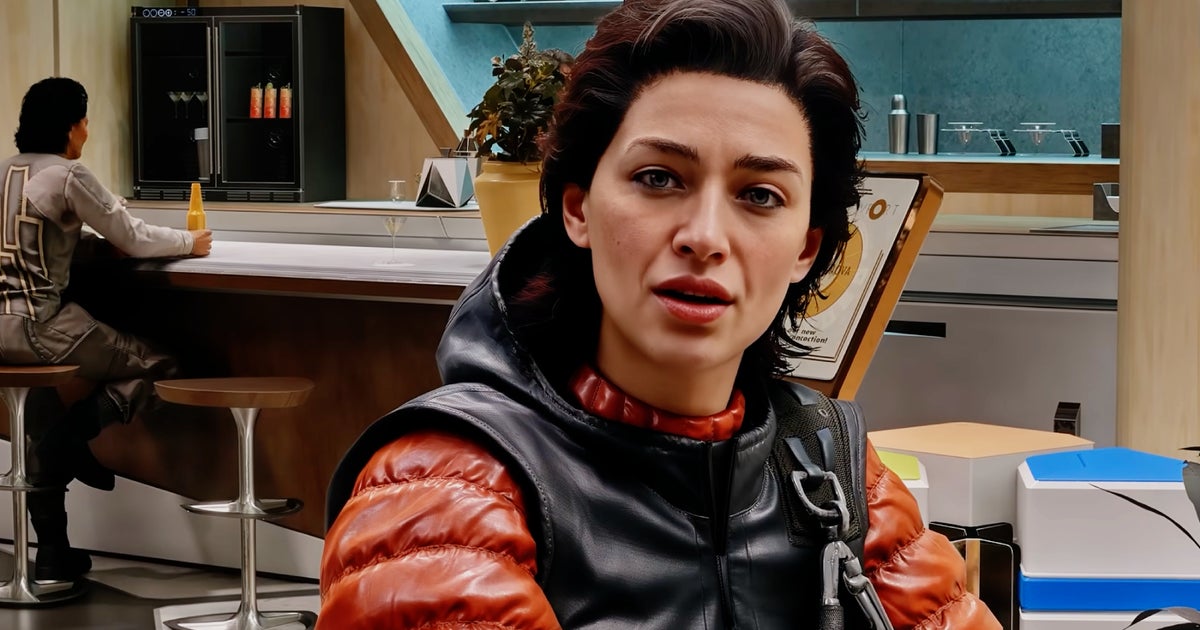
As you’re probably aware, Nvidia unveiled DLSS 5 earlier this week, showing off the tech via a slideshow of game characters’ faces being transformed by its neural rendering into the sort of unnervingly yassified visages you get in dodgy internet ads nowadays. Naturally, the overwhelming response from players the company and its partners had seemingly assumed would be wowed by the tech has landed on a scale capped by annoyed sighs and middle fingers.
It’s ok, though. Nvidia boss Jensen Huang has now said those whose socks haven’t been blown off are just “completely wrong” about what DLSS 5 is.
“Well, first of all, they’re completely wrong,” Huang said when asked about criticism of the tech in a press Q&A at GTC 2026 attended by Tom’s Hardware. “The reason for that is because, as I have explained very carefully, DLSS 5 fuses controllability of the of geometry and textures and everything about the game with generative AI.”
After saying that, Huang went on to explain that the tech is “not post-processing at the frame level, it’s generative control at the geometry level”. He continued that it’s “very different than generative AI; it’s content-control generative AI. That’s why we call it neural rendering”. As with Bethesda’s attempt at damage control after a bunch of DLSS 5 yassified Starfield characters were shown off as part of the announcement, Huang’s hanging his defence on developers maintaining “artistic control” over their game when the tech’s deployed.
The likes of Bethesda and Capcom have clearly given their blessing for their games to be DLSS 5ed up for this reveal ahead of the tech’s rollout this autumn, but it’s very tough to argue that its turning of Grace Ashcroft into an eerily dead-eyed Scarlett Johansson lookalike or its attempt to inject more realstic frown lines into the cartoony faces of Oblivion Remastered’s elves is in keeping with either of those games’ established visuals.
Specifically in terms of the latter, the remaster’s ability to graphically overhaul the models of Cyrodiil’s residents without losing all of the uncanny and peculiar ugliness that made their previous appearances so memorable was one of best aspects of it. Throwing that away to make poor Honditar look like he’s about to start yapping in monotone computer voice about this one clever trick that’s resulted in doctors hating him is artistically questionable regardless of whether Todd Howard’s given a thumbs up at some point in the process.
I’ve got to shut up, though. As Huang pointed out, odds are I’m “completely wrong” in having judged DLSS 5’s changes – from what’s been shown so far – to be at best a thoroughly depressing use of tech which could be concentrating on more useful stuff like performance-focused upscaling, as its previous generations often have.